
Rōben
Japan·Kegon·Male·8th century
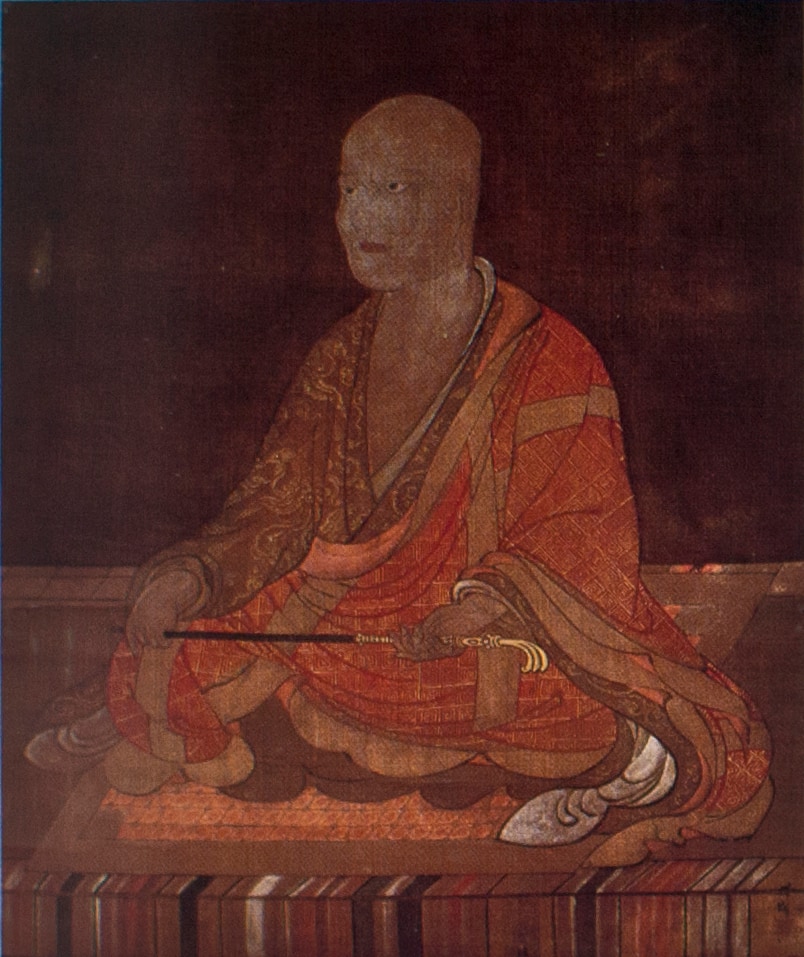
Rōben (689–773) was a pivotal Japanese Buddhist monk of the Kegon sect and the clerical founder of the Tōdai-ji temple in Nara. He played a crucial role in establishing the Kegon school in Japan and overseeing the construction and consecration of the Great Buddha statue at Tōdai-ji. His life spanned a formative period for Buddhism in Japan, contributing significantly to its institutional and doctrinal development.
Key Facts
- ›Clerical founder of the Tōdai-ji temple in Nara, Japan.
- ›Second patriarch of the Kegon school of Buddhism in Japan.
- ›Oversaw the construction of the massive bronze statue of Vairocana Buddha at Tōdai-ji.
- ›Presided over the drawing of the eyes ceremony for the Great Buddha statue in 751.
- ›Also involved in the establishment of Ishiyama-dera temple.
- ›His life spanned the late Asuka and early Nara periods of Japanese history.
Important Relationships
- Emperor Shōmu
- Tōdai-ji
- Kegon school
- Hossō Buddhism
- Ishiyama-dera
Nara, ōTsu, ōMi Province, Sagami Province
Gien, Simsang
Monk
Clerical Founder
About Rōben
Rōben (良弁)
Rōben (689–773), also known as Ryōben, was a prominent Japanese Buddhist monk and a central figure in the establishment of Buddhism during the Nara period. He is best recognized as the clerical founder of the renowned Tōdai-ji temple in Nara and as the second patriarch of the Kegon school in Japan.
Life and Historical Context
Born in the late Asuka period and active through the early Nara period, Rōben's life coincided with a crucial era of Buddhism's integration into Japanese society and state affairs. Tradition suggests he was born in either Ōmi or Sagami Province, with Sagami considered more likely. Legends speak of his unusual childhood, including being carried off by an eagle and later reunited with his mother after thirty years. He was raised as a monk from infancy, with records confirming this upbringing but offering little detail about his origins.
Buddhist Studies and Contributions
Rōben initially studied Hossō Buddhism under the monk Gien. Alongside Gien and other disciples like Gyōki, Rōben is credited with laying the groundwork for Japanese Buddhism in the Nara period. A significant undertaking was his oversight of the expansion and construction of Kinshō-ji (later the Hokke-dō hall of Tōdai-ji) and the monumental bronze statue of Vairocana Buddha, a project patronized by Emperor Shōmu.
Establishment of the Kegon School
In 740, Rōben invited the eminent Korean monk Simsang (known in Japan as Shinjō) from the Silla kingdom. Simsang's expertise was crucial in establishing a new Buddhist sect in Japan based on the Huayan school of Chinese Buddhism. This collaboration led to the formal foundation of the Kegon school, with Rōben assuming the position of its second patriarch.
Association with Tōdai-ji and Later Life
Rōben's association with Tōdai-ji extended to presiding over the significant "drawing of the eyes" ceremony for the Great Buddha statue in 751. He held various positions at the temple, rising from bettō monk to zōshō, a high-ranking Buddhist priest. In his later years, Rōben dedicated his efforts to the establishment of Ishiyama-dera temple in present-day Ōtsu, Shiga Prefecture. He passed away on November 16, 773, at the age of 85, in or near Uda, Nara Prefecture.
Source: Wikipedia ↗
Frequently Asked Questions
Who was Rōben?
Rōben was a highly influential Japanese Buddhist monk of the Kegon sect. He is most renowned for his role as the clerical founder of the Tōdai-ji temple in Nara and for his significant contributions to the establishment of the Kegon school in Japan.
When did Rōben live?
Rōben lived from 689 to 773 CE. His life spanned the late Asuka period and the early Nara period, a critical time for the development and integration of Buddhism in Japan.
What is Rōben known for regarding Tōdai-ji?
Rōben was instrumental in the establishment of the Tōdai-ji temple, serving as its clerical founder. He also oversaw the construction of its iconic massive bronze statue of Vairocana Buddha and presided over its consecration ceremony.
What role did Rōben play in the Kegon school?
Rōben was responsible for inviting the eminent Korean monk Simsang to Japan to help establish a new sect based on the Huayan school of thought. This initiative led to the foundation of the Kegon school in Japan, with Rōben becoming its second patriarch.
Where was Rōben born?
According to tradition, Rōben was born in either Ōmi Province or Sagami Province. Sagami Province, in present-day Kanagawa Prefecture, is considered the more likely location of his birth.
What other Buddhist temples is Rōben associated with?
Besides Tōdai-ji, Rōben spent the final years of his life establishing Ishiyama-dera temple, located in present-day Ōtsu, Shiga Prefecture.
Related Buddhists

Kūkai
Kūkai was a pivotal Japanese Buddhist monk, calligrapher, and poet who founded the esoteric Shingon school of Buddhism. He traveled to Tang China, where he studied under Huiguo and became a master of Chinese Vajrayana Buddhism. Upon his return to Japan, Kūkai established Shingon, deeply influencing Japanese religious and cultural life, and is revered as a bodhisattva.

Saichō
Saichō was a Japanese Buddhist monk and the founder of the Japanese Tendai school, a significant tradition that integrated Chinese Tiantai teachings with Esoteric Buddhism. He is credited with establishing the Tendai headquarters at Enryaku-ji on Mount Hiei, which became a major center for Buddhist practice in Japan. Saichō's work laid the foundation for later Japanese Buddhist movements, including Pure Land and Zen.

Śāntarakṣita
Śāntarakṣita was an influential Indian Buddhist philosopher and monk, particularly significant for the Tibetan Buddhist tradition. He is renowned for synthesizing Madhyamaka philosophy with Yogācāra and Dharmakirtian epistemology, creating the Yogācāra-Mādhyamika school. Śāntarakṣita founded Samye, the first Buddhist monastery in Tibet, and played a crucial role in establishing Buddhism there.