
Prajñā
Afghanistan·Mahayana·Male·9th century
Prajñā was a 9th-century Buddhist monk born in Kapisa, near modern Kabul, Afghanistan. He is known for his significant contributions to the translation of Sanskrit sutras into Chinese during his visit to Tang China. His work facilitated the understanding of important Buddhist texts and he is also noted for his association with the Japanese monk Kūkai.
Key Facts
- ›Born in Kapisa, near modern Kabul, Afghanistan.
- ›Active as a Buddhist monk in the 9th century.
- ›Translated important Sanskrit sutras into Chinese.
- ›Known for translating the Avatamsaka Sutra and the Heart Sutra.
- ›Studied at the monastic university of Nalanda.
- ›Reportedly befriended Kūkai, the founder of Shingon Buddhism.
Important Relationships
- Kūkai
- Jingjing
- the Avatamsaka Sutra
- the Heart Sutra
- the Mahayana Sutra of Mind Meditation From the Jataka Tales
- Satparamita Sutra
Kapisa, Tang China, Nalanda, Kabul
Chinese, Sanskrit
Monk
About Prajñā
Prajñā was a 9th-century Buddhist monk whose life and work significantly contributed to the transmission of Buddhist scriptures. Born in Kapisa, a region near modern Kabul in Afghanistan, he later journeyed to Tang China, where he engaged in the crucial task of retranslating Sanskrit sutras into Chinese.
Life and Historical Context
Active during the 9th century, Prajñā's origins in Kapisa placed him within a region historically significant for its role in the Silk Road transmission of Buddhism. His presence in Tang China indicates a period of active cultural and religious exchange between India, Central Asia, and China. He also spent time studying at the esteemed monastic university of Nalanda in present-day India, a testament to his dedication to Buddhist scholarship.
Major Contributions
Prajñā's most notable contributions lie in his translations of important Buddhist texts. Among his key works are the Chinese versions of the Avatamsaka Sutra, the Heart Sutra, and the Mahayana Sutra of Mind Meditation from the Jataka Tales. He also collaborated with the Christian monk Jingjing to translate the Satparamita Sutra into Chinese, though this work is no longer extant.
Important Relationships
Historical accounts suggest that Prajñā developed a significant relationship with the Japanese monk Kūkai, who would later become the founder of Shingon Buddhism. Prajñā is said to have aided Kūkai in his studies by helping him understand Sanskrit source texts during Kūkai's pilgrimage to China. This interaction highlights Prajñā's role in fostering cross-cultural Buddhist learning.
Source: Wikipedia ↗
Frequently Asked Questions
Where was Prajñā born?
Prajñā was born in Kapisa, a region located near modern-day Kabul in Afghanistan.
What is Prajñā most known for?
Prajñā is most known for his work as a Buddhist monk who translated important Sanskrit sutras into Chinese during the 9th century. His efforts helped preserve and disseminate Buddhist teachings.
Which sutras did Prajñā translate?
Prajñā is credited with translating several significant sutras into Chinese, including the Avatamsaka Sutra, the Heart Sutra, and the Mahayana Sutra of Mind Meditation from the Jataka Tales.
Did Prajñā have any notable associations?
Yes, Prajñā reportedly befriended the Japanese monk Kūkai, who later founded Shingon Buddhism. He is said to have assisted Kūkai in understanding Sanskrit source texts.
Where did Prajñā study?
Prajñā studied at Nalanda, a renowned ancient monastic university located in modern-day India.
Related Buddhists
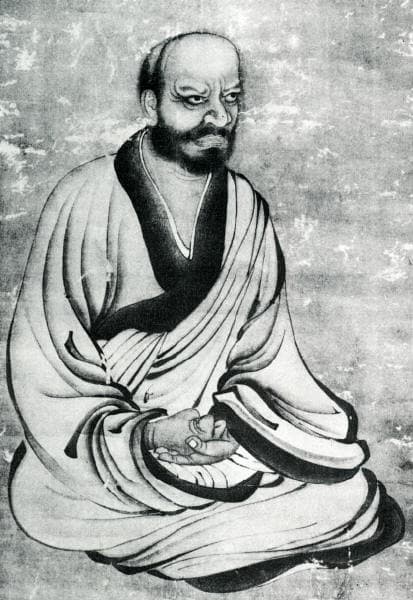
Linji Yixuan
Linji Yixuan was a prominent Tang dynasty Chinese Chan (Zen) Buddhist monk and teacher. He is considered the leading figure of Chan Buddhism in his era and the founder of the influential Linji school, which later branched into Japanese Rinzai, Korean Seon, and Vietnamese Lâm Tế traditions. His teachings, compiled in the "Recorded Sayings of Linji," are known for their iconoclastic and antinomian spirit, emphasizing self-reliance and direct experience over conceptual grasping.
Lokaksema
Lokaksema was a Kushan Buddhist monk who flourished between 147 and 189 CE. He is historically significant as one of the first known translators of Mahayana Buddhist texts into Chinese during the Han dynasty. His work played a crucial role in the transmission of Buddhism to East Asia.
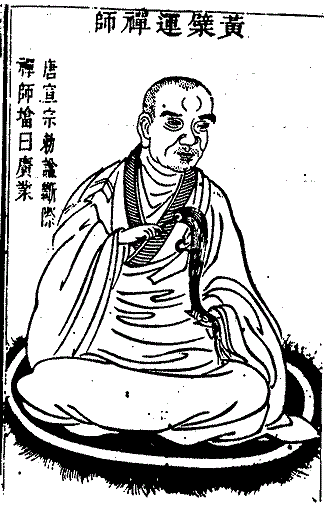
Huangbo Xiyun
Huangbo Xiyun was an influential Chan Buddhist master during the Tang dynasty, known for his teachings on the "One Mind" and the inherent Buddha-nature within all beings. He was a key figure in the Hongzhou school of Chan, a student of Baizhang Huaihai, and the teacher of Linji Yixuan, who founded the Rinzai school of Zen. His teachings emphasized direct experience and the rejection of dualistic thinking, famously encapsulated in the phrase "mind is the Buddha."