
Nishitani Keiji
Japan·Kyoto School·Male·20th century
Keiji Nishitani was a prominent Japanese philosopher and a key figure in the Kyoto School, known for his distinctive philosophical approach that integrated Western thought with Buddhist concepts, particularly Zen. He explored themes of nihilism, emptiness, and subjective experience, offering a unique perspective that sought to bridge Eastern and Western philosophical traditions. His work significantly influenced subsequent philosophical discourse on existentialism and religious thought.
Key Facts
- ›Born in Ishikawa prefecture, Japan, in 1900.
- ›Disciple of Kitarō Nishida and studied under Martin Heidegger.
- ›Received his doctorate from Kyoto Imperial University in 1924.
- ›His philosophy critically engaged with Western thought, particularly its dualistic tendencies.
- ›Explored the concepts of the Field of Consciousness, Field of Nihility, and Field of Emptiness.
- ›Authored significant works including 'Religion and Culture' and 'Contemporary Society's Problems and Religion'.
Important Relationships
- Kitarō Nishida (teacher)
- Martin Heidegger (teacher, colleague)
Philosophy of Fundamental Subjectivity, Religion and Culture, Contemporary Society's Problems and Religion, Nihirizumu
Ishikawa Prefecture, Kyoto Imperial University, Freiburg, ōTani University
Kitarō Nishida, Martin Heidegger, D. T. Suzuki, Meister Eckhart, Friedrich Nietzsche, Immanuel Kant, René Descartes
Japanese
About Nishitani Keiji
Keiji Nishitani
Keiji Nishitani (1900–1990) was a distinguished Japanese philosopher and a central figure in the renowned Kyoto School. As a devoted disciple of Kitarō Nishida, Nishitani's philosophical journey was marked by a profound engagement with both Eastern Buddhist traditions, particularly Zen, and Western philosophical thought.
Early Life and Education
Born in Ishikawa prefecture, Nishitani's early life was shaped by personal suffering, including the loss of his father and his own childhood illness. This period of despair led him to philosophy as a matter of life and death. He received his education in Tokyo and later at Kyoto Imperial University, where he studied under Nishida Kitarō and Tanabe Hajime. His academic career included postgraduate study in Germany from 1937 to 1939, where he studied under the influential existentialist philosopher Martin Heidegger.
Philosophical Contributions
Nishitani's philosophy is characterized by its critical engagement with Western thought and its integration of Buddhist concepts. He developed a framework involving three fields: the Field of Consciousness, the Field of Nihility, and the Field of Emptiness. He critiqued Western philosophy for remaining confined to the Field of Consciousness, which he believed offered only representations of reality rather than direct encounter. Nishitani's work grappled extensively with the concept of nihilism, proposing that the overcoming of nihilism could be achieved through a radical confrontation with it, leading to an awareness of emptiness (śūnyatā).
His thought often contrasted Eastern non-dualism with Western dualistic tendencies, evident in his critique of Cartesian philosophy and Christian ethics. Nishitani sought to articulate a philosophical standpoint that could illuminate a broader range of topics, often using Western ideas to elucidate Buddhist themes. His writings explored the intersection of religion, history, and culture, aiming to lay the groundwork for a new, unified way of thinking that transcended East-West divides.
Key Works and Legacy
Among Nishitani's notable works are "Philosophy of Fundamental Subjectivity," "Religion and Culture," and "Contemporary Society's Problems and Religion." His exploration of existentialism, nihilism, and Buddhist emptiness, often drawing parallels with mystics like Meister Eckhart and thinkers like Heidegger, cemented his reputation as a significant philosopher. Nishitani's intellectual legacy lies in his ability to synthesize diverse philosophical traditions, offering profound insights into the human condition and the nature of reality.
Source: Wikipedia ↗
Frequently Asked Questions
What is Keiji Nishitani best known for?
Keiji Nishitani is best known for his philosophical work that synthesized Western philosophy with Buddhist thought, particularly Zen Buddhism. He is recognized for his exploration of themes like nihilism, the nature of consciousness, and the concept of emptiness (śūnyatā).
Who were Keiji Nishitani's main influences?
Nishitani was deeply influenced by his teacher Kitarō Nishida and the broader Kyoto School of philosophy. He also studied under Martin Heidegger and drew inspiration from Western thinkers like Nietzsche, as well as from Zen masters like Dōgen and figures in Western mysticism such as Meister Eckhart.
What were Nishitani's key philosophical concepts?
Nishitani's philosophy is characterized by his exploration of three fields: the Field of Consciousness, the Field of Nihility, and the Field of Emptiness. He critiqued Western philosophy's focus on the Field of Consciousness and advocated for a deeper understanding found in the Field of Emptiness, rooted in Buddhist principles.
How did Nishitani view the relationship between Eastern and Western thought?
Nishitani saw the inheritance of both Eastern and Western cultures as a privilege for Japanese thinkers, creating a responsibility to lay the foundations for a new, united world thought. He used Western philosophy to elucidate Buddhist themes and critiqued Western dualism from a Buddhist perspective.
What was Nishitani's view on nihilism?
Nishitani famously stated that the fundamental problem of his life was the 'overcoming of nihilism through nihilism.' He explored nihilism not as mere meaninglessness, but as a necessary stage of confronting existential despair and the impermanence of all things, leading towards the realization of emptiness.
Related Buddhists
Nishida Kitaro
Nishida Kitarō was a prominent Japanese philosopher and the founder of the Kyoto School of philosophy. He is known for developing a unique philosophical system that synthesized Western thought with Eastern traditions, particularly Zen Buddhism. His work aimed to bridge Eastern and Western intellectual traditions and laid the groundwork for subsequent philosophical developments in Japan.
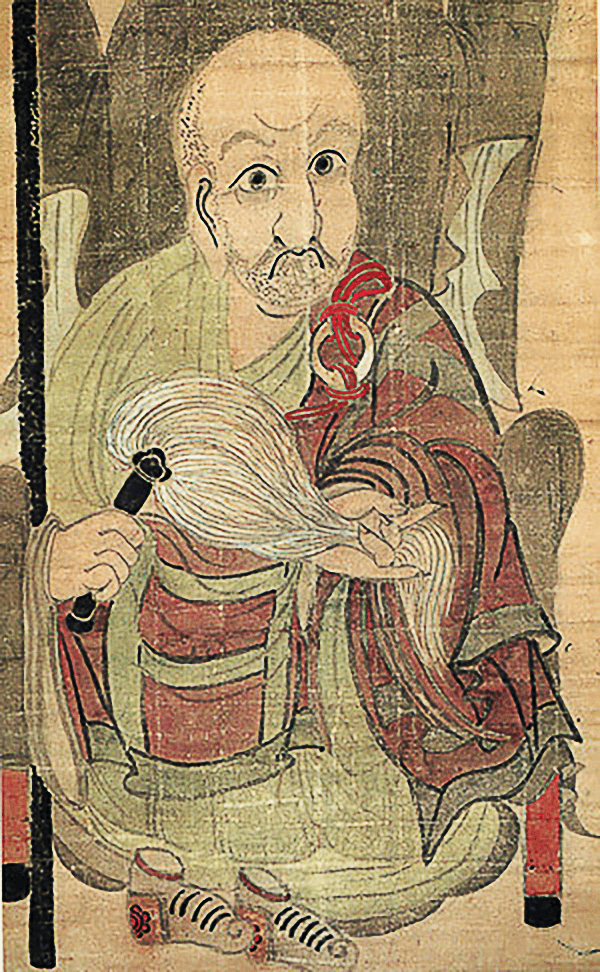
Hakuin Ekaku
Hakuin Ekaku was a pivotal figure in Japanese Zen Buddhism, revitalizing the Rinzai school through rigorous training that integrated meditation and koan practice. He emphasized the importance of bodhicitta, or working for the benefit of others, as the ultimate goal of Zen training, even though he never formally received dharma transmission. Hakuin's teachings and methods significantly shaped modern Zen practice.
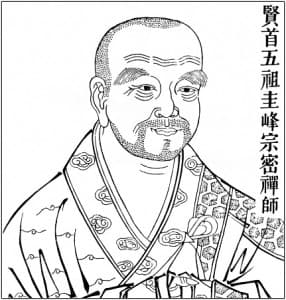
Guifeng Zongmi
Guifeng Zongmi was a highly influential Tang dynasty Chinese Buddhist monk, scholar, and patriarch of both the Huayan and Chan schools. He is renowned for his efforts to harmonize various Buddhist teachings, particularly Chan and Huayan, with Taoism and Confucianism, aiming to create a comprehensive spiritual vision. His extensive writings serve as a crucial resource for understanding the diverse Chan schools of his era.