
Nishida Kitaro
Nishida Kitarō was a prominent Japanese philosopher and the founder of the Kyoto School of philosophy. He is known for developing a unique philosophical system that synthesized Western thought with Eastern traditions, particularly Zen Buddhism. His work aimed to bridge Eastern and Western intellectual traditions and laid the groundwork for subsequent philosophical developments in Japan.
Key Facts
- ›Founder of the Kyoto School of philosophy.
- ›Developed the concept of the logic of 'basho' (place).
- ›His philosophy integrated Western philosophy with Zen Buddhism.
- ›Authored numerous influential works including 'an Inquiry into the Good'.
- ›Taught philosophy at Kyoto University after graduating from the University of Tokyo.
- ›Awarded the Order of Culture in 1940.
Important Relationships
- D. T. Suzuki
- Masao Abe
- An Inquiry Into the Good
- the Logic of the Place of Nothingness and the Religious Worldview
- Fundamental Problems of Philosophy
Kyoto University, Unoke, Ishikawa, Kamakura, Reiun'In , Kyoto
Zen Buddhism, Western Philosophy
Japanese
About Nishida Kitaro
Nishida Kitarō
Nishida Kitarō (1870–1945) was a seminal Japanese philosopher and the founder of the Kyoto School of philosophy. Born in the Meiji period, he was uniquely positioned to engage with both traditional Eastern thought and the burgeoning influence of Western philosophy. Nishida's intellectual project was deeply concerned with bridging these two traditions, aiming to foster a more profound understanding between East and West.
Philosophy
Nishida's philosophical system is characterized by its creative synthesis of Zen Buddhist principles with Western philosophical concepts, including those of Kant, Hegel, and Bergson. He developed the concept of the "logic of basho" (place), which proposed a non-dualistic framework to overcome the limitations of subject-object distinctions. This logic emphasizes the "absolutely contradictory self-identity," a dynamic tension of opposites that defines its subject through the affirmation and negation of perspectives.
His early work, "An Inquiry into the Good," explored profound experiences, reality, and religion, arguing for the primacy of "pure experience" and the human craving for unity. Throughout his career, Nishida published extensively, laying the foundation for a distinctively Japanese philosophical tradition.
Academic Career and Legacy
Nishida graduated from the University of Tokyo and later became a professor of philosophy at Kyoto University, influencing a generation of thinkers. His work was not without controversy; he faced criticism from both right-wing and left-wing intellectuals during and after World War II for his perceived nationalistic or anti-nationalistic leanings. Despite these debates, Nishida Kitarō's philosophical contributions remain foundational to modern Japanese philosophy, and his work continues to be studied and debated internationally.
Source: Wikipedia ↗
Frequently Asked Questions
What is Nishida Kitarō most famous for?
Nishida Kitarō is most famous for founding the Kyoto School of philosophy and for developing his unique philosophical concept known as the logic of 'basho,' or 'place.' This philosophical system sought to integrate Western and Eastern thought, particularly Zen Buddhism.
What was the main goal of Nishida Kitarō's philosophy?
The primary aim of Nishida Kitarō's philosophy was to foster a greater understanding and connection between Eastern and Western cultures and intellectual traditions. He sought to create a philosophical framework that could bridge these seemingly disparate worlds.
What is the 'logic of basho'?
The logic of 'basho' (place) is a central concept in Nishida Kitarō's philosophy. It proposes a non-dualistic logic aimed at transcending the traditional subject-object distinction, emphasizing a dynamic tension of opposites rather than a resolved synthesis.
What are some of Nishida Kitarō's notable works?
Among Nishida Kitarō's most significant works are 'An Inquiry into the Good,' 'The Logic of the Place of Nothingness and the Religious Worldview,' and 'Fundamental Problems of Philosophy.' His collected works are extensive, covering a wide range of philosophical topics.
What was Nishida Kitarō's academic career like?
Nishida Kitarō graduated from the University of Tokyo with a degree in philosophy. He went on to become a professor at the Fourth Higher School in Ishikawa Prefecture and later a professor of philosophy at Kyoto University, where he retired in 1927.
Related Buddhists
Nishitani Keiji
Keiji Nishitani was a prominent Japanese philosopher and a key figure in the Kyoto School, known for his distinctive philosophical approach that integrated Western thought with Buddhist concepts, particularly Zen. He explored themes of nihilism, emptiness, and subjective experience, offering a unique perspective that sought to bridge Eastern and Western philosophical traditions. His work significantly influenced subsequent philosophical discourse on existentialism and religious thought.

Ledi Sayadaw
Ledi Sayadaw U Ñaṇadhaja was a highly influential Theravada Buddhist monk from Burma, celebrated for his deep scholarship in Buddhist theory (Abhidhamma) and practice. He played a crucial role in reviving Vipassanā meditation, making it accessible to both monastics and laypeople, and authored numerous accessible Dhamma texts in Burmese and Pali. His advocacy against beef consumption also significantly impacted Burmese nationalism during the colonial era.
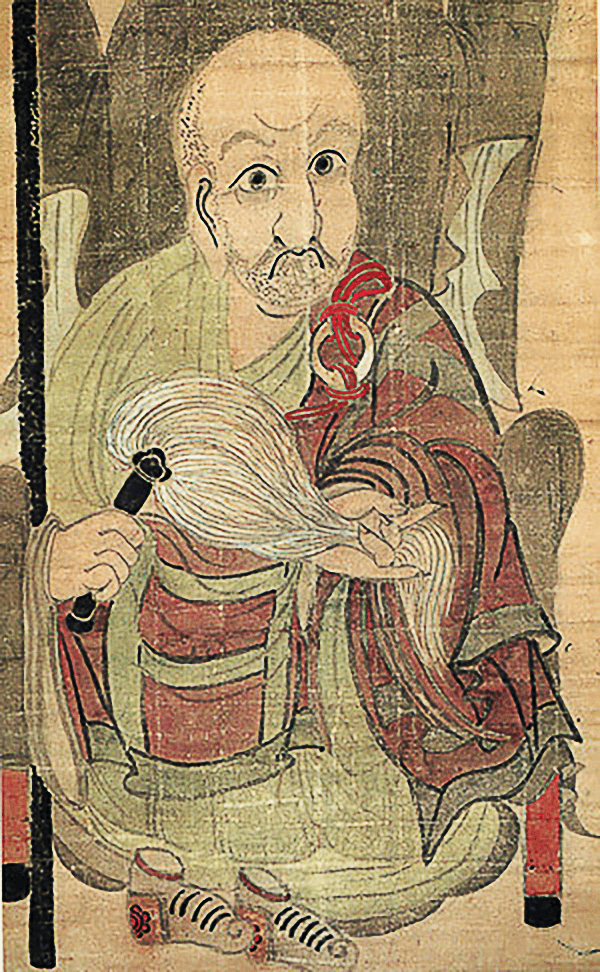
Hakuin Ekaku
Hakuin Ekaku was a pivotal figure in Japanese Zen Buddhism, revitalizing the Rinzai school through rigorous training that integrated meditation and koan practice. He emphasized the importance of bodhicitta, or working for the benefit of others, as the ultimate goal of Zen training, even though he never formally received dharma transmission. Hakuin's teachings and methods significantly shaped modern Zen practice.