
Nagarjuna
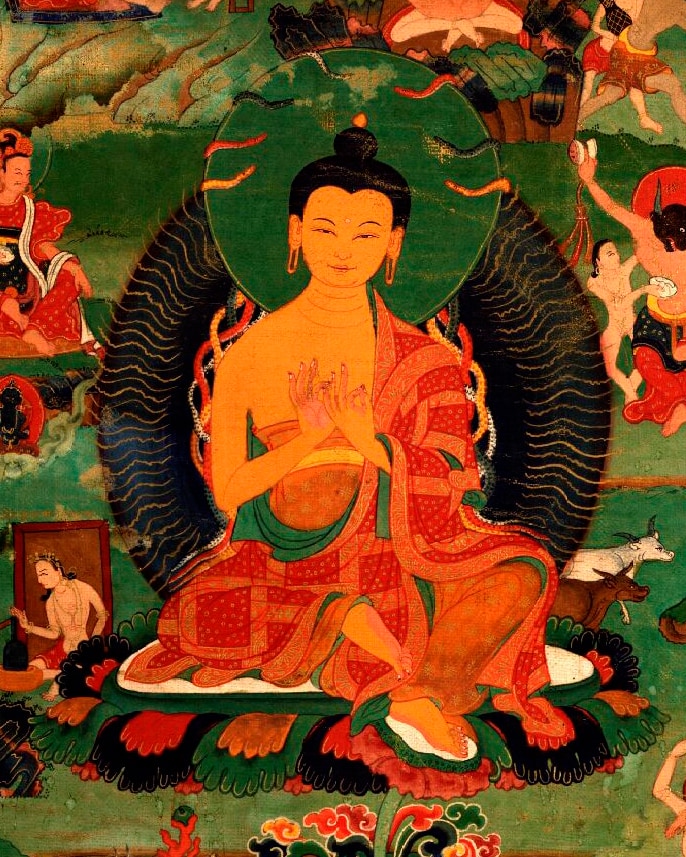
Nagarjuna was an influential Indian scholar-monk and philosopher of Mahayana Buddhism, widely regarded as the founder of the Madhyamaka school. He is celebrated for his profound philosophical writings on the doctrine of emptiness (śūnyatā), which became foundational texts for Mahayana Buddhism. Nagarjuna is considered by many to be the most significant Buddhist philosopher after the Buddha himself, earning him the title "second Buddha" in Tibetan Buddhism.
Key Facts
- ›Considered the founder of the Madhyamaka school of Mahayana Buddhism.
- ›Authored the seminal text Mūlamadhyamakakārikā (MMK), which expounds the philosophy of emptiness.
- ›His philosophical work on emptiness (śūnyatā) was highly influential in Indian philosophy and Mahayana Buddhism across Asia.
- ›Often referred to as the "second Buddha" in Tibetan Buddhism due to his profound philosophical contributions.
- ›His teachings were central to the Mahayana movement, defending and propagating its doctrines.
- ›Scholars generally place his life between the 1st and 3rd centuries CE, with most placing him in South India.
Important Relationships
- Kumārajīva (translator)
- Candrakirti (commentator)
- Aśvaghoṣa (mentioned in hagiography)
- Sātavāhana dynasty (advisor to a king)
MūLamadhyamakakāRikā, śūNyatāSaptati, VigrahavyāVartanī, VaidalyaprakaraṇA, YuktiṣāṣṭIka, CatuḥStava, RatnāValī, SuhṛLlekha
South India, Andhra Region, Dhanyakataka, śRīParvata
Sanskrit
Monk Vows
Influential Philosopher, Second Buddha
About Nagarjuna
Nāgārjuna
Nāgārjuna was a pivotal Indian scholar-monk, philosopher, and teacher (acharya) of Mahayana Buddhism, active roughly between the 1st and 3rd centuries CE. He is widely credited as the founder of the Madhyamaka, or "Middle Way," school of Buddhist philosophy. Nagarjuna's profound insights into the doctrine of emptiness (śūnyatā) have made him one of the most significant figures in Buddhist thought, often considered the most important philosopher after the Buddha himself, and in Tibetan Buddhism, he is revered as the "second Buddha."
Life and Historical Context
Reliable details about Nāgārjuna's life are scarce, with historical accounts being largely hagiographical and written centuries after his death. Most scholars place him in South India, with conventional dates ranging from 150 to 250 CE. Some scholars suggest he may have served as an advisor to a king of the Sātavāhana dynasty, possibly Yajña Śrī Śātakarṇi, during the second century CE. It is also plausible that he resided in the Andhra region, near modern-day Amaravati, and wrote significant works there.
Philosophical Contributions and Notable Works
Nāgārjuna's primary contribution to Buddhist philosophy is his systematic exposition of emptiness (śūnyatā) through the Madhyamaka school. His most famous work, the Mūlamadhyamakakārikā (Root Verses on Madhyamaka), is a foundational text that employs rigorous reasoning to deconstruct notions of inherent existence and expound the interdependent nature of reality. Other key attributed works include the Śūnyatāsaptati, Vigrahavyāvartanī, Yuktiṣāṣṭika, and Ratnāvalī. His philosophical writings deeply influenced Indian philosophy for a millennium and remain indispensable to Mahayana Buddhism in East Asia and Indo-Tibetan traditions.
Legacy and Influence
Nāgārjuna's philosophical system laid the groundwork for much of Mahayana Buddhist thought. His defense of Mahayana ideas and his prolific writings were crucial in the development and dissemination of its doctrines. Beyond his philosophical impact, Nāgārjuna is also associated with the Vajrayana tradition and is considered a patriarch by the Pure Land school, highlighting the breadth of his influence across various Buddhist lineages. The scholarly debate continues regarding the authenticity of many texts attributed to him, given the multitude of later works bearing his name.
Source: Wikipedia ↗
Frequently Asked Questions
Who was Nagarjuna?
Nagarjuna was an Indian scholar-monk, philosopher, and teacher of Mahayana Buddhism. He is widely recognized as the founder of the Madhyamaka school and is considered one of the most important Buddhist philosophers after the Buddha.
What is Nagarjuna known for?
Nagarjuna is best known for his philosophical work on the doctrine of emptiness (śūnyatā) and for founding the Madhyamaka school. His text, the Mūlamadhyamakakārikā, is a foundational work in Buddhist philosophy.
When did Nagarjuna live?
Historical consensus places Nagarjuna between the 1st and 3rd centuries CE. While precise dates and locations are debated, most scholars suggest he was active in South India during this period.
What is the Madhyamaka school?
The Madhyamaka school, founded by Nagarjuna, is a major tradition within Mahayana Buddhism. Its central philosophical tenet is the concept of emptiness (śūnyatā), which emphasizes the lack of inherent existence in all phenomena.
Related Buddhists
Aryadeva
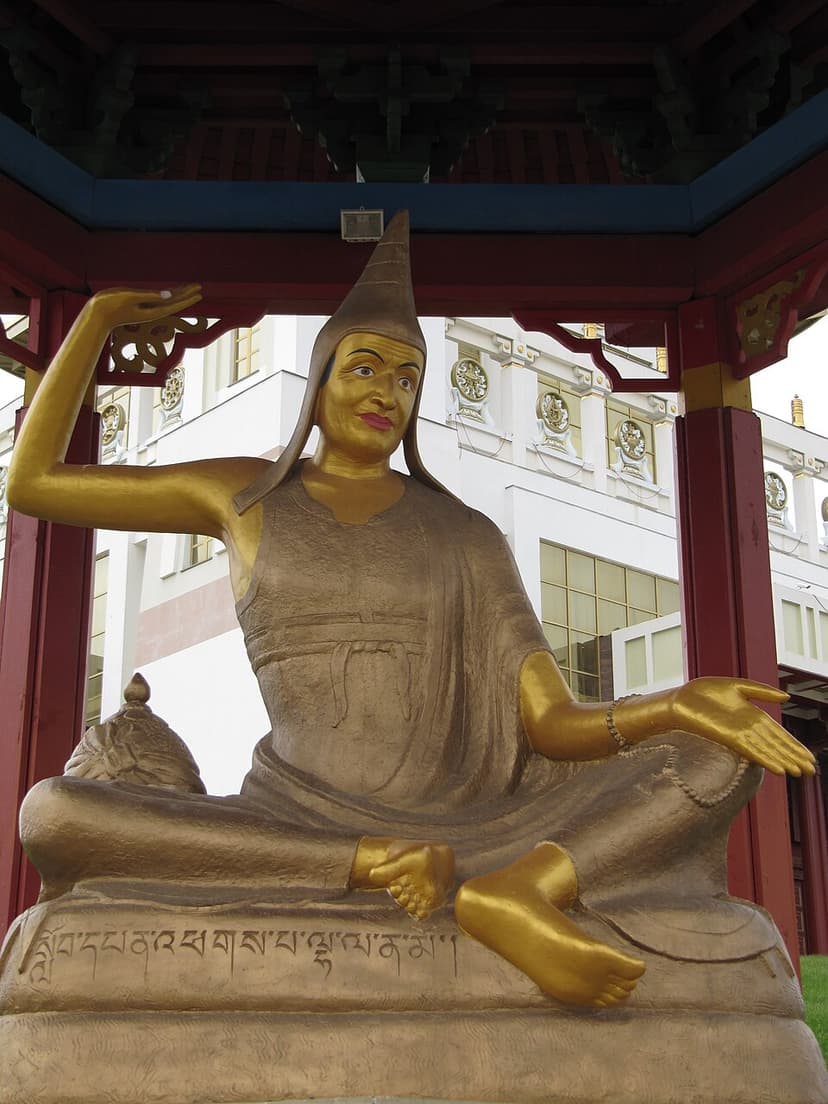
Aryadeva was a 3rd-century CE Mahayana Buddhist monk, a disciple of Nagarjuna, and a prominent Madhyamaka philosopher. He is considered the next most important figure in the Indian Madhyamaka school after Nagarjuna, and his writings significantly influenced Madhyamaka philosophy in both India and East Asia. His most renowned work, the Catuḥśataka (Four Hundred Verses), remains a key text for understanding Madhyamaka concepts.
Dharmarakṣa
Dharmarakṣa was a pivotal early translator of Mahayana sutras into Chinese, born in Dunhuang around 233 CE. His extensive translations, including the Lotus Sutra and the Ten Stages Sutra, profoundly influenced East Asian Buddhism and contributed to the development of Chang'an as a major Buddhist center. He is described as being of Yuezhi origin and was active from 266 CE until his death around 310 CE.
Buddhapālita
Buddhapālita was an influential Indian Mahayana Buddhist commentator active in the 5th-6th centuries CE, primarily known for his commentary on Nagarjuna's Mūlamadhyamakakarikā. His work, the Mūlamadhyama-vṛtti, utilized the reductio ad absurdum method to explain Nagarjuna's philosophy, a methodological approach that later became a defining characteristic of the Prasaṅgika school of Madhyamaka philosophy in Tibetan scholasticism. While little is known about his life, his philosophical method significantly shaped later debates and interpretations within Mahayana Buddhism.