
Dharmarakṣa
Dharmarakṣa was a pivotal early translator of Mahayana sutras into Chinese, born in Dunhuang around 233 CE. His extensive translations, including the Lotus Sutra and the Ten Stages Sutra, profoundly influenced East Asian Buddhism and contributed to the development of Chang'an as a major Buddhist center. He is described as being of Yuezhi origin and was active from 266 CE until his death around 310 CE.
Key Facts
- ›Translated approximately 154 Mahayana sutras into Chinese.
- ›Made the first known Chinese translations of the Lotus Sutra and the ten Stages Sutra.
- ›His translations were widely circulated and studied in northern China.
- ›Born in Dunhuang around 233 CE and died around 310 CE.
- ›Described as being of Yuezhi origin.
- ›Active in translation and lecturing, converting many to Buddhism.
Important Relationships
- Zhu Gaozuo (teacher)
- Nie Chengyuan (assistant)
Lotus Sutra, Ten Stages Sutra, Perfection of Wisdom Sutra In 25,000 Lines, Lalitavistara SūTra, VimalakīRtinirdeśA, TathāGataguhyaka SūTra, BhadrakalpikasūTra, śūRaṅGama SamāDhi SūTra, AkṣAyamatinirdeśA
Dunhuang, Chang'An, Luoyang
Zhu Gaozuo
Chinese
Novice Vows
About Dharmarakṣa
Dharmarakṣa (c. 233–310)
Dharmarakṣa was one of the most significant early translators of Mahayana Buddhist sutras into Chinese, profoundly influencing the development of East Asian Buddhism. Born into a Yuezhi family in Dunhuang around 233 CE, he became a novice monk at the age of eight under the Indian monk Zhu Gaozuo.
Life and Travels
Dharmarakṣa displayed exceptional intelligence from a young age. He accompanied his teacher on extensive journeys throughout the Western Regions, where he acquired proficiency in numerous Central Asian languages and scripts. Returning to China, he dedicated himself to translating Buddhist scriptures with the assistance of both Chinese and foreign scholars and scribes, including the Chinese upāsaka Nie Chengyuan.
Translation Career and Major Works
His translation activities began in Chang'an in 266 CE, and he also worked in Luoyang and Dunhuang. Dharmarakṣa produced approximately 154 translations of sutras. Among his most impactful works were the first known Chinese translations of the Lotus Sutra (Saddharmapundarika Sūtra) in 286 CE and the Ten Stages Sutra (Dasabhūmika-sūtra) in 302 CE, both of which became foundational texts for Chinese Buddhism. Other notable translations include the Perfection of Wisdom Sutra in 25,000 Lines, the Lalitavistara Sūtra, and the Vimalakīrtinirdeśa.
Influence and Legacy
Dharmarakṣa's translations were widely circulated in northern China during the third century and became subjects of study and exegesis in the fourth century. His extensive translation efforts and public lectures are credited with converting many to Buddhism in China and establishing Chang'an as a major center of Buddhist learning and practice. He died at the age of seventy-eight after a period of illness, though the precise location of his death remains a subject of historical discussion.
Source: Wikipedia ↗
Frequently Asked Questions
Who was Dharmarakṣa?
Dharmarakṣa was a significant early translator of Mahayana Buddhist scriptures into Chinese. He is credited with translating around 154 sutras, profoundly impacting the development of Buddhism in East Asia.
What are Dharmarakṣa's most important translated works?
Among his most influential translations are the Lotus Sutra (Saddharmapundarika Sūtra) and the Ten Stages Sutra (Dasabhūmika-sūtra). These texts became foundational for Chinese Buddhism.
Where and when did Dharmarakṣa live and work?
Dharmarakṣa was born in Dunhuang around 233 CE and was active as a translator from 266 CE, working in cities such as Chang'an and Luoyang. He died around 310 CE.
What was Dharmarakṣa's origin?
Dharmarakṣa is described in scriptural catalogues as being of Yuezhi origin. His family lived in Dunhuang, where he was born.
Related Buddhists
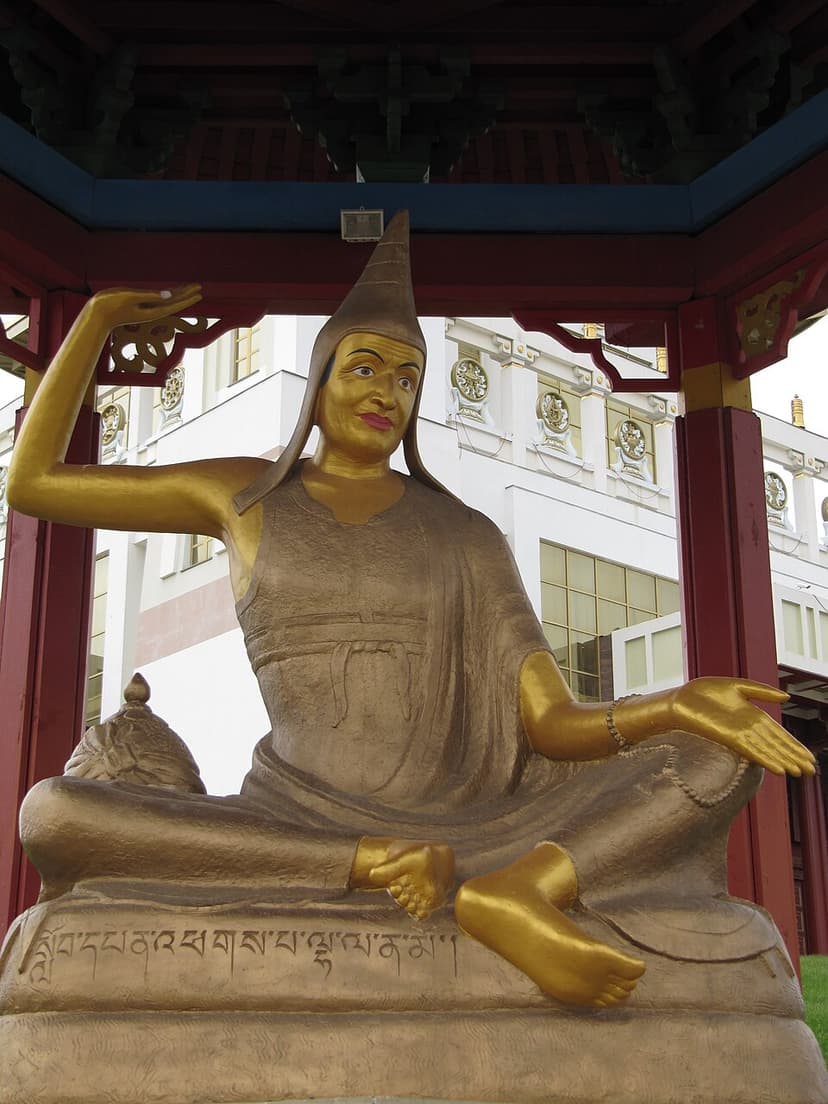
Aryadeva
Aryadeva was a 3rd-century CE Mahayana Buddhist monk, a disciple of Nagarjuna, and a prominent Madhyamaka philosopher. He is considered the next most important figure in the Indian Madhyamaka school after Nagarjuna, and his writings significantly influenced Madhyamaka philosophy in both India and East Asia. His most renowned work, the Catuḥśataka (Four Hundred Verses), remains a key text for understanding Madhyamaka concepts.

Chandragomin
Chandragomin was an influential Indian Buddhist lay scholar and poet known for his philosophical writings and the play Lokānanda. Active during the 5th century, he was a teacher at Nalanda Monastic University and is recognized for his contributions to grammar and his devotional works to the goddess Tara. The Tibetan tradition holds him in high regard, believing he once challenged Chandrakirti.
Dharmakīrtiśrī
Dharmakīrtiśrī was a significant 10th-century Buddhist teacher, also known as Serlingpa or Kulānta, whose name indicated his origin from a region in Southeast Asia such as Lower Burma, the Malay Peninsula, or Sumatra. He is renowned for being the teacher of several influential Mahayana Buddhist scholars and for authoring a key commentary on the Abhisamayālaṃkāra.