
Moheyan
Tibet·Chan Buddhism (East Mountain Teaching)·Male·8th century
Moheyan was a late 8th-century Chan Buddhist monk, notable for representing Chinese Buddhism in the "Council of Lhasa." His teachings, often characterized as "sudden enlightenment," emphasized direct realization through meditation and ceasing conceptual thought. Though traditionally depicted as losing the debate to the "gradual enlightenment" advocate Kamalaśīla, historical interpretations suggest a more complex doctrinal landscape and continued influence of Chan in Tibet.
Key Facts
- ›Moheyan was a proponent of "sudden enlightenment" teachings within Chan Buddhism.
- ›He represented Chinese Chan Buddhism at the renowned "Council of Lhasa" (or Samye Debate) in the late 8th century.
- ›His teachings emphasized "gazing-at-mind" and "no examining" as paths to liberation.
- ›While Tibetan sources claim his defeat and expulsion, some Chinese manuscripts and later scholarship suggest his teachings were not entirely suppressed.
- ›His name, Moheyan, is a transliteration of "Mahayana" in Chinese, literally meaning a Mahayana monk.
- ›Moheyan's teachings are preserved in fragments of Chinese and Tibetan texts found in Dunhuang.
Important Relationships
- Kamalaśīla
- Trisong Detsen
- Yuquan Shenxiu
- Huineng
- Master Moheyan’S Introduction To Instantaneous Meditation
Dunhuang, Samye Monastery
East Mountain Teachings, Baotang School
Chinese, Tibetan
About Moheyan
Heshang Moheyan
Heshang Moheyan was a significant Buddhist monk active in the late 8th century, most famously associated with the "Council of Lhasa" where he represented Chinese Chan Buddhism. His teachings, often characterized by the concept of "sudden enlightenment," emphasized direct realization through meditation and the cessation of conceptual thought, a perspective that contrasted with the "gradual enlightenment" approach favored by Indian Buddhist traditions.
Life and Historical Context
Moheyan's name itself, "Moheyan" (摩訶衍), is a Chinese transliteration of the Sanskrit term "Mahayana," meaning "great vehicle," indicating his broad Buddhist affiliation. He traveled to Dunhuang around 781 or 787 CE, a region then under Tibetan imperial control, seeking to spread the teachings of what was known as the "East Mountain Teaching" or "Northern School" of Chan Buddhism. While some scholars debate his precise sectarian affiliations, noting potential attempts to harmonize "sudden" and "gradual" aspects, he is generally seen as a proponent of the "sudden" path.
Later, Moheyan was invited by King Trisong Detsen to Samye Monastery, the nascent center of Tibetan Buddhism. There, he attracted numerous followers. However, by 793 CE, King Trisong Detsen resolved to settle doctrinal disputes through a formal debate. This led to the "Council of Lhasa," though it may have actually occurred at Samye. Moheyan debated against the Indian monk Kamalaśīla, who advocated for "gradual enlightenment."
Teachings and the Council of Lhasa
Moheyan's "sudden enlightenment" teachings, often summarized as "gazing-at-mind" (k'an-hsin) and "no examining" (pu-kuan), posited that enlightenment could be accessed immediately by turning awareness inward and ceasing mentation. He argued that practices like the six perfections were primarily for those of lesser spiritual capacity, while those with "sharp" minds could achieve liberation directly. His doctrinal stance was that the root of suffering (samsara) lies in the creation of "false distinctions" (vikalpa-citta), and that by ceasing to think and reflect, one could achieve immediate access to liberation.
According to most Tibetan historical accounts, Kamalaśīla won the "Council of Lhasa." This is said to have resulted in Moheyan's expulsion from Tibet and the royal decree to destroy sudden-enlightenment texts. This event is considered pivotal in solidifying the dominance of Indian Buddhist traditions in Tibet. However, the existence of Chan texts produced in Tibet until the 10th century, and a Chinese manuscript indicating imperial approval of Moheyan's teachings, suggest a more nuanced historical outcome and continued influence of Chan doctrines.
Legacy
While the traditional narrative depicts Moheyan as defeated, his teachings and the debate he participated in had a lasting impact on the development of Tibetan Buddhism. Fragments of his writings, found in Dunhuang, offer insights into his unique approach to Chan practice. He is sometimes iconographically depicted as a jovial figure holding prayer beads and a conch shell, often presented as a benefactor of children.
Source: Wikipedia ↗
Frequently Asked Questions
What is Moheyan known for?
Moheyan is primarily known for representing Chan Buddhism in the "Council of Lhasa," a significant debate concerning the nature of enlightenment. He advocated for "sudden enlightenment" as opposed to the "gradual enlightenment" championed by Indian Buddhist traditions.
What were Moheyan's core teachings?
Moheyan's teachings centered on the idea of "sudden enlightenment," emphasizing practices like "gazing-at-mind" and "no examining." He taught that liberation could be achieved directly through meditation and ceasing conceptual thought, rather than through gradual accumulation of merit or purification.
What was the "Council of Lhasa"?
The "Council of Lhasa" (or Samye Debate) was a significant debate held in the Tibetan Empire around 793 CE between Moheyan, representing Chinese Chan Buddhism, and Kamalaśīla, representing Indian Buddhist traditions. The debate concerned whether enlightenment was achieved through "sudden" or "gradual" paths.
Did Moheyan win the Council of Lhasa?
Most Tibetan sources state that Kamalaśīla won the debate, leading to Moheyan's expulsion and the suppression of sudden-enlightenment texts. However, some Chinese sources claim Moheyan was victorious, and the continued production of Chan texts in Tibet until the 10th century casts doubt on the complete triumph of the gradualist position.
Where did Moheyan teach?
Moheyan traveled to Dunhuang, which was then part of the Tibetan Empire, around 781 or 787 CE. He later moved to Samye Monastery, the center of emerging Tibetan Buddhism, where he attracted a considerable following before the Council of Lhasa.
What is the meaning of Moheyan's name?
Moheyan (摩訶衍) is a Chinese transliteration of the Sanskrit term "Mahayana," meaning "great vehicle." Thus, his name literally signifies "a Mahayana monk," reflecting his affiliation with this major branch of Buddhism.
Related Buddhists
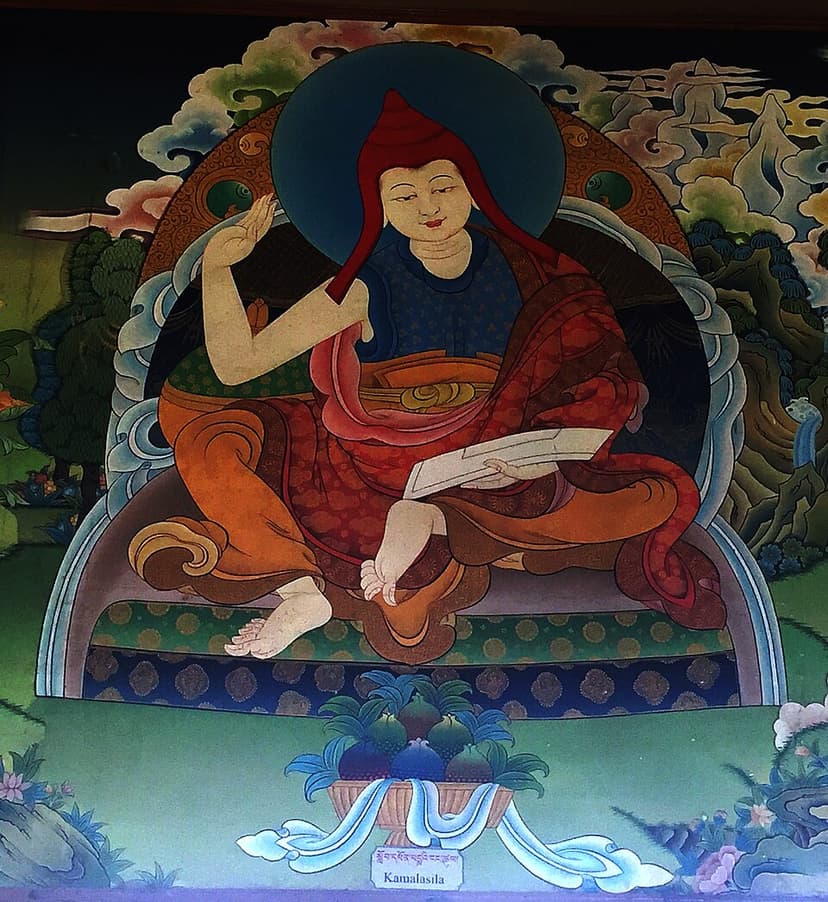
Kamalaśīla
Kamalaśīla was an influential Indian Buddhist monk and philosopher from Nalanda Mahavihara, active around the 8th century CE. He is renowned for his role in the development of Indian Mahayana thought and his significant contributions to Buddhist philosophy. His participation and supposed victory in the Debate of Samye played a crucial role in shaping the direction of Tibetan Buddhism.
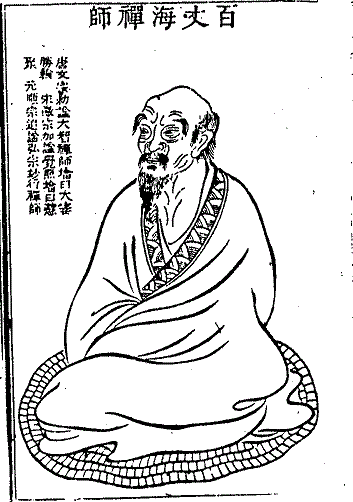
Baizhang Huaihai
Baizhang Huaihai (720–814) was a prominent Chan/Zen master during China's Tang dynasty, known for his sophisticated teachings on the ineffability of reality and the importance of intuitive knowledge. He is also credited with establishing a new pattern of Chan monastic life, emphasizing self-sufficiency through periods of work and farming, and developing early rules for monastic discipline that influenced later Zen monasteries.
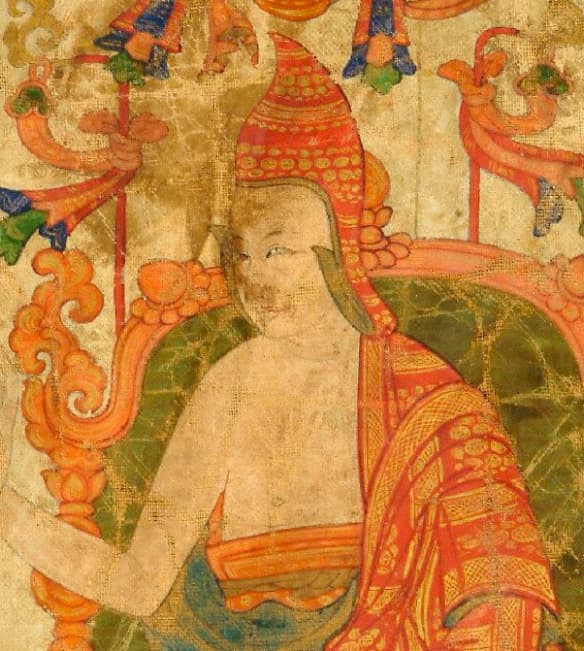
Shantideva
Shantideva was an 8th-century Indian Buddhist philosopher, monk, and poet renowned for his influential works on the bodhisattva path. He is particularly celebrated for authoring the Bodhisattvacaryāvatāra, a foundational text in Mahayana Buddhism that guides practitioners toward enlightenment. His philosophical contributions emphasized altruism, personal identity, and the cultivation of bodhicitta, making him a significant figure in Buddhist thought.