
Mandarava
Mandarava was a principal consort of the 8th-century Indian Vajrayana teacher Padmasambhava, and is considered a female guru-deity in Tantric Buddhism. Born a princess in Zahor, she renounced her royal life to practice the Dharma and became a highly educated yogini and spiritual teacher. She is revered for her attainment of full enlightenment alongside Padmasambhava in the Maratika Cave.
Key Facts
- ›Considered a female guru-deity and one of Padmasambhava's two principal consorts.
- ›Born a princess in Zahor, northern India, she renounced her royal life to pursue spiritual practice.
- ›Known for her high level of education at a young age, a rarity for women of her time.
- ›Attained full enlightenment in the Maratika Cave in Nepal with Padmasambhava.
- ›Her iconography often depicts her with white skin tinged with red, adorned with regal ornamentation and holding ritual implements like a dadar and melong.
- ›Associated with long-life practices and the consecration of spiritual medicines.
Important Relationships
- Padmasambhava
- Yeshe Tsogyal
Maratika Cave, Nepal, Mandi, Himachal Pradesh, India, Zahor, India
Ordination Vows, Bodhisattva Vows
Female Guru-Deity, Iconic Figure
About Mandarava
Mandarava, also known as Pāṇḍaravāsinī, was a significant figure in 8th-century Indian Vajrayana Buddhism, renowned as a female guru-deity and one of the two principal consorts of the renowned teacher Padmasambhava.
Early Life and Renunciation
Born a princess in Zahor, northern India, Mandarava demonstrated an early inclination towards spiritual practice, renouncing her royal birthright. She was noted for her exceptional education at a young age, a rare achievement for women of her era. Despite societal pressures and numerous royal suitors, Mandarava remained steadfast in her pursuit of the Dharma. Her commitment led her to inspire and guide at least 800 women, including her entire retinue, to take up spiritual practice and vows before she even met Padmasambhava.
Spiritual Practice and Enlightenment
Mandarava's spiritual journey led her to meet Padmasambhava, with whom she developed a profound connection. Together, they undertook intensive spiritual practice in the Maratika Cave in Nepal, a location historically associated with longevity practices. It was within this sacred cave that Mandarava, alongside Padmasambhava, is said to have attained full enlightenment, achieving the unified vajra body and realizing advanced spiritual mastery. She is recognized as a fully realized spiritual adept and teacher.
Legacy and Iconography
Mandarava's teachings and spiritual practices continue to be disseminated through various Buddhist lineages, often focusing on long-life practices and the consecration of sacred spiritual medicines. Her iconography typically portrays her with white skin tinged with red, adorned in regal bodhisattva ornamentation. She is often depicted holding symbolic implements such as a dadar (arrow) and a melong (mirror), representing profound aspects of Buddhist philosophy. The city of Mandi in India is believed to be named in her honor, serving as a testament to her enduring influence.
Source: Wikipedia ↗
Frequently Asked Questions
Who was Mandarava?
Mandarava was a prominent female figure in 8th-century Indian Vajrayana Buddhism. She is recognized as a guru-deity and was one of the two principal consorts of the influential teacher Padmasambhava.
Where was Mandarava born and what was her early life like?
According to tradition, Mandarava was born a princess in Zahor, northern India. She renounced her royal status at a young age to dedicate herself to practicing the Dharma, showing a strong spiritual inclination from early on.
What is Mandarava known for in terms of spiritual practice?
Mandarava is known for her deep devotion and spiritual mastery. She is said to have attained full enlightenment alongside Padmasambhava in the Maratika Cave in Nepal, and is considered a fully realized yogini and spiritual teacher.
What is Mandarava's relationship with Padmasambhava?
Mandarava was one of the two principal consorts of Padmasambhava, a key founder of Tibetan Buddhism. They are depicted as spiritual partners who practiced together, notably achieving enlightenment in the Maratika Cave.
What are some of Mandarava's notable iconography and symbols?
In her enlightened form, Mandarava is often depicted with white skin tinged with red, wearing bodhisattva ornamentation. She frequently holds a dadar (arrow) and a melong (mirror), symbolizing Dzogchen and the nature of mind, and sometimes a bumpa (long-life vase).
Are there any places associated with Mandarava?
The city of Mandi in Himachal Pradesh, India, is believed to be named after Mandarava, and it remains a site with numerous shrines and pilgrimage locations dedicated to her. The Maratika Cave in Nepal is also a significant location where she attained enlightenment with Padmasambhava.
Related Buddhists
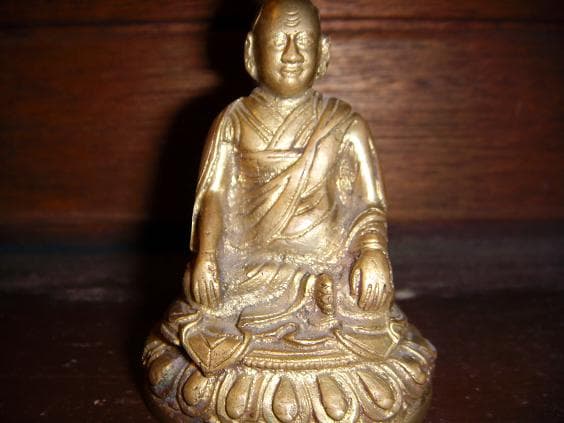
Longchenpa
Longchenpa (1308–1364) was a preeminent Tibetan scholar-yogi of the Nyingma school, renowned for his systematization of Dzogchen, the Great Perfection, within Tibetan Buddhism. His extensive writings, including the influential Seven Treasuries, are considered definitive expressions of Dzogchen thought, integrating it with broader Buddhist scholasticism. He unified various Dzogchen traditions and is celebrated for his poetic literary style and his role as a Khenpo of Samye Monastery.
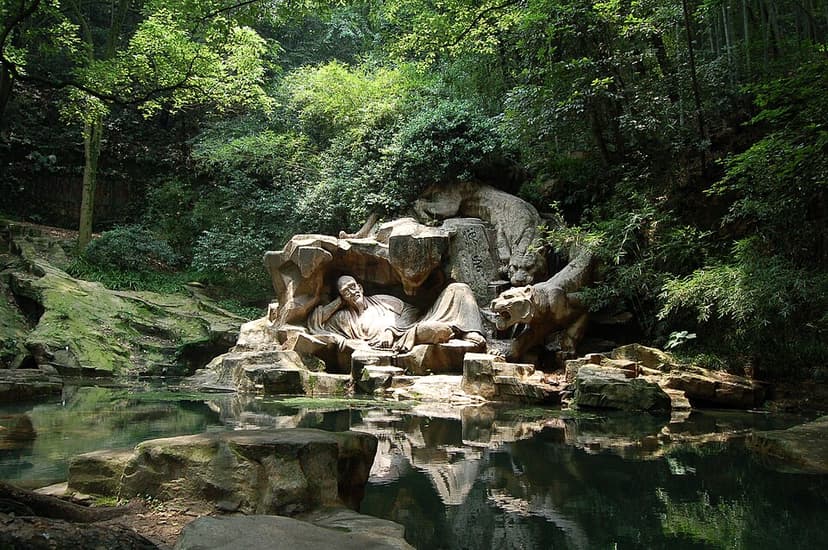
Ji Gong
Ji Gong, born Li Xiuyuan, was a Chan Buddhist monk of the Southern Song dynasty, renowned for his purported supernatural abilities used to aid the poor and combat injustice. Despite his compassionate deeds, he defied monastic rules by consuming alcohol and meat, leading to his expulsion. By his death, he had become a legendary figure in Chinese culture and a deity in folk religion, revered as the incarnation of the Dragon Subduing Arhat.

Padmasambhava
Padmasambhava, also known as Guru Rinpoche, was a semi-legendary Indian tantric Buddhist master who is credited with fully revealing Vajrayana Buddhism in Tibet around the 8th-9th centuries. Revered as an emanation of Shakyamuni Buddha, he played a crucial role in establishing Buddhism in Tibet, including the design of Samye Monastery and the translation of Buddhist scriptures. His life and teachings are central to the Nyingma school and he is widely venerated across the Himalayan regions and beyond.