
Longchenpa
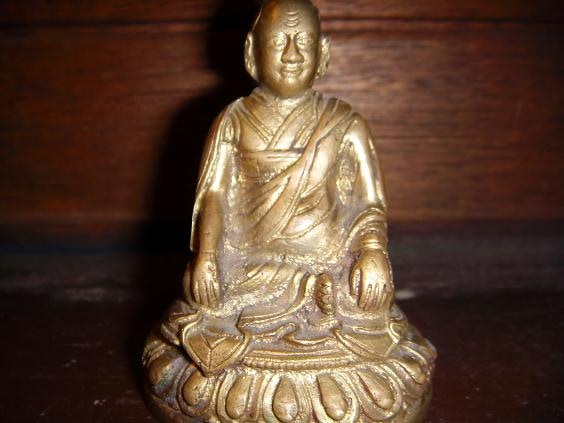
Longchenpa (1308–1364) was a preeminent Tibetan scholar-yogi of the Nyingma school, renowned for his systematization of Dzogchen, the Great Perfection, within Tibetan Buddhism. His extensive writings, including the influential Seven Treasuries, are considered definitive expressions of Dzogchen thought, integrating it with broader Buddhist scholasticism. He unified various Dzogchen traditions and is celebrated for his poetic literary style and his role as a Khenpo of Samye Monastery.
Key Facts
- ›Authored over 270 texts, including the influential seven Treasuries and the Nyingtig Yabshi compilation.
- ›Systematized Dzogchen thought, making it the dominant tradition within the Nyingma school.
- ›Served as the Khenpo of Samye Monastery, Tibet's first Buddhist monastery.
- ›Considered a Tertön, or treasure revealer, with some of his works identified as terma.
- ›His writings unified disparate Dzogchen traditions into a coherent philosophical and practical system.
- ›Known for his unique and widely imitated poetic literary voice.
Important Relationships
- Princess Pema Sal (incarnation lineage)
- Pema Ledrel Sal (incarnation lineage)
- Pema Lingpa (regarded as reincarnation)
- Third Karmapa Rangjung Dorje (teacher)
- Lopon Tsensung (father)
- Abbot Sonam Rinchen (teacher)
- Lopon Kunga Ozer (teacher)
Seven Treasuries, Nyingtig Yabshi, the Trilogy of Natural Freedom, the Trilogy of Natural Ease
Samye Monastery, Bumthang, Bhutan, Dra Valley, U-Tsang
Padmasambhava, Vimalamitra, Rigdzin Kumaradza
Tibetan
Monastic Vows, Bodhisattva Vows
Great Master, Iconic Figure
About Longchenpa
Longchenpa Rabjam Drimé Özer (1308–1364), often simply referred to as Longchenpa, was a pivotal Tibetan scholar-yogi belonging to the Nyingma school of Tibetan Buddhism. He is widely recognized as the most important writer on Dzogchen, the Great Perfection, a profound system of teachings within Tibetan Buddhism. Longchenpa's scholarly work was instrumental in the systematization of Dzogchen thought, integrating it within the broader framework of Tibetan Vajrayana philosophy and establishing the dominance of the Longchen Nyingthig lineage.
Life and Scholarly Contributions
Born in the Dra Valley of U-Tsang, Longchenpa's early life was marked by the early loss of his parents, leading him to enter Samye Monastery. He pursued rigorous studies at Sangpu Neutok, a prominent center of learning, mastering various Buddhist philosophical traditions. His intellectual journey included receiving teachings from diverse lineages, including Kadam, Sakya, Kagyu, and Nyingma, and notably from the Third Karmapa Rangjung Dorje.
Longchenpa spent significant periods in solitary retreat, which were crucial for his spiritual realization and the development of his unique insights. He later encountered his principal teacher, Rigdzin Kumaradza, from whom he received extensive Dzogchen transmissions, particularly concerning the Vima Nyingthig and Khandro Nyingthig cycles. His mature period was characterized by extensive writing and teaching, often from his hermitage at Gangri Thokar.
Major Works and Legacy
Longchenpa authored over 270 texts, with his most influential works being the "Seven Treasuries" (mdzod bdun) and his compilation of the "Nyingtig Yabshi" (The Inner Essence in Four Parts). These works are celebrated for their philosophical depth, precise terminology, and eloquent literary style, which became a model for later Nyingma masters. His writings are credited with unifying the diverse Dzogchen traditions of his era into a comprehensive system.
He also served as the Khenpo of Samye Monastery, Tibet's first monastery. According to tradition, Longchenpa is considered an incarnation of Princess Pema Sal and Pema Ledrel Sal, and the famous Bhutanese tertön Pema Lingpa is regarded as his immediate reincarnation. Longchenpa's profound scholarship and spiritual practice left an indelible mark on the Nyingma school and Tibetan Buddhism as a whole.
Source: Wikipedia ↗
Frequently Asked Questions
Who was Longchenpa?
Longchenpa, also known as Longchen Rabjam Drimé Özer, was a significant Tibetan scholar-yogi of the Nyingma school. He lived from 1308 to 1364 and is most famous for his profound contributions to the systematization and scholarly understanding of Dzogchen, the Great Perfection.
What is Longchenpa most known for?
He is primarily known for his extensive writings that definitively expressed Dzogchen thought, integrating it with mainstream Buddhist scholasticism. His influential works, particularly the Seven Treasuries and the Nyingtig Yabshi, are considered foundational texts for the Nyingma tradition.
What role did Longchenpa play in Dzogchen traditions?
Longchenpa played a crucial role in unifying the various Dzogchen traditions of his time into a single, coherent system. His scholastic approach brought clarity and structure to Dzogchen teachings, solidifying its position within Tibetan Buddhism.
What are some of Longchenpa's most important works?
His most celebrated works include the Seven Treasuries, which explore the Nyingma worldview and Dzogchen, and his compilation of the Nyingtig Yabshi, a collection of Dzogchen texts and commentaries. He also authored numerous other treatises and commentaries.
What was Longchenpa's connection to Samye Monastery?
Longchenpa held the position of Khenpo, or abbot, at Samye Monastery. This monastery holds historical significance as Tibet's first Buddhist monastery, established in the Himalayas.
Related Buddhists
Mandarava
Mandarava was a principal consort of the 8th-century Indian Vajrayana teacher Padmasambhava, and is considered a female guru-deity in Tantric Buddhism. Born a princess in Zahor, she renounced her royal life to practice the Dharma and became a highly educated yogini and spiritual teacher. She is revered for her attainment of full enlightenment alongside Padmasambhava in the Maratika Cave.

Je Tsongkhapa
Je Tsongkhapa was a highly influential Tibetan Buddhist monk, philosopher, and tantric yogi who founded the Gelug school of Tibetan Buddhism. His philosophical system synthesized various Indian Buddhist traditions, emphasizing a rigorous understanding of emptiness and the importance of reasoned inquiry in the path to liberation. He is revered as one of the most important figures in Tibetan Buddhism.
Milarepa
Milarepa was a renowned Tibetan siddha, yogi, and spiritual poet, celebrated for his profound teachings within various schools of Tibetan Buddhism. Initially known for sorcery and murder in his youth, he later dedicated himself to spiritual practice under his teacher Marpa the Translator, ultimately achieving realization and becoming an exemplar of religious dedication and mastery. His life story and collection of spiritual songs are foundational to the Kagyu lineage and Tibetan culture.