
Jack Kerouac
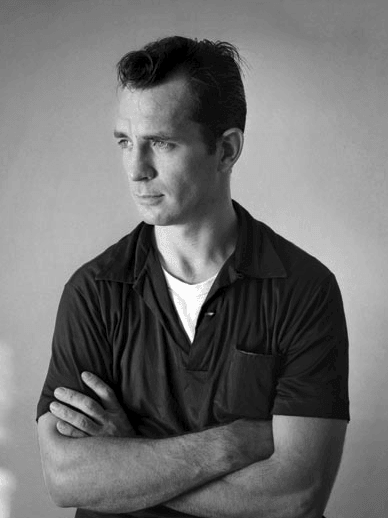
Jack Kerouac was an American novelist and poet, recognized as a pioneer of the Beat Generation alongside William S. Burroughs and Allen Ginsberg. He is best known for his novel "On the Road," which achieved widespread fame and cemented his status as a Beat icon. Kerouac's work explored themes of religion, mysticism, Buddhism, and life in urban America, influencing many cultural figures of the 1960s.
Key Facts
- ›Pioneered the Beat Generation with William S. Burroughs and Allen Ginsberg.
- ›Achieved widespread fame with his 1957 novel "on the Road."
- ›Known for his distinctive stream of consciousness spontaneous prose style.
- ›His work often explored themes of religion, mysticism, and Buddhism.
- ›Significantly influenced cultural icons of the 1960s, including Bob Dylan and the Beatles.
Important Relationships
- William S. Burroughs
- Allen Ginsberg
- Neal Cassady
- Lucien Carr
- Edie Parker
- Joan Haverty
- Gabrielle-Ange Lévesque
- Léo-Alcide Kéroack
- Gerard Kerouac
- Caroline Kerouac
- Herbert Huncke
- John Clellon Holmes
- Gregory Corso
- Gary Snyder
- Robert Giroux
- Mark Van Doren
- Lou Little
- Abe Green
- Alene Lee
- Paul Blake
the Town and the City, On the Road, the Dharma Bums, the Subterraneans, Doctor Sax, Tristessa, Desolation Angels, the Sea Is My Brother, Visions of Gerard, and the Hippos Were Boiled In Their Tanks, Some of the Dharma, Wake Up: A Life of the Buddha, La Vie Est D'Hommage
Lowell, Massachusetts, New York City, San Francisco, Ozone Park, Queens, Orlando, Florida, Desolation Peak, Rocky Mount, North Carolina
Thomas Wolfe, Emerson, Thoreau, Dwight Goddard, Heinrich Zimmer
English, French
Novelist, Poet
About Jack Kerouac
Jean-Louis Lebris de Kérouac (1922–1969), widely known as Jack Kerouac, was an American novelist and poet who became a seminal figure of the Beat Generation, alongside contemporaries like William S. Burroughs and Allen Ginsberg. Raised in a French-speaking home in Lowell, Massachusetts, Kerouac learned English at age six and later served as a United States Merchant Mariner during World War II.
Kerouac's literary career began with "The Town and the City" (1950), but it was his second novel, "On the Road" (1957), that brought him widespread fame and notoriety. This work, celebrated for its spontaneous prose style and exploration of themes like Buddhism, mysticism, and the American landscape, made him a "Beat icon." He went on to publish twelve more novels and numerous poetry volumes, all of which explored his unique perspective on life, spirituality, and the post-war American experience.
Kerouac's literary prestige has grown significantly since his death in 1969, with many previously unpublished works coming to light. His distinctive writing style, characterized by stream of consciousness and spontaneous prose, and his thematic engagement with Buddhism and other spiritual traditions, left a lasting legacy. He is recognized for profoundly influencing many cultural figures of the 1960s, including musicians and writers, and is considered a progenitor of the hippie movement, despite his later disinterest in the movement itself.
Source: Wikipedia ↗
Frequently Asked Questions
Who was Jack Kerouac?
Jack Kerouac was an American novelist and poet, best known as a pioneer of the Beat Generation. He wrote numerous novels and poetry volumes, with "On the Road" being his most famous work.
What is Jack Kerouac famous for?
Kerouac is famous for his spontaneous prose style and his novels that captured the spirit of the Beat Generation. His book "On the Road" became an iconic representation of this cultural movement.
What themes did Jack Kerouac explore in his writing?
Kerouac's work frequently delved into themes of religion and mysticism, childhood, poetry, literature, urban life in New York City and the Bay Area, and Buddhism. His Catholic upbringing and later studies in Buddhism were significant influences.
How did Jack Kerouac influence the 1960s?
Kerouac and the Beat Generation profoundly influenced the cultural icons of the 1960s. His work and rebellious spirit inspired artists such as Bob Dylan, the Beatles, Jerry Garcia, and the Doors.
Was Jack Kerouac religious?
Jack Kerouac had a complex spiritual life. Raised as a devout Catholic, he also developed a deep interest in Buddhism, which significantly informed his writing and worldview. He once stated, "I'm not a beatnik. I'm a Catholic."
Related Buddhists

Faye Wong
Faye Wong is a highly influential Chinese singer-songwriter and actress, known for her distinctive musical style that blends alternative music with Chinese pop. She achieved significant commercial success, particularly in the Cantopop and Mandopop markets, and gained international recognition for her roles in films by Wong Kar-wai. Wong is celebrated for her artistic innovation, unique vocal delivery, and her reputation as a cultural icon in the Chinese-speaking world.
Houn Jiyu-Kennett
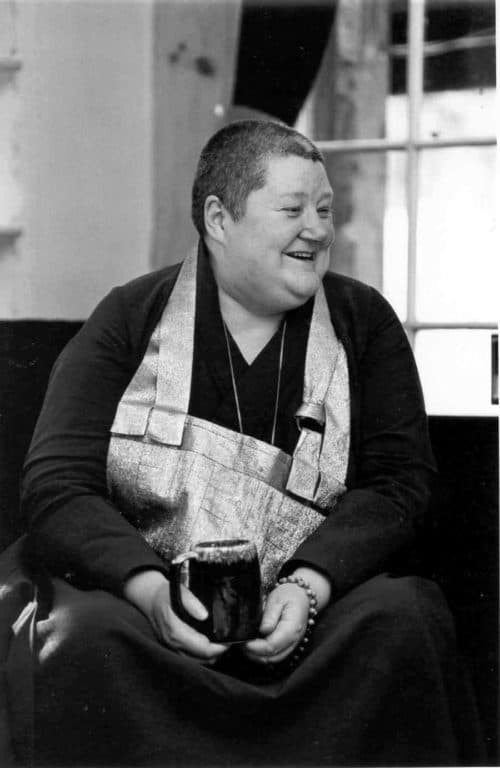
Houn Jiyu-Kennett was a British Buddhist abbess, born Peggy Teresa Nancy Kennett, recognized as the first female rōshi sanctioned by the Sōtō School of Japan to teach in Western countries. She established the Order of Buddhist Contemplatives, with chapters in the US, Canada, and Europe, and is known for adapting Zen to Western needs and for her own visionary experiences, which she documented in "How to Grow a Lotus Blossom."

Allen Ginsberg
Allen Ginsberg was a prominent American poet and writer, best known as a central figure of the Beat Generation. He was a vocal critic of militarism, materialism, and sexual repression, and he explored themes of Eastern religions, drugs, and counterculture in his work. His most famous poem, "Howl," led to an influential obscenity trial that defended freedom of speech.