
Hsing Yun
Taiwan·Humanistic Buddhism, Fo Guang Shan·Male·20th century
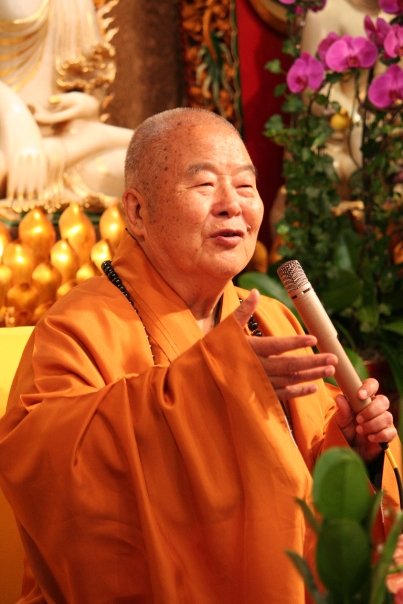
Hsing Yun was a prominent Chinese Buddhist monk, teacher, and philanthropist who founded the Fo Guang Shan monastic order and the Buddha's Light International Association. He was a leading proponent of Humanistic Buddhism and one of the most influential figures in modern Taiwanese Buddhism, known for his efforts to modernize Buddhist teachings and engage with contemporary society through various media and social welfare initiatives.
Key Facts
- ›Founded the Fo Guang Shan Buddhist monastic order in 1967.
- ›Established the Buddha's Light International Association (BLIA) as a layperson-based organization.
- ›Was a major proponent of Humanistic Buddhism, emphasizing Buddhism's relevance in the modern world.
- ›Utilized modern media such as choirs, radio, and newspapers to propagate Buddhist teachings.
- ›Fo Guang Shan has grown into a global network with over 300 branches worldwide.
- ›Was popularly referred to as one of the "four Heavenly Kings" of Taiwanese Buddhism.
Important Relationships
- Fo Guang Shan
- Buddha's Light International Association
- Zhikai
- Ruoshun
Kaohsiung, Taiwan, Jiangsu Province
Taixu
Novice Precepts, Upasampadā Vinaya Precepts
About Hsing Yun
Hsing Yun (1927–2023) was a highly influential Chinese Buddhist monk, teacher, and philanthropist who became a pivotal figure in the development of modern Taiwanese Buddhism. Born Lee Kuo-shen in Jiangsu Province, China, he entered monastic life at the age of 12. Inspired by Buddhist modernism and the reformist ideas of Taixu, Hsing Yun adopted the name "Hsing Yun," meaning "nebula." He fled mainland China for Taiwan in 1949, where he dedicated himself to re-establishing and expanding Buddhist practice.
Life and Contributions
Hsing Yun is most renowned for founding the Fo Guang Shan Buddhist monastic order in 1967, which began as a large monastery in Kaohsiung, Taiwan, and has since grown into a global network with hundreds of branches. He also established the Buddha's Light International Association (BLIA), a layperson-based organization promoting Humanistic Buddhism. Hsing Yun championed the propagation of Buddhist teachings through modern media, including choirs, lectures, and publications, making Buddhism more accessible to contemporary society. His organization has been active in social welfare, establishing schools, orphanages, and programs for the elderly and those recovering from addiction.
Humanistic Buddhism and Modern Engagement
As a leading proponent of Humanistic Buddhism, Hsing Yun emphasized the practical application of Buddhist principles in daily life and societal engagement. He believed that Buddhism should be relevant to the modern world and actively worked to bridge traditional doctrines with contemporary needs. His organization, Fo Guang Shan, has expanded its reach internationally, with branches in numerous countries across continents. In his later years, Hsing Yun also engaged in political discourse, advocating for a One-China policy, which drew both support and criticism.
Later Life and Legacy
Hsing Yun faced various health challenges in his later years, including a stroke and diabetes. He passed away on February 5, 2023, at the Fo Guang Shan monastery. His legacy is marked by the extensive global network of Fo Guang Shan, its significant contributions to social welfare, and its role in shaping Humanistic Buddhism as a vital force in contemporary Buddhist thought and practice.
Source: Wikipedia ↗
Frequently Asked Questions
Who was Hsing Yun?
Hsing Yun was a Chinese Buddhist monk, teacher, and philanthropist. He is best known as the founder of the Fo Guang Shan Buddhist monastic order and the Buddha's Light International Association.
What is Humanistic Buddhism?
Humanistic Buddhism, as promoted by Hsing Yun, is a philosophy that emphasizes Buddhism's relevance in the contemporary world and its application to daily life. It focuses on the compassionate and practical aspects of Buddhist teachings.
When and where was Hsing Yun born?
Hsing Yun was born Lee Kuo-shen on August 19, 1927, in Jiangdu village, Jiangsu Province, in the Republic of China (modern-day Yangzhou).
What is Fo Guang Shan?
Fo Guang Shan is a major Buddhist monastic order founded by Hsing Yun. It is known for its Humanistic Buddhist approach and has established numerous schools, colleges, and social welfare programs.
What was Hsing Yun's role in Taiwanese politics?
Hsing Yun was noted for his political activity in Taiwan, particularly his support for the One-China policy and legislation backed by the Kuomintang. His views sometimes drew criticism from those advocating for Taiwan independence.
When did Hsing Yun die?
Hsing Yun died on February 5, 2023, at the age of 95 (or 97 by East Asian reckoning) at his residence in Fo Guang Shan monastery.
Related Buddhists

Ajahn Chah
Ajahn Chah was a highly respected Thai Buddhist monk and a pivotal figure in the modern Thai Forest Tradition. He is renowned for his profound teachings on the Dhamma and his instrumental role in establishing Theravada Buddhism in the West through the monasteries he founded. His legacy includes a vast collection of recorded dhamma talks and a global network of students and monastic communities.
Daw Mya Thwin
Daw Mya Thwin, also known as Mother Sayamagyi, was a prominent Theravada Buddhist meditation teacher. She was a senior disciple of Sayagyi U Ba Khin and played a crucial role in establishing Vipassana meditation centers worldwide, fulfilling her teacher's vision of spreading Buddhist meditation in the West. Her extensive teaching career spanned over three decades and multiple continents, making her a significant figure in the global dissemination of Vipassana.
Kenneth Pai
Kenneth Hsien-yung Pai is a Taiwanese writer known for his pioneering role in Chinese modernism. Born in 1937, his work often explores themes of melancholy, displacement, and the Chinese experience in postwar America and Taiwan. Pai's notable works, such as "Taipei People" and "Crystal Boys," have significantly influenced contemporary Chinese literature and offered groundbreaking perspectives.