
Guang Qin
China·Cheng Tian Chan Monastery·Male·20th century
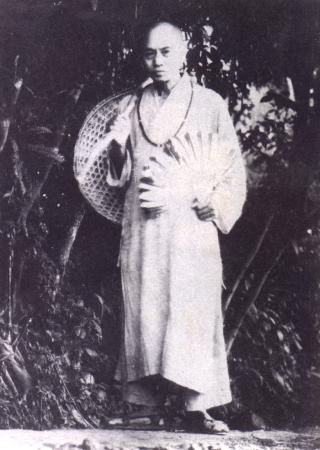
Guang Qin was a renowned Buddhist monk, teacher, and cultivator, born in China in 1892. Known for his ascetic practices, including never lying down to sleep after a youthful oversight, he became a significant figure in the Cheng Tian Chan Monastery lineage. He passed away in 1986, with his funeral marked by auspicious signs and the distribution of his relics.
Key Facts
- ›Born Huang Wenlai in 1892 in Hui'an County, Fujian, China.
- ›Ordained at Cheng Tian Chan Monastery in 1927.
- ›Practiced asceticism, including sitting up to sleep for the rest of his life after oversleeping once.
- ›Announced his impending death in 1985 and passed away in 1986 at the age of 93.
- ›His funeral was reportedly accompanied by auspicious signs, such as lights and clouds forming a lotus flower.
- ›One of his relics is part of the Maitreya Project Heart Relic Tour.
Important Relationships
- Master Rui Fang
Cheng Tian Chan Monastery, Miao Tong Temple
Ordination Vows
Renowned
About Guang Qin
Guang Qin (1892–1986)
Guang Qin, born Huang Wenlai, was a prominent Buddhist monk, teacher, and cultivator celebrated for his ascetic practices and spiritual dedication. Born in Hui'an County, Fujian, China, his early life was marked by poverty and the loss of his parents, experiences that profoundly influenced his spiritual path.
Life and Practice
After his parents' death in 1902, Guang Qin took refuge at the Cheng Tian Chan Monastery and was ordained there in 1927. He became known for his rigorous asceticism. A pivotal moment in his practice occurred when he accidentally overslept and missed ringing the morning bell. Following this event, he resolved to never lie down to sleep again for the remainder of his life, choosing instead to meditate while seated.
Passing and Legacy
In 1985, Guang Qin gathered his disciples to announce his impending death. He instructed them on the distribution of his relics among various temples and monasteries. He passed away peacefully on February 13, 1986, at Miao Tong Temple, surrounded by his disciples who were chanting Amitabha Buddha's name. His funeral was reportedly accompanied by auspicious signs, fueling devotion among his followers. A relic of Guang Qin is also part of the Maitreya Project Heart Relic Tour, continuing to be a point of veneration.
Source: Wikipedia ↗
Frequently Asked Questions
When and where was Guang Qin born?
Guang Qin was born as Huang Wenlai in 1892 in Hui'an County, Fujian, China. His birth family experienced extreme poverty, leading to him being sold to the Li family.
What led Guang Qin to become a monk?
After his parents died when he was 11, Guang Qin realized the impermanence of life. He then took refuge with Master Rui Fang of the Cheng Tian Chan Monastery.
What was unique about Guang Qin's practice?
Guang Qin was known as an ascetic practitioner. Notably, after an incident where he overslept and missed ringing the morning bell, he vowed to never lie down to sleep again, meditating while seated even during sleep.
When did Guang Qin pass away and what were the circumstances?
Guang Qin passed away on February 13, 1986, at the age of 93. He had informed his disciples he would pass soon and instructed them to recite Amitabha Buddha's name. He died peacefully while chanting.
Were there any notable events at Guang Qin's funeral?
Yes, photos from Guang Qin's funeral allegedly displayed auspicious signs. These included lights pointing at his casket and a faint silhouette resembling Amitabha shining down, as well as clouds forming a lotus flower in the sky.
Related Buddhists
Fayun
Fayun, also known as Fa Yun, (1933–2003) was a respected Chinese Buddhist monk and the thirteenth successor in the Yunmen lineage of the Chan (Zen) school. He is remembered for his compassion and for bringing Chan and Pure Land Buddhism to the United States, where he founded the Grace Gratitude Buddhist Temple in New York City. His passing was marked by the discovery of numerous relics among his cremains, a testament to his advanced spiritual qualities.
Hong Yi
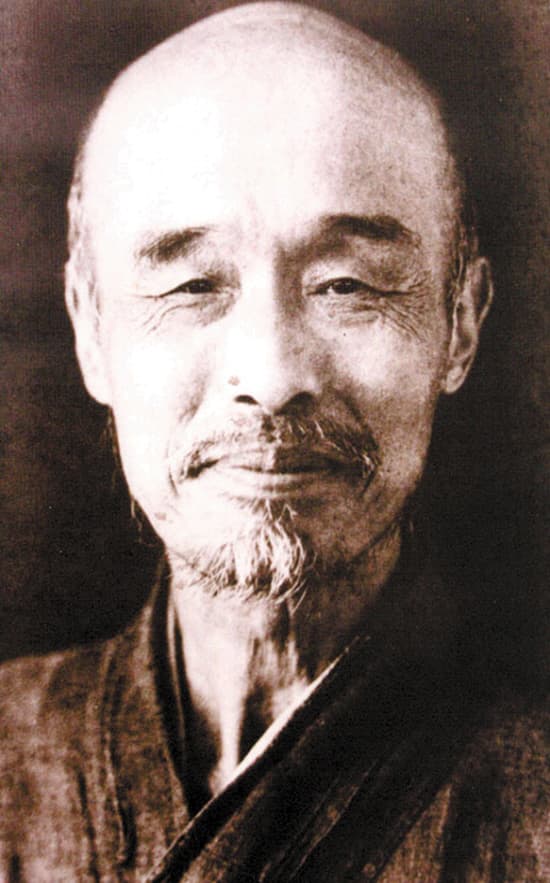
Hong Yi (1880–1942) was a highly influential Chinese Buddhist monk, artist, and musician of the Nanshan Vinaya school. Initially celebrated for his diverse artistic talents, he ordained as a monk in 1918 and dedicated his later life to revitalizing the study and practice of Buddhist Vinaya in modern China. He is revered as the eleventh patriarch of the Nanshan Vinaya school and is recognized as one of the four eminent monks of the Republic of China.
Hsu Yun
Hsu Yun (1840?-1959) was a highly influential Chinese Chan Buddhist master known for his extensive teachings, restoration of temples, and enduring spiritual practice throughout the 19th and 20th centuries. Despite facing persecution and imprisonment, he played a significant role in the revival of Buddhism in modern China and was recognized as an honorary chairman of the Chinese Buddhist Association.