
Dhammalok Mahasthavir
Dhammalok Mahasthavir was a Nepalese Buddhist monk and writer instrumental in reviving Theravada Buddhism in Nepal during the 1930s and 1940s. His efforts to promote Buddhism and the Nepal Bhasa language led to his exile by the Rana regime. He is recognized for establishing Nepal's first modern Theravada monastery and co-founding a key Buddhist organization.
Key Facts
- ›Revived Theravada Buddhism in Nepal in the 1930s and 1940s.
- ›Expelled from Nepal by the Rana regime for propagating Buddhism and writing in Nepal Bhasa.
- ›Established Ananda Kuti Vihar, the first Theravada monastery in modern Nepal.
- ›Co-founded Dharmodaya Sabha (Society for the Rise of the Teaching) in exile.
- ›Authored several books in Nepal Bhasa, including 'Lokay Kuchal Kubyabahar Sudhar' and 'Dharmaya Namay Pap'.
- ›Translated 'Buddha Charita' into Nepal Bhasa.

Important Relationships
- Dibya Laxmi (wife)
- Aniruddha Mahathera (son)
- Rana regime
Lokay Kuchal Kubyabahar Sudhar, Dharmaya Namay Pap, Mahachin Yatra, Buddha Charita
Kathmandu, Swayambhu, Kindo Baha, Rangoon, Kusinagar, Sarnath, India, Tibet, Bhutan, Lumbini, Kapilavastu
Mahapandit Rahul Sankrityayan
Nepal Bhasa
Novice Monk Vows, Higher Ordination
About Dhammalok Mahasthavir
Dhammalok Mahasthavir, born Das Ratna Tuladhar, was a significant figure in 20th-century Nepalese Buddhism. He is celebrated for his pivotal role in the revival of Theravada Buddhism in Nepal during the 1930s and 1940s. His dedication to promoting Buddhist teachings and the Nepal Bhasa language led to conflict with the ruling Rana regime, ultimately resulting in his expulsion from the country.
Early Life and Religious Turn
Born into a trading family in Asan Dhalasikwa, Kathmandu, Das Ratna Tuladhar initially engaged in business, even spending time in Tibet where he was known as Baran Sahu. His life took a spiritual turn following the death of his wife, Dibya Laxmi, and through his association with Indian scholar Mahapandit Rahul Sankrityayan. This period marked his increasing inclination towards religious studies and practice.
Imprisonment, Ordination, and Literary Contributions
In 1929, Das Ratna traveled to Sri Lanka for religious education. Upon his return to Nepal, he began conducting prayer meetings and distributing pamphlets written in Nepal Bhasa, which led to his arrest and seven-day imprisonment in 1931, as the propagation of Buddhism and writing in Nepal Bhasa were then illegal. He later went to Rangoon (now Yangon, Myanmar) and then to Kusinagar, where he became a novice monk in 1933, adopting the name Dhammalok. He received higher ordination in Sarnath in 1935. Dhammalok Mahasthavir was also a prolific writer and translator, penning works like 'Lokay Kuchal Kubyabahar Sudhar' and 'Dharmaya Namay Pap' that critiqued societal ills and religious hypocrisy. He translated Asva Ghosh's 'Buddha Charita' into Nepal Bhasa and authored the travelogue 'Mahachin Yatra'.
Exile and Return
Dhammalok Mahasthavir founded Ananda Kuti Vihar in 1943, establishing the first modern Theravada monastery in Nepal at Swayambhu. In 1944, he, along with seven other monks, was expelled from Nepal for refusing to cease their Buddhist activities and writings. During his exile in India, Tibet, and Bhutan, he co-founded the Dharmodaya Sabha in Sarnath, an organization dedicated to spreading Buddhist teachings. He returned to Kathmandu in 1946 after the ban on these activities was lifted. In his later years, Dhammalok Mahasthavir continued to write and also contributed to the development of Lumbini and Kapilavastu, significant sites associated with the Buddha's life. He passed away at Ananda Kuti Vihar.
Source: Wikipedia ↗
Frequently Asked Questions
Who was Dhammalok Mahasthavir?
Dhammalok Mahasthavir, born Das Ratna Tuladhar, was a prominent Nepalese Buddhist monk and writer. He is best known for his role in reviving Theravada Buddhism in Nepal during the mid-20th century.
Why was Dhammalok Mahasthavir exiled from Nepal?
He was exiled by the tyrannical Rana regime in 1944 because his activities promoting Theravada Buddhism and writing in the Nepal Bhasa language were deemed illegal by the government. He refused to sign a pledge to cease these activities.
What significant Buddhist institutions did Dhammalok Mahasthavir establish or co-found?
In 1943, he established Ananda Kuti Vihar at Swayambhu, which became the first Theravada monastery in modern Nepal. While in exile in 1944, he co-founded Dharmodaya Sabha (Society for the Rise of the Teaching) in Sarnath, India.
What were some of Dhammalok Mahasthavir's notable written works?
Dhammalok Mahasthavir was a prolific writer in Nepal Bhasa. Some of his well-known works include 'Lokay Kuchal Kubyabahar Sudhar' (Reforming Ill Practices and Customs in Society) and 'Dharmaya Namay Pap' (Sinning in the Name of Religion). He also translated Asva Ghosh's 'Buddha Charita' into Nepal Bhasa.
Related Buddhists

Chittadhar Hridaya
Chittadhar Hridaya was a highly esteemed Nepalese poet, recognized as one of the 20th century's greatest literary figures from Nepal. He dedicated his life to promoting his mother tongue, Nepal Bhasa, even enduring imprisonment for his literary activities. His magnum opus, the epic poem "Sugata Saurabha," chronicles the life of the Buddha and is considered a cornerstone of Nepal Bhasa literature.
Aniruddha Mahathera
Aniruddha Mahathera was a prominent Nepalese Buddhist monk and the Sangha Nayak (Patriarch) of Nepal from 1998 until his death in 2003. He was instrumental in the revival of Theravada Buddhism in Nepal and the development of Lumbini, the Buddha's birthplace, into a significant international pilgrimage site. His extensive work included developing Lumbini, translating Buddhist texts, and authoring numerous books.
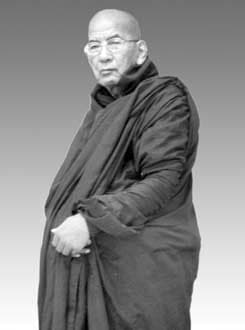
Buddhaghosa Mahasthavir
Buddhaghosa Mahasthavir was a Nepalese Buddhist monk instrumental in reviving Theravada Buddhism in Nepal during the 1940s amidst governmental suppression. He founded the Pariyatti Shiksha (Buddhist education) system and was later recognized as the fifth Sangha Nayaka (Chief Prelate) in 2006. His extensive work included authoring and translating Buddhist scriptures, significantly contributing to the spread of Buddhist teachings in Nepal.