
Buddhaghosa Mahasthavir
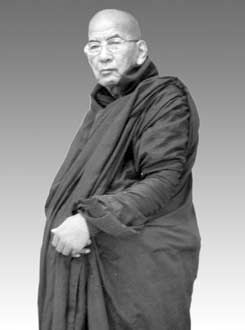
Buddhaghosa Mahasthavir was a Nepalese Buddhist monk instrumental in reviving Theravada Buddhism in Nepal during the 1940s amidst governmental suppression. He founded the Pariyatti Shiksha (Buddhist education) system and was later recognized as the fifth Sangha Nayaka (Chief Prelate) in 2006. His extensive work included authoring and translating Buddhist scriptures, significantly contributing to the spread of Buddhist teachings in Nepal.
Key Facts
- ›Revived Theravada Buddhism in Nepal in the 1940s.
- ›Founded Pariyatti Shiksha (Buddhist education) in Nepal.
- ›Was ordained as a novice monk in Kushinagar, India.
- ›Received higher ordination as a full monk in Mandalay, Burma.
- ›Authored, translated, or edited 22 books in Nepal Bhasa and Nepali.
- ›Named the fifth Sangha Nayaka (Chief Prelate) in 2006.
Important Relationships
- Purnananda (father)
- Surjamaya Vajracharya (mother)
Books On the Tripitaka
Kathmandu, Kushinagar, Mandalay, Sumangal Vihar, Lalitpur
Nepal Bhasa, Nepali
Novice Monk Vows, Full Monk Vows
About Buddhaghosa Mahasthavir
Buddhaghosa Mahasthavir, born Sapta Ratna Vajracharya on October 12, 1921, was a pivotal Nepalese Buddhist monk and scholar who dedicated his life to the revival and propagation of Theravada Buddhism in Nepal. His efforts in the 1940s were particularly significant, as he worked to re-establish Buddhist practices during a period of suppression by the Rana regime. He passed away on September 24, 2011.
Life and Work
Born in Kwa Baha, Kathmandu, Sapta Ratna Vajracharya embarked on his monastic journey in 1940, being ordained as a novice monk in Kushinagar, India, and given the Dhamma name Buddhaghosa. He furthered his studies and meditation practices in Burma, receiving higher ordination as a full monk in Mandalay in 1943. Notably, he was the first individual from a Vajracharya family to become a Theravada monk.
Upon returning to Nepal, Buddhaghosa Mahasthavir resided at Sumangal Vihar in Lalitpur, devoting himself to spreading the teachings of the Buddha. The 1940s were challenging times for Buddhist monks, with many facing expulsion for their preaching and literary activities. However, following the fall of the Rana regime and the establishment of democracy in 1951, Theravada monks gained the freedom to practice and teach openly.
In 1963, Buddhaghosa Mahasthavir founded Pariyatti Shiksha, a system of Buddhist education that revolutionized how Dhamma was taught in Nepal by employing a scientific approach. This initiative attracted large numbers of young people and fostered a deeper engagement with Buddhist studies beyond mere sermons and services. His intellectual contributions were substantial, as he authored, translated, or edited 22 books in Nepal Bhasa and Nepali, focusing on the Tripitaka, the canonical scriptures of Theravada Buddhism.
Honors and Recognition
Buddhaghosa Mahasthavir received significant recognition for his lifelong commitment to Buddhism. In 1999, the government of Myanmar bestowed upon him the title of Aggamahasaddhammajotikadhaja, recognizing his profound contributions to the faith. Further acknowledging his leadership and influence, he was designated as the fifth Sangha Nayaka (Chief Prelate) of Nepal in 2006.
Source: Wikipedia ↗
Frequently Asked Questions
When and where was Buddhaghosa Mahasthavir born?
Buddhaghosa Mahasthavir was born Sapta Ratna Vajracharya on October 12, 1921, in Kwa Baha, Kathmandu, Nepal.
What significant role did Buddhaghosa Mahasthavir play in Nepalese Buddhism?
He played a crucial role in reviving Theravada Buddhism in Nepal during the 1940s when it faced suppression. He also founded Buddhist education in the country.
What were some of his major contributions to Buddhist literature?
Buddhaghosa Mahasthavir authored, translated, or edited 22 books in Nepal Bhasa and Nepali, focusing on the Theravada Buddhist scriptures known as the Tripitaka.
What honors did Buddhaghosa Mahasthavir receive?
In 1999, he was decorated with the title Aggamahasaddhammajotikadhaja by the government of Myanmar for his contributions to Buddhism. He was also named the fifth Sangha Nayaka in 2006.
What was his background before becoming a monk?
He was born into a Vajracharya family and was the first from such a family to become a Theravada monk.
Related Buddhists
Aniruddha Mahathera
Aniruddha Mahathera was a prominent Nepalese Buddhist monk and the Sangha Nayak (Patriarch) of Nepal from 1998 until his death in 2003. He was instrumental in the revival of Theravada Buddhism in Nepal and the development of Lumbini, the Buddha's birthplace, into a significant international pilgrimage site. His extensive work included developing Lumbini, translating Buddhist texts, and authoring numerous books.

Dhammalok Mahasthavir
Dhammalok Mahasthavir was a Nepalese Buddhist monk and writer instrumental in reviving Theravada Buddhism in Nepal during the 1930s and 1940s. His efforts to promote Buddhism and the Nepal Bhasa language led to his exile by the Rana regime. He is recognized for establishing Nepal's first modern Theravada monastery and co-founding a key Buddhist organization.
Chökyi Nyima Rinpoche
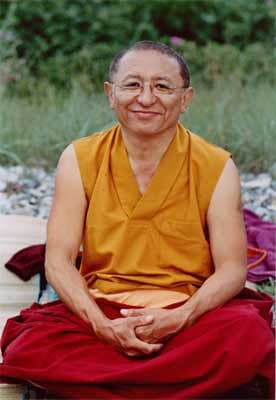
Chökyi Nyima Rinpoche is a contemporary Tibetan Buddhist teacher and meditation master, recognized as the seventh incarnation of Gar Drubchen. He is widely known as the abbot of Ka-Nying Shedrub Ling Monastery in Kathmandu, Nepal, and as an international teacher who has founded numerous meditation centers worldwide.