
Aniruddha Mahathera
Aniruddha Mahathera was a prominent Nepalese Buddhist monk and the Sangha Nayak (Patriarch) of Nepal from 1998 until his death in 2003. He was instrumental in the revival of Theravada Buddhism in Nepal and the development of Lumbini, the Buddha's birthplace, into a significant international pilgrimage site. His extensive work included developing Lumbini, translating Buddhist texts, and authoring numerous books.
Key Facts
- ›Born Gaja Ratna Tuladhar in Kathmandu, Nepal in 1915.
- ›Became a novice monk in Sri Lanka in 1929 and received higher ordination in Myanmar in 1937.
- ›Served as the first editor of the Buddhist magazine Dharmodaya in Nepal Bhasa.
- ›Dedicated 46 years to the development of Lumbini as a pilgrimage site, building a monastery and rest house.
- ›Translated Buddhist texts from Sinhala and Burmese into Nepal Bhasa.
- ›Authored and published 21 books on Buddhism.
Important Relationships
- Dhammalok Mahasthavir (father)
Dharmodaya, 21 Books Authored
Kathmandu, Lhasa, Sri Lanka, Myanmar, Kusinagar, Lumbini, Kalimpong, Swayambhu
Nepal Bhasa, Sinhala, Pali, Sanskrit, English, Burmese
Novice Monk, Higher Ordination
About Aniruddha Mahathera
Aniruddha Mahathera, born Gaja Ratna Tuladhar on December 15, 1915, was a highly influential Nepalese Buddhist monk and the Sangha Nayak (Patriarch) of Nepal from 1998 until his passing on February 17, 2003. He is recognized as one of the most pivotal figures in the revival of Theravada Buddhism within Nepal. His dedication significantly contributed to the transformation of Lumbini, the sacred birthplace of the Buddha, into a prominent international center for Buddhist pilgrimage.
Early Life and Education
Born into a merchant family with business ties in Lhasa, Tibet, Aniruddha's early life was marked by travel. At the age of eight, he accompanied his father, who later became a Buddhist monk, to Lhasa. After returning to Kathmandu, he received his education at the Central Hindu Boarding School in Varanasi, India. His spiritual journey led him to Sri Lanka in 1929, where he became a novice monk and adopted the name Aniruddha, immersing himself in Buddhist studies for five years. He furthered his education in Buddhist philosophy and literature in India and later in Myanmar, where he received higher ordination in 1937 and resided for a decade.
Contributions to Lumbini and Nepalese Buddhism
Returning to Nepal in 1946, Aniruddha Mahathera became the first editor of Dharmodaya, a significant Buddhist magazine. His most enduring legacy, however, lies in his forty-six years of devoted work at Lumbini. He was instrumental in developing the then-undeveloped site into a functional pilgrimage destination, establishing a monastery and a rest house for visitors. His efforts garnered international attention, particularly after hosting UN Secretary-General U Thant in 1967, which paved the way for the Lumbini Development Master Plan. He also translated numerous Buddhist texts into Nepal Bhasa and authored 21 books, enriching the Buddhist literary tradition.
Later Life and Legacy
In 1991, Aniruddha Mahathera returned to Kathmandu to serve as the abbot of Ananda Kuti Vihar in Swayambhu. His leadership as Sangha Nayak from 1998 until his death solidified his position as a spiritual leader and a guardian of Buddhist traditions in Nepal. His extensive work in Lumbini and his contributions to Buddhist scholarship continue to be recognized and appreciated.
Source: Wikipedia ↗
Frequently Asked Questions
What was Aniruddha Mahathera's role in the revival of Theravada Buddhism in Nepal?
Aniruddha Mahathera was one of the most important figures in the revival of Theravada Buddhism in Nepal. His efforts contributed significantly to re-establishing and promoting Buddhist practices and teachings within the country.
What contribution did Aniruddha Mahathera make to Lumbini?
Aniruddha Mahathera played a crucial role in developing Lumbini, the birthplace of the Buddha, into a center of international pilgrimage. He spent 46 years there, building a monastery and a rest house, and assisting pilgrims.
What was Aniruddha Mahathera's birth name and family background?
Aniruddha Mahathera was born Gaja Ratna Tuladhar into a merchant family in Kathmandu. His family had a business in Lhasa, Tibet, and his father was also involved in trade before becoming a Buddhist monk.
Where did Aniruddha Mahathera receive his Buddhist education?
Aniruddha Mahathera pursued his Buddhist studies in Sri Lanka, where he became a novice monk at Vidyalankara Pirivena Buddhist college. He later traveled to Kusinagar, India, and then to Burma (now Myanmar) for further studies.
What literary contributions did Aniruddha Mahathera make?
Aniruddha Mahathera was a prolific writer and translator. He translated Buddhist texts from Sinhala and Burmese into Nepal Bhasa and authored and published 21 books.
Related Buddhists
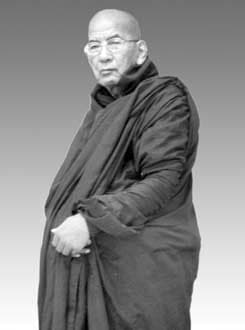
Buddhaghosa Mahasthavir
Buddhaghosa Mahasthavir was a Nepalese Buddhist monk instrumental in reviving Theravada Buddhism in Nepal during the 1940s amidst governmental suppression. He founded the Pariyatti Shiksha (Buddhist education) system and was later recognized as the fifth Sangha Nayaka (Chief Prelate) in 2006. His extensive work included authoring and translating Buddhist scriptures, significantly contributing to the spread of Buddhist teachings in Nepal.

Dhammalok Mahasthavir
Dhammalok Mahasthavir was a Nepalese Buddhist monk and writer instrumental in reviving Theravada Buddhism in Nepal during the 1930s and 1940s. His efforts to promote Buddhism and the Nepal Bhasa language led to his exile by the Rana regime. He is recognized for establishing Nepal's first modern Theravada monastery and co-founding a key Buddhist organization.
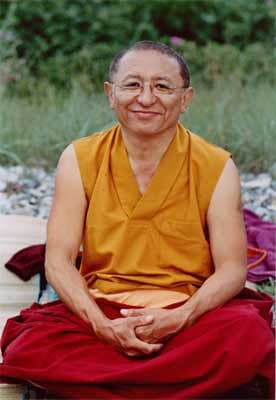
Chökyi Nyima Rinpoche
Chökyi Nyima Rinpoche is a contemporary Tibetan Buddhist teacher and meditation master, recognized as the seventh incarnation of Gar Drubchen. He is widely known as the abbot of Ka-Nying Shedrub Ling Monastery in Kathmandu, Nepal, and as an international teacher who has founded numerous meditation centers worldwide.