
Daisaku Ikeda
Japan·Nichiren Buddhism, Soka Gakkai·Male·20th century
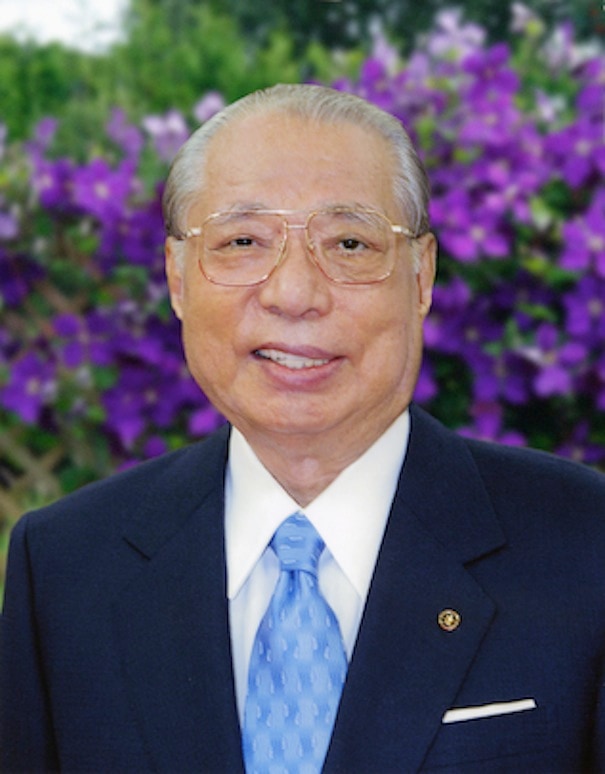
Daisaku Ikeda was a prominent Japanese Buddhist leader, author, educator, and advocate for nuclear disarmament. He served as the third president and then honorary president of the Soka Gakkai, a significant new religious movement in Japan, and was the founding president of the Soka Gakkai International. Ikeda is recognized for his extensive efforts in promoting peace, culture, and education through dialogue and the establishment of various institutions.
Key Facts
- ›Third president and honorary president of Soka Gakkai.
- ›Founding president of Soka Gakkai International.
- ›Authored the 30-volume autobiographical novel, the Human Revolution.
- ›Founded Soka University in Japan and Soka University of America.
- ›Submitted annual peace proposals to the United Nations since 1983.
- ›Engaged in extensive dialogue with international figures on peace and culture.
Important Relationships
- Kaneko Ikeda (wife)
- Arnold J. Toynbee (dialogue partner)
- Zhou Enlai (Chinese Premier)
- Henry Kissinger (US Secretary of State)
- Nelson Mandela
- the Human Revolution
- Choose Life: A Dialogue
- Before It Is Too Late
- Life—An Enigma, A Precious Jewel
- Unlocking the Mysteries of Birth and Death
- the Inner Philosopher
- America Will Be!: Conversations On Hope, Freedom, and Democracy
Tokyo, Japan, ōMori, ōTa, Tokyo, Aliso Viejo, California, Usa, France
Josei Toda, Tsunesaburō Makiguchi
Japanese
About Daisaku Ikeda
Daisaku Ikeda (1928–2023) was a highly influential Japanese Buddhist leader, author, educator, and activist for nuclear disarmament. He is primarily recognized for his role as the third president and later honorary president of the Soka Gakkai, a major Buddhist movement in Japan, and as the founding president of the Soka Gakkai International (SGI).
Life and Background
Born in Tokyo, Japan, Ikeda's early life was marked by the devastation of World War II and personal illness. His spiritual journey began at age 19 when he encountered Josei Toda, the second president of Soka Gakkai, who became his mentor. Ikeda joined the Soka Gakkai and dedicated himself to its principles, eventually rising through its ranks.
Leadership and Expansion
In 1960, Ikeda succeeded Josei Toda as president of the Soka Gakkai, initiating a period of significant growth and reform. He modernized the organization's practices and focused on expanding its reach globally, leading to the establishment of the Soka Gakkai International in 1975, with Ikeda as its first president. Under his leadership, the SGI grew into a worldwide lay Buddhist movement.
Contributions and Advocacy
Ikeda was a prolific author, with his autobiographical novel "The Human Revolution" being his most famous work. He also engaged in numerous published dialogues with scholars, artists, and political figures from around the world, exploring themes of peace, culture, and human potential. A passionate advocate for nuclear disarmament, he submitted annual peace proposals to the United Nations and inspired global movements for peace and human rights. He founded educational institutions such as Soka University in Japan and Soka University of America, emphasizing the role of dialogue and education in fostering global understanding and peace.
Legacy
Ikeda's work and teachings have had a profound impact on millions worldwide. He is remembered for his tireless efforts in promoting peace, culture, and education, and for his vision of a global society grounded in Buddhist humanism. Despite controversies surrounding the Soka Gakkai's political influence, Ikeda's dedication to dialogue and his extensive humanitarian initiatives remain a significant part of his legacy.
Source: Wikipedia ↗
Frequently Asked Questions
When was Daisaku Ikeda born and when did he die?
Daisaku Ikeda was born on January 2, 1928, and passed away on November 15, 2023. He was 95 years old at the time of his death.
What is Soka Gakkai?
Soka Gakkai is a Japanese Buddhist new religious movement that Daisaku Ikeda led as president. It is known for its activities in peace, culture, and education, and claims a large international membership.
What was Daisaku Ikeda's role in the Soka Gakkai International?
Daisaku Ikeda was the founding president of the Soka Gakkai International (SGI). He played a leading role in its global development, expanding the Soka Gakkai into an international lay Buddhist movement.
What kind of institutions did Daisaku Ikeda found?
Daisaku Ikeda founded numerous institutions to promote education, cultural exchange, and peacebuilding. These include Soka University in Japan, Soka University of America, the Min-On Concert Association, and the Tokyo Fuji Art Museum.
What were Daisaku Ikeda's views on peace and disarmament?
Ikeda was a strong advocate for nuclear disarmament and peace. He submitted annual peace proposals to the United Nations and engaged in 'citizen diplomacy' through dialogues and meetings with world leaders to promote international understanding and de-escalate tensions.
How did Daisaku Ikeda influence Sino-Japanese relations?
Daisaku Ikeda made several visits to China and met with Premier Zhou Enlai, contributing to cultural and academic exchanges. He is credited by Chinese media as an early proponent of normalizing diplomatic relations between China and Japan in the 1970s.
Related Buddhists

Ayushman Khurrana
Ayushmann Khurrana is an Indian actor and singer celebrated for portraying ordinary men challenging societal norms in Hindi films. He has received numerous accolades, including a National Film Award and multiple Filmfare Awards, and was recognized by Time as one of the most influential people globally. Khurrana is also a dedicated advocate, serving as a national UNICEF Goodwill Ambassador for India.

Ānanda
Ānanda was a principal attendant and one of the ten principal disciples of the Buddha, renowned for his exceptional memory. He is credited with recalling and reciting the Buddha's teachings, forming the basis of the Sutta-Piṭaka, and is thus known as the Treasurer of the Dhamma. Ānanda also played a significant role in the establishment of the order of bhikkhunīs (female monastics).

B. R. Ambedkar
Bhimrao Ramji Ambedkar was a pioneering Indian jurist, economist, and social reformer, most renowned for chairing the committee that drafted the Constitution of India. He served as the nation's first Law and Justice minister and later converted to Buddhism, inspiring the Dalit Buddhist movement. His work significantly advocated for the political rights and social freedom of Dalits, challenging the deeply entrenched caste system.