
Brigitte D'Ortschy
Germany·Sanbo Kyodan·Female·20th century
Brigitte D'Ortschy, also known as Koun-An Doru Chiko Roshi, was a German architect, journalist, translator, and author who became the first Zen master from Germany within the Sanbo Kyodan school. She is recognized for her rigorous Zen training under prominent Japanese masters and her extensive translations and teachings, making her a significant figure in the introduction of Zen Buddhism to the West and in Christian-Buddhist dialogue.
Key Facts
- ›First Zen master from Germany in the Sanbo Kyodan school.
- ›Completed rigorous Koan training and received Inka Shomei, becoming a Dharma heir to Yasutani Haku'un Roshi and Yamada Koun Roshi.
- ›Translated classic Zen Buddhist texts, including the "Mumonkan" and "Hekigan Roku," into German and English.
- ›Established her own Zen zendo in Munich in 1975, attracting students globally.
- ›Designed the cover for Philip Kapleau's "the three Pillars of Zen" and translated it into German.
- ›Engaged in extensive correspondence and dialogue with leading thinkers and religious figures on science and philosophy.

Important Relationships
- Ryoko Roshi
- Yasutani Haku'un Roshi
- Yamada Koun Roshi
- Philip Kapleau
- Hugo Makibi Enomiya Lassalle
- Thomas Hand
- Frank Lloyd Wright
Mumon Kan Translation and Teisho, Hekigan-Roku Translation and Teisho, Zen, the Three Pillars of Zen
Berlin, Munich, Tokyo, Kamakura, Taliesin West
Angelus Silesius, Meister Eckhart, Teresa of Avila, Chuang-Tzu, Frank Lloyd Wright, Eugen Herrigel, Ryoko Roshi, Yasutani Haku'Un Roshi, Yamada Koun Roshi
German, English
Bodhisattva Vows
Teacher, Translator, Author, Architect
About Brigitte D'Ortschy
Brigitte D'Ortschy: Architect and First German Zen Master
Brigitte D'Ortschy (1921–1990), also known by her Dharma name Koun-An Doru Chiko, was a multifaceted figure who bridged the worlds of architecture, journalism, and Zen Buddhism. She is celebrated as the first Zen master from Germany within the Sanbo Kyodan school of Japan, leaving a significant legacy through her translations, teachings, and establishment of Zen practice in the West.
Life and Early Career
Born in Berlin, D'Ortschy's early intellectual curiosity was sparked by figures like Angelus Silesius and Meister Eckhart. She pursued a career in architecture and engineering, earning her diploma in 1945. Her professional life included work as a research assistant in building history and archaeology, and gaining experience in urban and regional planning in the United States, with an aim to contribute to postwar German reconstruction. She was an admirer of Frank Lloyd Wright's architectural philosophy, which influenced her understanding of form as 'cultural language'. D'Ortschy also organized international architectural exhibitions and wrote extensively for trade publications.
Zen Training and Teaching
In 1963, D'Ortschy moved to Japan, where she encountered Zen Master Ryoko Roshi and began her rigorous Zen training. She completed the entire Koan-training, receiving Inka Shomei in 1972 and becoming a Dharma heir to Yasutani Haku'un Roshi and Yamada Koun Roshi. Under Yamada Koun's tutelage, she was confirmed as an authentic Zen Master in her own right within the Sanbo Kyodan lineage. D'Ortschy also formed significant relationships with fellow Zen practitioners like Philip Kapleau and contributed to the Christian-Buddhist dialogue, notably through extensive correspondence with a Carthusian monk.
Literary and Pedagogical Contributions
Brigitte D'Ortschy made substantial contributions to the dissemination of Zen teachings through her prolific writing and translation work. She translated seminal Zen texts from Chinese and Japanese originals into German and English, including "The Gateless Gate" and "The Blue Cliff Record." Her own dharma talks, particularly on the koan 'MU' (published under the pseudonym Michael Mueller), provided deep insights into Zen practice. In 1975, she established her own zendo in Munich, fostering a global community of disciples and emphasizing the principle that spiritual training should be free. She spent her winters continuing her own Zen practice in Japan until her death in 1990.
Source: Wikipedia ↗
Frequently Asked Questions
Who was Brigitte D'Ortschy?
Brigitte D'Ortschy (1921-1990) was a German architect, journalist, translator, and author. She is best known for becoming the first Zen master from Germany in the Sanbo Kyodan school.
What was Brigitte D'Ortschy's background before becoming a Zen master?
Before her Zen training, D'Ortschy studied architecture and engineering in Berlin and Graz, graduating in 1945. She worked in urban planning, including a period in the United States, and was acquainted with architect Frank Lloyd Wright.
When did Brigitte D'Ortschy begin her Zen training and with whom?
Brigitte D'Ortschy began her rigorous Zen training in Japan in April 1964 under Zen Master Ryoko Roshi. She later continued her training under Yasutani Haku'un Roshi and Yamada Koun Roshi.
What significant contributions did Brigitte D'Ortschy make to Zen Buddhism?
D'Ortschy made significant contributions through her extensive translations of classic Zen texts, her teachings and dharma talks, and by establishing a Zen community in Munich. She is considered a pioneer in bringing Zen to Germany and fostering Christian-Buddhist dialogue.
What is the significance of her Dharma name and lineage?
She received the Dharma name Doru Chiko Daishi from Yasutani Haku'un Roshi and later inherited the Dharma of Yamada Koun Roshi, who gave her the name Koun An Roshi. She was confirmed as an authentic Zen Master in her own right in the Sanbo Kyodan lineage, tracing her lineage back to Shakyamuni Buddha and Dogen Zenji.
What notable works are attributed to Brigitte D'Ortschy?
Brigitte D'Ortschy translated classic Zen texts such as the "Mumonkan" (The Gateless Gate) and the "Hekigan Roku" (The Blue Cliff Record). She also authored teisho (dharma talks) on these koans and published a book titled "ZEN" under the pseudonym Michael Mueller.
Related Buddhists
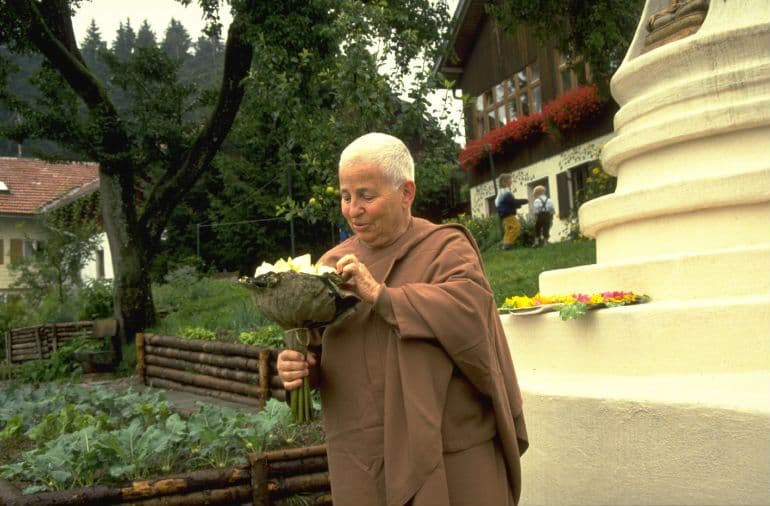
Ayya Khema
Ayya Khema was a German-born Buddhist teacher and author known for her efforts to create opportunities for women in Buddhism. She founded several centers worldwide and co-coordinated the first International Conference on Buddhist Women, which led to the establishment of the Sakyadhita International Association of Buddhist Women. Over two dozen books of her transcribed Dhamma talks have been published, alongside her autobiography.
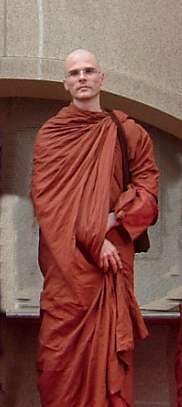
Bhikkhu Anālayo
Bhikkhu Anālayo is a contemporary Buddhist monk, scholar, and meditation teacher, born in Germany in 1962. He is renowned for his extensive comparative studies of early Buddhist texts preserved across various traditions, contributing significantly to the understanding of early Buddhist thought and practice. His work often focuses on meditation, historical developments, and textual analysis, making him a key figure in modern Buddhist scholarship.
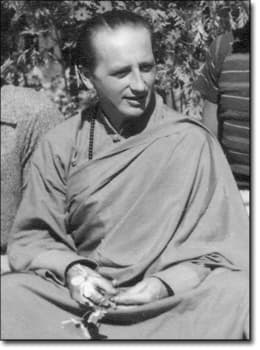
Anagarika Govinda
Anagarika Govinda, born Ernst Lothar Hoffmann, was a German Buddhist author, painter, and poet, and the founder of the Arya Maitreya Mandala order. He is renowned for his extensive writings on Tibetan Buddhism, Buddhist meditation, and Abhidharma, significantly influencing Western understanding of these traditions. Govinda's work also encompassed art and poetry, and he was a pivotal figure in bridging Eastern and Western spiritual and philosophical thought.