
Ayya Khema
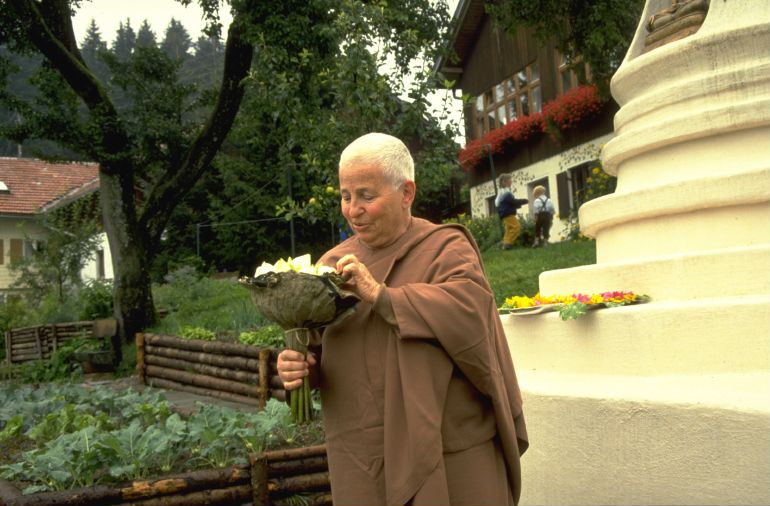
Ayya Khema was a German-born Buddhist teacher and author known for her efforts to create opportunities for women in Buddhism. She founded several centers worldwide and co-coordinated the first International Conference on Buddhist Women, which led to the establishment of the Sakyadhita International Association of Buddhist Women. Over two dozen books of her transcribed Dhamma talks have been published, alongside her autobiography.
Key Facts
- ›Born Ilse Kussel in Berlin, Germany in 1923 to Jewish parents.
- ›Fled Nazi Germany, living in China and Scotland before settling in the us.
- ›Founded the Wat Buddha Dhamma forest monastery in Australia in 1978.
- ›Co-organized the first International Conference on Buddhist Women in 1987.
- ›Received full monastic ordination in the Mahayana tradition in 1988.
- ›Published her autobiography, "I Give you my Life," in 1997.
Important Relationships
- Sakyadhita International Association of Buddhist Women
- Wat Buddha Dhamma
- Buddha Haus
- Fo Guang Shan Buddhist Order
I Give You My Life, Being Nobody, Going Nowhere, When the Iron Eagle Flies, Who Is Myself?, Come and See For Yourself, Be An Island, Visible Here and Now, Know Where You'Re Going, the Meditative Mind, Within Our Own Hearts, Self-Image and Self-Knowledge, Meditating On No-Self
Berlin, Shanghai, San Francisco, Sydney, New South Wales, Thailand, Sri Lanka, Munich, UttenbüHl
Edmund Skekely, Phra Khantipalo, U Ba Khin, Tan Ajahn Singtong, Nyanaponika Thera, Narada Maha Thera, Matara Sri ñāNarāMa
English, German
Bhikkhuni Vows, Bodhisattva Vows
About Ayya Khema
Ayya Khema, born Ilse Kussel in Berlin, Germany, on August 25, 1923, was a significant Buddhist teacher and nun. Her life was marked by early displacement due to Nazi persecution, leading her family to flee Germany and eventually settle in Shanghai. After experiencing personal loss and navigating complex family life, she embarked on a spiritual quest that led her to Buddhism.
Life and Spiritual Journey
Khema's early years were shaped by her Jewish heritage and the escalating threat of Nazism. Her family's escape from Germany and subsequent life in Shanghai, including time in the Hongkew Ghetto, represented a period of profound hardship. Following her marriage and the birth of her children, Irene and Jeffrey, she emigrated to the United States. It was during this time that she began to feel an "incompleteness," prompting her to explore various spiritual paths, which ultimately led to her divorce from her first husband.
Her spiritual investigations took her to Mexico, where she studied the philosophy of the Essenes and married her second husband, Gerd. The family adopted a vegetarian lifestyle. Their travels spanned continents, including South America, New Zealand, and Australia. In Australia, she began formal Buddhist studies under Phra Khantipalo and later pursued Zen practice at the San Francisco Zen Center. Further meditation training took her to Burma, where she studied with students of U Ba Khin.
Founding Centers and Teaching
In 1978, Ayya Khema founded the Wat Buddha Dhamma forest monastery in New South Wales, Australia. Her commitment to monastic life led her to Thailand and Sri Lanka, where she received the name "Ayya Khema" from Narada Maha Thera. A pivotal moment was her meeting with Ven. Matara Sri Ñānarāma, who inspired her to teach jhana meditation. Recognizing the limitations for female monastic ordination in the Theravada tradition at the time, she received full monastic ordination at a Mahayana temple in 1988.
Ayya Khema was a key organizer of the first International Conference on Buddhist Women in 1987, which resulted in the establishment of the Sakyadhita International Association of Buddhist Women. She also taught extensively in Germany, beginning in Munich in 1989. Throughout her life, she faced personal health challenges, including breast cancer, which she documented in her autobiography, "I Give You My Life." Ayya Khema passed away on November 2, 1997, in Germany.
Source: Wikipedia ↗
Frequently Asked Questions
What was Ayya Khema's birth name and when was she born?
Ayya Khema was born Ilse Kussel on August 25, 1923, in Berlin, Germany.
What significant role did Ayya Khema play in promoting Buddhism for women?
Ayya Khema was instrumental in providing opportunities for women to practice Buddhism. She founded several centers globally and played a key role in organizing the first International Conference on Buddhist Women, leading to the formation of the Sakyadhita International Association of Buddhist Women.
What are some of Ayya Khema's notable publications?
Ayya Khema authored over two dozen books, primarily transcriptions of her Dhamma talks, published in English and German. Her autobiography, "I Give You My Life," and titles like "Being Nobody, Going Nowhere" and "When the Iron Eagle Flies" are among her published works.
Where did Ayya Khema establish her first monastery?
In 1978, Ayya Khema founded the Wat Buddha Dhamma forest monastery in New South Wales, Australia.
When and where did Ayya Khema pass away?
Ayya Khema died on November 2, 1997, at Buddha Haus in Uttenbühl, Germany, after a fourteen-year battle with breast cancer.
Related Buddhists

Brigitte D'Ortschy
Brigitte D'Ortschy, also known as Koun-An Doru Chiko Roshi, was a German architect, journalist, translator, and author who became the first Zen master from Germany within the Sanbo Kyodan school. She is recognized for her rigorous Zen training under prominent Japanese masters and her extensive translations and teachings, making her a significant figure in the introduction of Zen Buddhism to the West and in Christian-Buddhist dialogue.
Anagarika Govinda
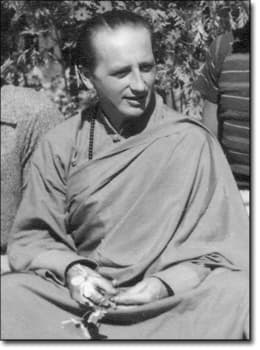
Anagarika Govinda, born Ernst Lothar Hoffmann, was a German Buddhist author, painter, and poet, and the founder of the Arya Maitreya Mandala order. He is renowned for his extensive writings on Tibetan Buddhism, Buddhist meditation, and Abhidharma, significantly influencing Western understanding of these traditions. Govinda's work also encompassed art and poetry, and he was a pivotal figure in bridging Eastern and Western spiritual and philosophical thought.
Hugo Enomiya-Lassalle
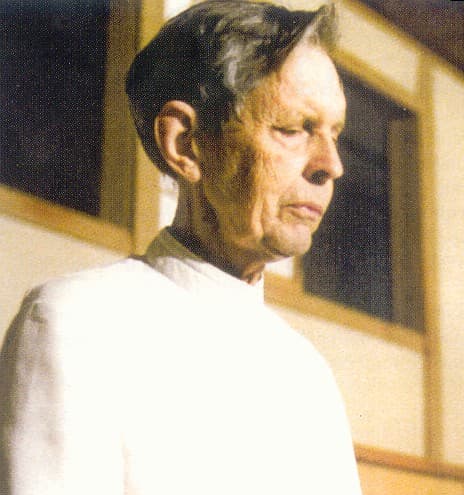
Hugo Makibi Enomiya-Lassalle was a German Jesuit priest and missionary who became a prominent figure in bridging Zen Buddhism and Roman Catholicism. He is renowned for his efforts in teaching Zen to Christians, influencing the integration of Zen practices within the Catholic Church.