
Anagarika Govinda
Germany·Arya Maitreya Mandala, Tibetan Buddhism, Theravada Buddhism·Male·20th century
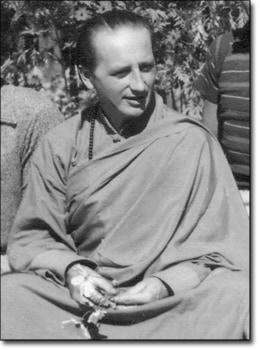
Anagarika Govinda, born Ernst Lothar Hoffmann, was a German Buddhist author, painter, and poet, and the founder of the Arya Maitreya Mandala order. He is renowned for his extensive writings on Tibetan Buddhism, Buddhist meditation, and Abhidharma, significantly influencing Western understanding of these traditions. Govinda's work also encompassed art and poetry, and he was a pivotal figure in bridging Eastern and Western spiritual and philosophical thought.
Key Facts
- ›Founded the Buddhist Order Arya Maitreya Mandala in 1933.
- ›Authored influential books such as 'the Way of the White Clouds' and 'Foundations of Tibetan Mysticism'.
- ›Studied philosophy, psychology, and archaeology at Freiburg University.
- ›Was an expositor of Tibetan Buddhism, Abhidharma, and Buddhist meditation.
- ›Lived in Sri Lanka, India, and traveled extensively in Tibet.
- ›Was a painter and poet, with his art also reflecting Buddhist themes.
Important Relationships
- Li Gotami (wife)
- Anne Habermann (stepmother)
- Nyanaponika Thera (friend)
- Alan Watts
- Suzuki Roshi
- the Way of the White Clouds
- Foundations of Tibetan Mysticism
- the Psychological Attitude of Early Buddhist Philosophy
- Psycho-Cosmic Symbolism of the Buddhist Stupa
- the Inner Structure of the I Ching, the Book of Transformation
Capri, Italy, Sri Lanka, India, Tibet, Darjeeling, India, Sikkim, India, Kasar Devi, India, San Francisco Bay Area, Usa
Ludwig Klages, Tomo Geshe Rimpoche, Nyanatiloka Thera, Novalis
German, English
BrahmacāRi, Anagarika
About Anagarika Govinda
Anagarika Govinda, born Ernst Lothar Hoffmann (1898–1985), was a German-born Buddhist teacher, philosopher, artist, and author who became a pivotal figure in introducing Tibetan Buddhism to the West. He founded the Arya Maitreya Mandala, a syncretic order that blended elements of Theravada and Tibetan Buddhism, and was instrumental in establishing a Western wing of this order.
Life and Influences
Born in Waldheim, Germany, Hoffmann's early life included studies in philosophy, psychology, and archaeology, alongside a career as a painter and poet. His intellectual journey led him to Buddhism at a young age, influenced by thinkers like Schopenhauer and Ludwig Klages. He first encountered Buddhist teachings in Europe, joined the Bund für buddhistisches Leben, and practiced meditation.
Sri Lanka and the Theravada Tradition
In 1928, Hoffmann moved to Sri Lanka, where he lived as a celibate layman (brahmacāri) and later as a homeless layman (anagarika) at the Island Hermitage under Nyanatiloka Thera. He was involved in founding the International Buddhist Union (IBU) with the aim of uniting Buddhists worldwide. During his time in Sri Lanka, he studied Abhidhamma and Pali.
Embracing Tibetan Buddhism
A significant turning point occurred in 1931 when, in Sikkim, he met the Tibetan Gelugpa meditation teacher Tomo Geshe Rimpoche. This encounter profoundly shifted his focus towards Tibetan Buddhism, though he maintained respect for his Theravada roots. He later received teachings and initiations from other Tibetan lamas, including Ajo Repa Rinpoche, and was initiated into the Kagyüpa and Nyingma and Sakyapa lineages during expeditions to Tibet.
Literary and Artistic Contributions
Govinda was a prolific writer, with his most celebrated works including "The Way of the White Clouds" and "Foundations of Tibetan Mysticism." These books, translated into numerous languages, offered insights into Tibetan Buddhist philosophy, practices, and his personal spiritual journey. He was also an accomplished painter, with his art often reflecting his spiritual experiences and insights.
Later Life and Legacy
Following World War II, Govinda married the Parsi artist Li Gotami, who became his lifelong companion and collaborator. They settled in Kasar Devi, India, which became a destination for numerous spiritual seekers, artists, and writers from the West. Govinda traveled extensively in the 1960s and 1970s, lecturing in Europe, North America, and Japan, further disseminating Buddhist teachings. He spent his final years in the San Francisco Bay Area, continuing his work until his death in 1985. His ashes were interred in a stupa in Darjeeling, India, marking a lasting memorial to his spiritual contributions.
Source: Wikipedia ↗
Frequently Asked Questions
Who was Anagarika Govinda?
Anagarika Govinda, originally Ernst Lothar Hoffmann, was a German Buddhist scholar, author, painter, and poet. He is best known as the founder of the Arya Maitreya Mandala order and for his extensive writings that introduced Tibetan Buddhism and Buddhist philosophy to the Western world.
What are Anagarika Govinda's most famous works?
His most celebrated works include 'The Way of the White Clouds', which chronicles his travels in Tibet, and 'Foundations of Tibetan Mysticism'. He also wrote 'The Psychological Attitude of Early Buddhist Philosophy' and 'Psycho-Cosmic Symbolism of the Buddhist Stupa'.
What Buddhist traditions did Anagarika Govinda follow or teach?
Govinda was deeply influenced by Theravada Buddhism in his early years in Sri Lanka. However, after meeting Tomo Geshe Rimpoche, he embraced Tibetan Buddhism, particularly the Gelugpa and later the Kagyüpa, Nyingma, and Sakyapa lineages. He founded the Arya Maitreya Mandala, an order that synthesizes elements of these traditions.
Where did Anagarika Govinda live and travel?
Born in Germany, Govinda lived for a period in Italy before moving to Sri Lanka in 1928. He spent significant time in India, including teaching at Visva-Bharati University, and undertook numerous journeys to Tibet. Later in life, he settled in the San Francisco Bay area for health reasons.
Was Anagarika Govinda a painter and poet?
Yes, Anagarika Govinda was also a painter and poet. He lived as a painter and poet on Capri in Italy before his Buddhist studies. His artistic talents are reflected in his writings and some of his books feature his artwork.
Related Buddhists
Ayya Khema
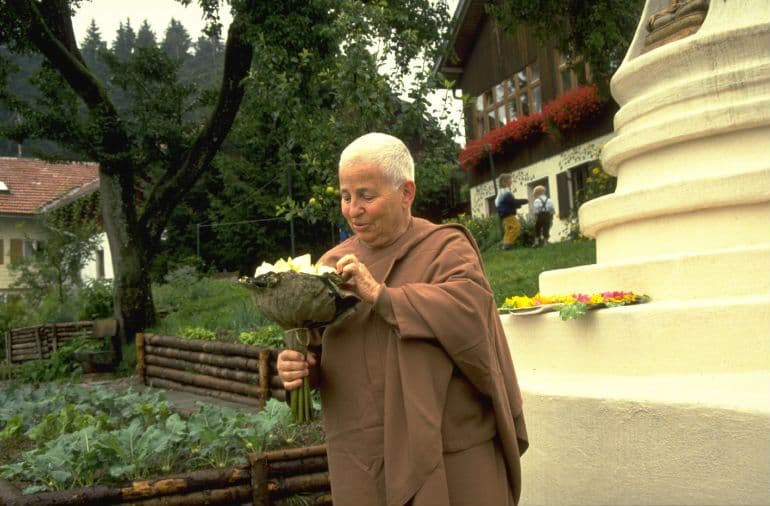
Ayya Khema was a German-born Buddhist teacher and author known for her efforts to create opportunities for women in Buddhism. She founded several centers worldwide and co-coordinated the first International Conference on Buddhist Women, which led to the establishment of the Sakyadhita International Association of Buddhist Women. Over two dozen books of her transcribed Dhamma talks have been published, alongside her autobiography.
Hugo Enomiya-Lassalle
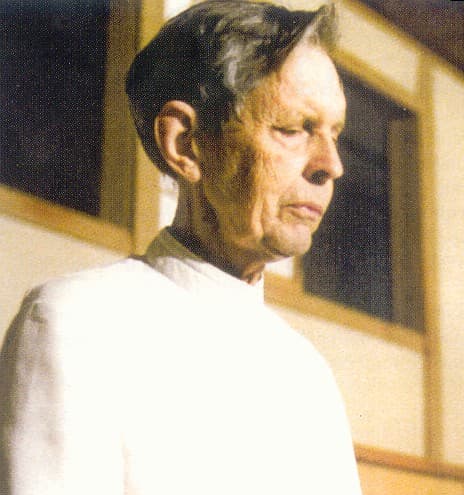
Hugo Makibi Enomiya-Lassalle was a German Jesuit priest and missionary who became a prominent figure in bridging Zen Buddhism and Roman Catholicism. He is renowned for his efforts in teaching Zen to Christians, influencing the integration of Zen practices within the Catholic Church.

Brigitte D'Ortschy
Brigitte D'Ortschy, also known as Koun-An Doru Chiko Roshi, was a German architect, journalist, translator, and author who became the first Zen master from Germany within the Sanbo Kyodan school. She is recognized for her rigorous Zen training under prominent Japanese masters and her extensive translations and teachings, making her a significant figure in the introduction of Zen Buddhism to the West and in Christian-Buddhist dialogue.