
Xihuang Temple
Xihuang Temple is a significant Buddhist temple located in Beijing, China, historically serving as a residence for important Tibetan Buddhist leaders. It holds importance for its role in Tibetan Buddhism in Beijing and its connection to various Panchen Lamas and Dalai Lamas, making it a site of both religious and historical interest.
Key Facts
- ›Established in 1651 by the Shunzhi Emperor as a residence for the 5th Dalai Lama.
- ›A white pagoda, the Qingjing Huacheng Pagoda, was built in 1780 to commemorate the 6th Panchen Lama.
- ›Suffered damage during the Second Opium War in 1860 and was ransacked in 1900 by the Eight-Nation Alliance.
- ›The 13th Dalai Lama resided here for nearly three months in 1908.
- ›In 1987, the High-Level Tibetan Buddhism College of China was established at the temple.
- ›The Museum of Xihuang Temple officially opened to the public in 2018.

Important Relationships
- Shunzhi Emperor
- 5th Dalai Lama
- Qianlong Emperor
- 6th Panchen Lama
- 13th Dalai Lama
- 9th Panchen Lama
- 10th Panchen Lama
- 14th Dalai Lama
- Eight-Nation Alliance
- English and French armies
Qingjing Huacheng Pagoda, Shanmen Hall, Hall of Four Heavenly Kings, Main Hall, Paifang, East Side Hall, West Side Hall
- Established As Residence For the 5th Dalai Lama
- Construction of Qingjing Huacheng Pagoda
- Devastated By English and French Armies
- Ransacked By Eight-Nation Alliance
- 13th Dalai Lama Stayed For Almost Three Months
- 9th Panchen Lama Lived Here
- 10th Panchen Lama and 14th Dalai Lama Visited
- Inscribed To Beijing Municipal Cultural Preservation List
- Refurbished and Redecorated
- Designated As National Key Buddhist Temple
- High-Level Tibetan Buddhism College of China Established
- White Pagoda Listed As Major National Historical and Cultural Site In Beijing
- Museum of Xihuang Temple Opened
About Xihuang Temple
Xihuang Temple, situated in Beijing's Chaoyang District, is a historically significant Buddhist temple with deep ties to Tibetan Buddhism. Its establishment in 1651 by the Shunzhi Emperor was to provide a residence for the esteemed 5th Dalai Lama during his visit to the Qing capital. This act underscored the temple's early importance as a bridge between the Qing imperial court and Tibetan religious leadership.
Over the centuries, Xihuang Temple has witnessed both periods of veneration and destruction. A notable architectural addition is the Qingjing Huacheng Pagoda, constructed in 1780 by the Qianlong Emperor to honor the passing of the 6th Panchen Lama. Despite its spiritual significance, the temple endured severe damage during the Second Opium War in 1860 and was further ransacked by the Eight-Nation Alliance in 1900. Nevertheless, it continued to host prominent figures, including the 13th Dalai Lama, who resided there for nearly three months in 1908.
In the modern era, Xihuang Temple has been recognized for its cultural and religious value. It was inscribed on the Beijing Municipal Cultural Preservation List in 1979 and subsequently refurbished. In 1983, it was designated a National Key Buddhist Temple in the Han Chinese Area. A significant development occurred in 1987 when the 10th Panchen Lama founded the High-Level Tibetan Buddhism College of China at the temple, solidifying its role as a center for Buddhist education. The temple's white pagoda was recognized as a Major National Historical and Cultural Site in Beijing in 2001, and in 2018, the Museum of Xihuang Temple opened its doors to the public, offering insights into its rich history.
Source: Wikipedia ↗
Frequently Asked Questions
When was Xihuang Temple built?
Xihuang Temple was established in 1651 by the Shunzhi Emperor of the Qing dynasty. It was built to serve as a residence for the 5th Dalai Lama during his visit to Beijing.
What is the significance of the white pagoda at Xihuang Temple?
The white pagoda, known as the Qingjing Huacheng Pagoda, was built in 1780 by the Qianlong Emperor. It was constructed to commemorate the Parinirvana of the 6th Panchen Lama.
Has Xihuang Temple experienced any significant historical damage?
Yes, Xihuang Temple suffered devastation by the combined armies of the English and French during the Second Opium War in 1860. Later, in 1900, it was ransacked by the Eight-Nation Alliance during the Invasion of Beijing.
Who are some notable Tibetan Buddhist figures associated with Xihuang Temple?
The temple served as a residence for the 5th Dalai Lama. The 6th Panchen Lama is commemorated by the Qingjing Huacheng Pagoda. The 13th Dalai Lama lived here in 1908, and the 9th, 10th, and 14th Dalai Lamas have also been associated with the temple through visits or residence.
What educational institution is located at Xihuang Temple?
In September 1987, the 10th Panchen Lama established the High-Level Tibetan Buddhism College of China at Xihuang Temple. This institution is dedicated to the study of Tibetan Buddhism.
When did the Museum of Xihuang Temple open?
The Museum of Xihuang Temple was officially opened to the public on May 18, 2018. It showcases the history and cultural significance of the temple.
Related Buddhist Temples

Tövkhön Monastery
Tövkhön Monastery is one of Mongolia's oldest Buddhist religious sites, originating in the 17th century. Founded by Zanabazar, the spiritual leader of Tibetan Buddhism for the Khalkha people, it served as his personal retreat and a center for artistic and script development. Despite periods of destruction and restoration, it remains an active monastic site and a UNESCO World Heritage site.

Pusading
Pusading, also known as the Bodhisattva Summit Temple, is a significant Buddhist temple located in Taihuai Town, Shanxi, China. It is considered the finest temple among all those situated on Mount Wutai and holds historical importance, having been established during the Northern Wei dynasty and later converted to Tibetan Buddhism in the Qing dynasty.
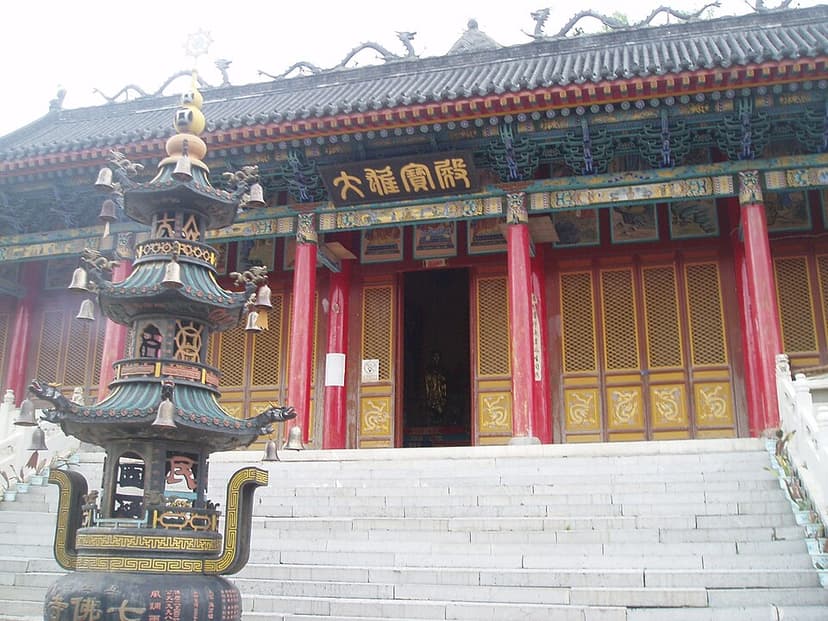
Qifo Temple
Qifo Temple is a significant Buddhist temple located in Taihuai Town, Shanxi, China. Originally constructed during the Northern Song dynasty, it has undergone several reconstructions and conversions, most notably to Tibetan Buddhism in 1734. Despite being destroyed during the Cultural Revolution, it was rebuilt starting in 1991 and features several halls and a notable white marble pagoda.