
Xá Lợi Pagoda
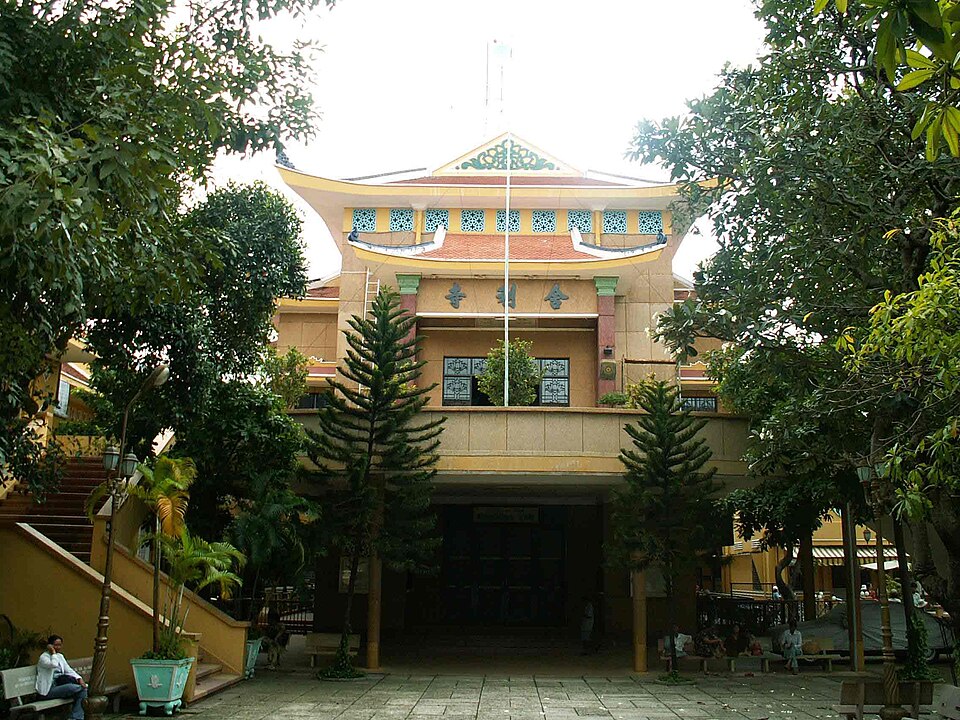
Xá Lợi Pagoda is the largest Buddhist temple in Ho Chi Minh City, Vietnam, constructed in 1956. It served as the central headquarters for Buddhism in South Vietnam and is named after śarīra, a term for Buddhist relics, which it was built to enshrine. The pagoda gained notoriety for being the site of raids by government forces in 1963 during protests against religious persecution.
Key Facts
- ›Construction of Xá LợI Pagoda began on August 5, 1956, and it was opened on May 2, 1958.
- ›The pagoda's name, Xá LợI, is the Vietnamese translation of śarīra, meaning relics of Buddhists, which it was built to house.
- ›It served as the headquarters of the Vietnamese Buddhist Association until 1981.
- ›The pagoda experienced significant raids by Special Forces loyal to Ngô Đình Nhu on August 21, 1963, amidst Buddhist protests.
- ›The site features a 32-meter-tall, seven-story bell tower, the highest in Vietnam, housing a two-tonne bell.
- ›Notable internal features include a large statue of Gautama Buddha and panels depicting scenes from his life.
Important Relationships
- Ngô Đình Diệm
- Ngô Đình Nhu
- Thích Quảng Đức
- Thích Tinh Khiet
- Lê Quang Tung
- Tôn Thất Đính
- Seven-Story Bell Tower
- Two-Tonne Bell
- Statue of Gautama Buddha
- Panels Depicting Scenes From the Life of Gautama Buddha
- Chinese-Style Statue of Quan M
- Construction Completed and Opened
- Raids By Army of the Republic of Vietnam Special Forces
Vietnamese
About Xá Lợi Pagoda
Xá Lợi Pagoda, located in District 3 of Ho Chi Minh City, Vietnam, stands as the largest Buddhist temple in the city. Its construction began in 1956, and it was officially opened in 1958. The pagoda's name, Xá Lợi, translates to 'śarīra,' a term for Buddhist relics, reflecting its purpose to enshrine a sample of Gautama Buddha's relics. For a significant period, it served as the headquarters of the Vietnamese Buddhist Association, underscoring its central role in the country's Buddhist community.
History and Significance
The pagoda's history is marked by significant events, particularly the raids that occurred on August 21, 1963. During this period of religious persecution under President Ngô Đình Diệm's government, Special Forces loyal to Ngô Đình Nhu raided and vandalized Buddhist monasteries and pagodas, including Xá Lợi. These events were part of a broader response to civil rights protests by Vietnamese Buddhists and brought international attention to the situation.
Architectural Features
Xá Lợi Pagoda is characterized by several notable architectural elements. It features a prominent bell tower that stands 32 meters tall and comprises seven stories, making it the highest bell tower in Vietnam. This tower houses a two-tonne bell, cast in the style of the bell at Thiên Mụ Pagoda in Huế. Inside the main ceremonial hall, visitors can find a large statue of Gautama Buddha, crafted by sculptors from Biên Hòa and gilded in 1969. The walls of the hall are adorned with fourteen large panels created by Dr. Nguyen Van Long, which depict sequential scenes from the life of Gautama Buddha, from his birth to his attainment of nirvana. The site also includes a popular Chinese-style statue of Quan Âm near the entrance fence.
Source: Wikipedia ↗
Frequently Asked Questions
What is the significance of the name Xá Lợi Pagoda?
The name Xá Lợi is the Vietnamese translation of śarīra, a term used for relics of Buddhists. The pagoda was built to enshrine a sample of the relics of Gautama Buddha, which is the origin of its name.
When was Xá Lợi Pagoda built?
Construction of Xá Lợi Pagoda began on August 5, 1956, and it was officially opened on May 2, 1958.
What historical events are associated with Xá Lợi Pagoda?
The pagoda is primarily known for the raids that occurred on August 21, 1963, when Special Forces loyal to Ngô Đình Nhu raided and vandalized Buddhist monasteries and pagodas during protests against religious persecution.
What are some notable features of Xá Lợi Pagoda?
The pagoda boasts a 32-meter-tall, seven-story bell tower, which is the highest in Vietnam and contains a two-tonne bell. Inside, there is a large statue of Gautama Buddha and wall panels illustrating fourteen scenes from his life.
What was the administrative role of Xá Lợi Pagoda?
Xá Lợi Pagoda served as the headquarters of the Vietnamese Buddhist Association until 1981, and then as its second office until May 1993.
Related Buddhist Temples
Ấn Quang Temple
Ấn Quang Temple, also known as Chùa Ấn Quang, is a significant Buddhist center in Ho Chi Minh City, Vietnam, established in 1948. It has served as a vital hub for the development of modern Vietnamese Buddhism, hosting the School of Buddhist Studies and acting as the headquarters for the Unified Buddhist Church of Vietnam. Its importance is underscored by the numerous Dharma teachers and thousands of monks and nuns who received their training there, and it continues to function as a headquarters for the Ho Chi Minh City Buddhist Sangha.
Vĩnh Nghiêm Pagoda
Vĩnh Nghiêm Pagoda is a significant Buddhist temple located in Ho Chi Minh City, Vietnam, notable for being the first pagoda in the country built in a traditional Vietnamese architectural style using concrete. It houses important Buddhist figures and features a prominent seven-story tower, making it a key religious and architectural landmark.

Bình Sơn Pagoda
Bình Sơn Pagoda is an 11-story terracotta Buddhist pagoda located at Vĩnh Khánh Temple in Vĩnh Phúc province, Vietnam. Originally believed to have stood 15 stories tall, it was constructed during the Trần dynasty, making it a significant historical and architectural monument from that period.