
Ấn Quang Temple
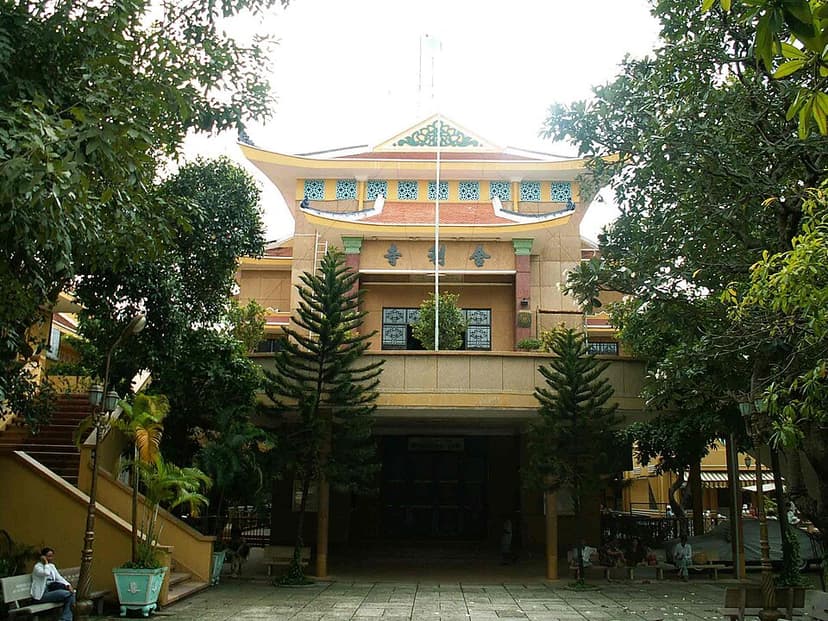
Ấn Quang Temple, also known as Chùa Ấn Quang, is a significant Buddhist center in Ho Chi Minh City, Vietnam, established in 1948. It has served as a vital hub for the development of modern Vietnamese Buddhism, hosting the School of Buddhist Studies and acting as the headquarters for the Unified Buddhist Church of Vietnam. Its importance is underscored by the numerous Dharma teachers and thousands of monks and nuns who received their training there, and it continues to function as a headquarters for the Ho Chi Minh City Buddhist Sangha.
Key Facts
- ›Founded in 1948, Ấn Quang Temple has undergone significant expansion of its buildings.
- ›It is a key meeting place for Vietnamese Buddhist leaders and a site for the Institute for Dharma Propagation.
- ›The temple served as the seat of the School of Buddhist Studies and headquarters of the Unified Buddhist Church of Vietnam.
- ›Thousands of monks and nuns received their training at Ấn Quang Temple.
- ›It currently serves as the headquarters of the Ho Chi Minh City Buddhist Sangha.
- ›The pagoda has been a focal point for the development of modern Vietnamese Buddhism.
Important Relationships
- Institute for Dharma Propagation
- School of Buddhist Studies
- Unified Buddhist Church of Vietnam
- Ho Chi Minh City Buddhist Sangha
Library, Publishing House
Development of Modern Vietnamese Buddhism, Training of Thousands of Monks and Nuns, Hq of Unified Buddhist Church of Vietnam, Hq of Ho Chi Minh City Buddhist Sangha
About Ấn Quang Temple
Ấn Quang Temple, known in Vietnamese as Chùa Ấn Quang and historically as the "Pagoda of the Light of the (Dharma) Seal" (印光寺), is a significant Buddhist center located on Master Vạn Hạnh Street in Ho Chi Minh City, Vietnam. Founded in 1948, it has played a pivotal role in the evolution of modern Vietnamese Buddhism.
Role in Vietnamese Buddhism
The pagoda has served as a crucial meeting point for Vietnamese Buddhist leaders and is a key site for the Institute for Dharma Propagation. It was the seat of the School of Buddhist Studies and the headquarters of the Unified Buddhist Church of Vietnam, highlighting its central position in the country's religious and organizational landscape. The importance of Ấn Quang Temple is further emphasized by the large number of Dharma teachers who began their work there and the thousands of monks and nuns who received their training within its precincts.
Current Function and Significance
Today, Ấn Quang Temple continues to operate as the headquarters of the Ho Chi Minh City Buddhist Sangha. Its buildings have expanded considerably since its founding, now including a library and a publishing house. The temple has also been recognized as a potential site for reconciliation between the Unified Buddhist Church of Vietnam and the government, underscoring its ongoing relevance in the socio-religious fabric of Vietnam.
Source: Wikipedia ↗
Frequently Asked Questions
What is the significance of Ấn Quang Temple?
Ấn Quang Temple is a crucial center for modern Vietnamese Buddhism, serving as a meeting place for leaders, a training ground for clergy, and the headquarters for key Buddhist organizations like the Unified Buddhist Church of Vietnam and the Ho Chi Minh City Buddhist Sangha.
When was Ấn Quang Temple founded?
Ấn Quang Temple was founded in 1948. Since its establishment, its buildings have been expanded in number and size.
What kind of activities take place at Ấn Quang Temple?
The temple functions as a meeting place for Vietnamese Buddhist leaders, a site for the Institute for Dharma Propagation, and a training center for monks and nuns. It also houses a library and a publishing house.
What is the role of Ấn Quang Temple in Vietnamese Buddhism today?
Today, Ấn Quang Temple serves as the headquarters of the Ho Chi Minh City Buddhist Sangha. It has also been a potential site for reconciliation between the Unified Buddhist Church of Vietnam and the government.
Related Buddhist Temples
Vĩnh Nghiêm Pagoda
Vĩnh Nghiêm Pagoda is a significant Buddhist temple located in Ho Chi Minh City, Vietnam, notable for being the first pagoda in the country built in a traditional Vietnamese architectural style using concrete. It houses important Buddhist figures and features a prominent seven-story tower, making it a key religious and architectural landmark.
Xá Lợi Pagoda
Xá Lợi Pagoda is the largest Buddhist temple in Ho Chi Minh City, Vietnam, constructed in 1956. It served as the central headquarters for Buddhism in South Vietnam and is named after śarīra, a term for Buddhist relics, which it was built to enshrine. The pagoda gained notoriety for being the site of raids by government forces in 1963 during protests against religious persecution.

Trấn Quốc Pagoda
Trấn Quốc Pagoda is the oldest Buddhist temple in Hanoi, Vietnam, originally constructed in the sixth century. Located on a small island in West Lake, it has undergone several relocations and renovations throughout its history. The pagoda is renowned for its picturesque setting, significant Buddhist symbolism, and its role as an active monastic residence and pilgrimage site.