
Trấn Quốc Pagoda
Trấn Quốc Pagoda is the oldest Buddhist temple in Hanoi, Vietnam, originally constructed in the sixth century. Located on a small island in West Lake, it has undergone several relocations and renovations throughout its history. The pagoda is renowned for its picturesque setting, significant Buddhist symbolism, and its role as an active monastic residence and pilgrimage site.
Key Facts
- ›Founded in the sixth century during the reign of Emperor Lý Nam Đế, making it over 1,500 years old.
- ›Originally named Khai QuốC, it was relocated to its current site on Kim Ngư islet in West Lake in 1615.
- ›Features significant Buddhist symbolism, including the eight-spoked wheel and numerous lotus flower carvings.
- ›Houses a Bodhi tree, a cutting from the original tree in Bodh Gaya, India.
- ›Serves as an active monastic residence with monks who practice vegetarianism.
- ›A popular pilgrimage site, especially during the first month of the Vietnamese calendar.

Important Relationships
- Lý Nam Đế
- Rajendra Prasad
Bodhi Tree, Lotus Flower Carvings, Statuary Pieces Dating To 1639, Eight-Spoked Wheel Symbolism
Relocation To West Lake In 1615, Major Repairs In 1815, Gift of Bodhi Tree Cutting In 1959
About Trấn Quốc Pagoda
Trấn Quốc Pagoda, also known as Trấn Quốc Tự in Sino-Vietnamese, stands as the oldest Buddhist temple in Hanoi, Vietnam. Its history stretches back to the sixth century, originally established during the reign of Emperor Lý Nam Đế between 544 and 548 AD. This makes the pagoda over 1,500 years old, a testament to its enduring significance.
History and Relocation
Initially named Khai Quốc, meaning 'National Founding,' the temple was first situated on the shores of the Red River. However, due to the river's encroachment, it was relocated in 1615 to its present site on Kim Ngư (Golden Fish) islet within Hanoi's West Lake. A small causeway now links the islet to the mainland, enhancing its accessibility. The pagoda has undergone several renovations and name changes throughout its existence, including periods known as An Quốc ('Pacification of the Realm') and Trấn Bắc ('Guardian of the North'). The most recent major repairs were completed in 1815, involving the main sanctuary and associated halls.
Architectural and Symbolic Features
The pagoda is celebrated for its harmonious architecture, which beautifully complements its watery landscape, making it a picturesque attraction. Sunset views from the temple grounds are particularly renowned. Buddhist symbolism is abundant, with the presence of the eight-spoked wheel, representing the Noble Eight-fold Path, and numerous lotus flower statues. These lotuses symbolize purity of mind, body, and speech, as well as enlightenment and achievement. Stone carvings of lotus flowers adorn a wall at the pagoda, celebrating the beauty of Vietnamese nature.
Monastic Life and Worship
Trấn Quốc Pagoda has been a center for Buddhist teachings for centuries, with monks residing and praying at its multiple shrines. These monks are vegetarian and do not marry. Visitors are often given incense to burn, a practice believed to send wishes to the divine and bring good luck, with offerings presented in odd numbers due to cultural beliefs. The temple also venerates Vietnamese goddesses known as 'Mẫu' (Mothers), including Mẫu Thượng Ngàn (green Mother) of the mountains, Mẫu Thoải (white Mother) of the water, and Mẫu Thượng Thiên (red Mother) of the sky, some of whom predate Buddhism in Vietnam.
Notable Items and Significance
Among the historic relics housed within Trấn Quốc Pagoda are statuary pieces dating back to 1639. A significant addition to the grounds is a Bodhi tree, a cutting taken from the original tree in Bodh Gaya, India, under which the Buddha attained enlightenment. This tree was a gift in 1959 during the visit of Indian President Rajendra Prasad. The pagoda remains a popular pilgrimage site, especially during the first month of the Vietnamese calendar, drawing many worshippers to its numerous shrines.
Source: Wikipedia ↗
Frequently Asked Questions
When was Trấn Quốc Pagoda founded?
Trấn Quốc Pagoda was originally constructed in the sixth century during the reign of Emperor Lý Nam Đế. This dates its founding to between 544 and 548 AD, giving it an age of over 1,500 years.
Where is Trấn Quốc Pagoda located?
The pagoda is situated on a small island near the southeastern shore of Hanoi's West Lake in Vietnam. A small causeway connects it to the mainland.
What significant relics or features does Trấn Quốc Pagoda have?
Notable features include statuary pieces dating to 1639 and a Bodhi tree which is a cutting from the original tree in Bodh Gaya, India. The pagoda also displays Buddhist symbolism like the eight-spoked wheel and lotus flower carvings.
Is Trấn Quốc Pagoda still an active monastery?
Yes, monks have resided at Trấn Quốc Pagoda for centuries, continuing to teach Buddhism. They live at the pagoda, do not marry, and maintain a vegetarian diet.
What is the historical significance of Trấn Quốc Pagoda?
As the oldest pagoda in Hanoi, it holds significant historical and religious importance. It has been known by various names throughout its history, reflecting its enduring presence and role in the region.
What kind of offerings are made at Trấn Quốc Pagoda?
Visitors often burn incense to send wishes and receive good luck, typically in odd numbers which are considered lucky. Offerings like food or money are also made, and importantly, no meat is offered as the resident monks are vegetarian.
Related Buddhist Temples

Songyue Pagoda
The Songyue Pagoda, constructed in 523 CE, is a significant Buddhist monument located on Mount Song in Henan province, China. It is recognized as the earliest known Chinese brick pagoda and one of the few intact pagodas from the sixth century, making it a crucial example of early Chinese Buddhist architecture and a UNESCO World Heritage site.
Ấn Quang Temple
Ấn Quang Temple, also known as Chùa Ấn Quang, is a significant Buddhist center in Ho Chi Minh City, Vietnam, established in 1948. It has served as a vital hub for the development of modern Vietnamese Buddhism, hosting the School of Buddhist Studies and acting as the headquarters for the Unified Buddhist Church of Vietnam. Its importance is underscored by the numerous Dharma teachers and thousands of monks and nuns who received their training there, and it continues to function as a headquarters for the Ho Chi Minh City Buddhist Sangha.
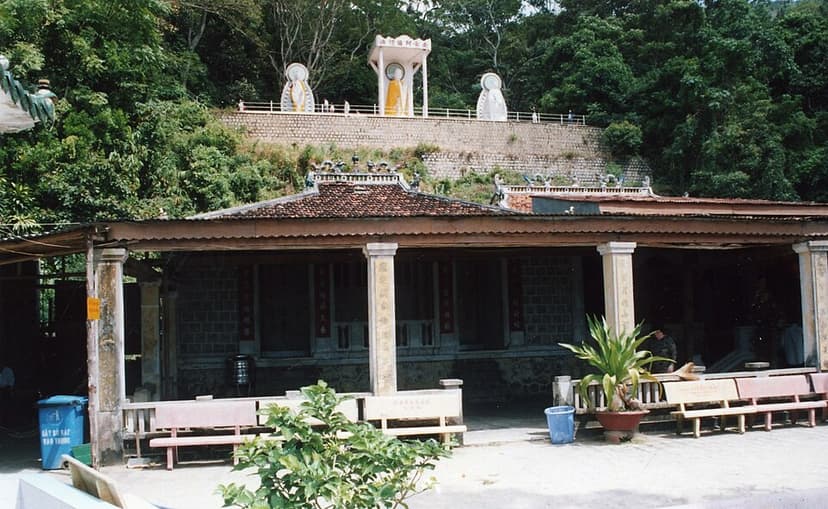
Tà Cú Pagoda
Tà Cú Pagoda is a Buddhist temple located on Tà Cú mountain in Bình Thuận Province, Vietnam. It is most notably home to the longest reclining Buddha statue in Vietnam, a significant work of art and a popular tourist attraction.