
Wat Si Saket
Wat Si Saket is a significant Buddhist temple located in Vientiane, Laos, built in 1818 by King Anouvong. It is notable for its unique architectural style and the extensive collection of Buddha images housed within its cloister walls, making it potentially the oldest standing temple in Vientiane.
Key Facts
- ›Constructed in 1818 on the orders of King Anouvong (Sethathirath V.).
- ›Features a cloister wall adorned with over 2,000 ceramic and silver Buddha images.
- ›May be the oldest temple still standing in Vientiane.
- ›Used as headquarters by Siamese armies in 1827 following King Anouvong's rebellion.
- ›Restored multiple times by the French colonial government in the early 20th century.
- ›Houses a museum within its complex.

Important Relationships
- King Anouvong
- King Rama I
- Cloister Wall With Over 2,000 Ceramic and Silver Buddha Images
- Ornate Five-Tiered Roof
- Surrounding Terrace
- Museum
- Used As Headquarters By Siamese Armies In 1827 Following King Anouvong's Rebellion.
Contemporary Buddhist Architecture
About Wat Si Saket
Wat Si Saket is a prominent Buddhist temple, or wat, located in Vientiane, the capital city of Laos. Established in 1818 by royal decree of King Anouvong, the temple holds historical and architectural significance. Its name, "Si Saket," is derived from "Sri," a Sanskrit title of veneration, prefixed to the name of Wat Saket in Bangkok, which was itself renamed by King Anouvong's contemporary, Rama I.
History and Architecture
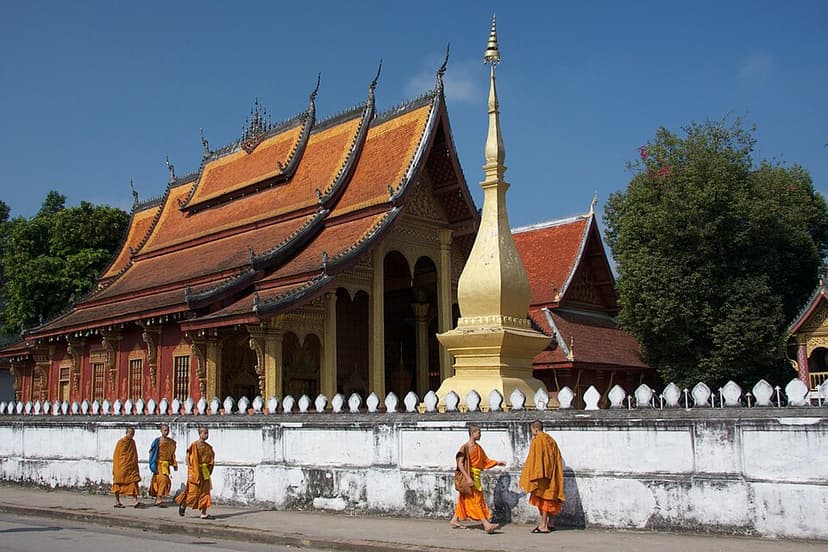
The construction of Wat Si Saket in 1818 followed a contemporary style of Buddhist architecture. It is characterized by a surrounding terrace and an ornate, five-tiered roof. This distinctive design may have contributed to its preservation during the Siamese invasion of Vientiane following King Anouvong's rebellion in 1827. During this conflict, the temple compound was utilized by the Siamese armies for lodging and as a base of operations. Wat Si Saket is considered by many to be the oldest temple still standing in Vientiane today.
Notable Features and Restoration
A remarkable feature of Wat Si Saket is its cloister wall, which houses an extensive collection of over 2,000 Buddha images. These images are crafted from both ceramic and silver, showcasing a variety of artistic styles. The temple complex also includes a museum, offering further insights into Buddhist art and history. The importance of preserving this heritage has led to several restoration efforts, notably by the French colonial government, which undertook significant work in 1924 and again in 1930.
Source: Wikipedia ↗
Frequently Asked Questions
When was Wat Si Saket built?
Wat Si Saket was built in 1818. It was constructed on the order of King Anouvong.
What is special about the walls at Wat Si Saket?
The temple features a cloister wall that contains more than 2,000 Buddha images. These images are made from ceramic and silver.
Is Wat Si Saket the oldest temple in Vientiane?
Wat Si Saket may be the oldest temple still standing in Vientiane. Historical records indicate its construction in 1818.
What happened at Wat Si Saket during King Anouvong's rebellion?
Following King Anouvong's rebellion in 1827, the armies of Siam used the temple compound as their headquarters and lodging place.
Has Wat Si Saket undergone restoration?
Yes, the French colonial government restored Wat Si Saket. These restorations took place in 1924 and again in 1930.
Related Buddhist Temples

Wat Manorom
Wat Manorom is a significant Buddhist temple and monastery located in Luang Prabang, Laos. Its founding is debated, with theories placing its establishment between 1372 and 1492, and it houses a notable 6-meter-high bronze Buddha statue dating from the 1370s.

Wat Ong Teu Mahawihan
Wat Ong Teu Mahawihan, meaning "Temple of the Heavy Buddha," is a significant Buddhist monastery in Vientiane, Laos, renowned for housing the largest Buddha image in the city. Originally built by King Setthathirath I in the 16th century, it has undergone several reconstructions after being destroyed by invasions, notably in the 19th century and then restored by the French in the early 20th century, maintaining its role as a center for Theravada Buddhist learning.
Wat Sen
Wat Sen, also known as Wat Sene Souk Haram, is a significant Buddhist temple located in Luang Prabang, Laos. Built in 1718 by King Kitsarath using 100,000 stones from the Mekong River, its name translates to "Temple of 100,000 treasures." The temple underwent restoration in 1957 to commemorate the 2500th anniversary of the Buddha's birth.