
Tissamaharama Raja Maha Vihara
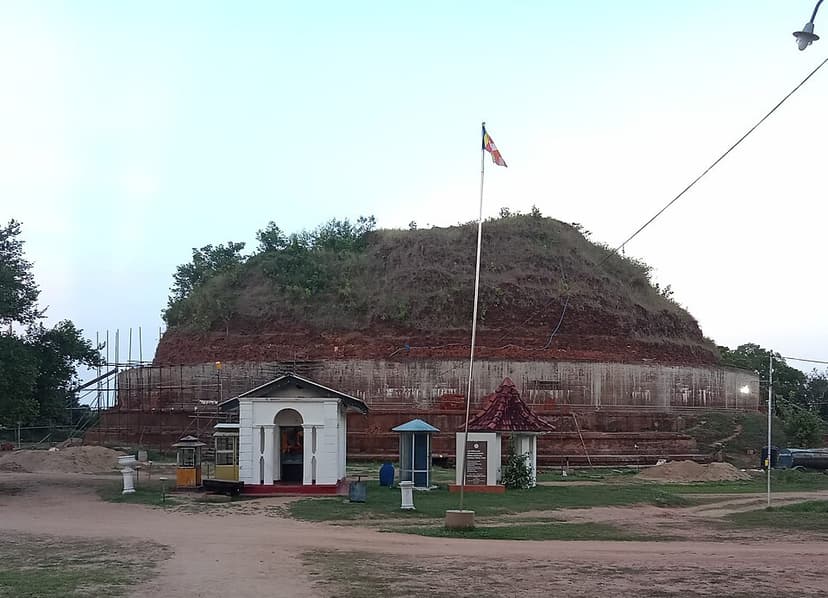
Tissamaharama Raja Maha Vihara is an ancient Buddhist temple situated in Tissamaharama, Southern Province, Sri Lanka. It was established as one of the country's first major Buddhist monasteries and served as a significant educational center for Southern Sri Lanka from the 3rd century BCE to the 11th century CE. The temple is particularly notable for its Tissamaharama Dagoba, one of the largest stupas in Sri Lanka.
Key Facts
- ›Established as one of the four major Buddhist monasteries in Sri Lanka after the arrival of Arhant Mahinda Thera.
- ›Served as a pre-eminent Buddhist educational center in Southern Sri Lanka from the 3rd century BCE to the 11th century CE.
- ›The Tissamaharama Dagoba, located within the premises, is one of the largest stupas in Sri Lanka.
- ›According to the Mahawamsa, it was built in the 2nd century BCE by King Kavan Tissa of Ruhuna.
- ›Underwent significant renovations and expansions throughout its history, including in the reigns of King Ilanaga and King Vijayabahu I.
- ›Suffered from raids and abandonment historically, with major restoration efforts beginning in the late 19th century.

Important Relationships
- Arhant Mahinda Thera
- King Devanampiya Tissa of Anuradhapura
- King Kavan Tissa of Ruhuna
- King Ilanaga
- King Mahanaga
- King Vijayabahu I
- Kalinga Magha
- Wepathaira Sumana Thera
- Walpita Medhankara Thero
- Tissamaharama Dagoba
- Bubble Shape Stupa Construction
- Square Platform Made of Granite Stones For the Stupa
- Establishment As One of the Four Major Buddhist Monasteries In Sri Lanka.
- Served As A Major Buddhist Educational Center From 3rd Century Bce To 11th Century Ce.
- Raid By Kalinga Magha In the 13th Century.
- Abandonment In the 18th Century.
- Major Restoration Efforts Beginning In 1858.
- Repair of Vertical Cracks In the Stupa In the 1990s.
About Tissamaharama Raja Maha Vihara
What is Tissamaharama Raja Maha Vihara?
Tissamaharama Raja Maha Vihara is an ancient Buddhist temple located in Tissamaharama, within the Southern Province of Sri Lanka. It holds significant historical and religious importance as one of the earliest major Buddhist monasteries established in the country following the introduction of Buddhism by Arhant Mahinda Thera. For centuries, from the 3rd century BCE to the 11th century CE, the monastery functioned as a prominent Buddhist educational center serving Southern Sri Lanka.
History and Development
The establishment of Tissamaharama Raja Maha Vihara is closely linked to the spread of Buddhism in Sri Lanka during the reign of Emperor Asoka of India. While some accounts attribute its founding to King Kavan Tissa in the 2nd century BCE, others suggest an earlier origin by King Mahanaga in the 3rd century BCE. The temple, initially known as Silapassa Pirivena, saw expansions and renovations under various rulers, including King Ilanaga. It became a large monastery in historic Southern Sri Lanka, with kings donating lands for its maintenance and the welfare of resident monks.
The Tissamaharama Dagoba, a central feature of the complex, is one of Sri Lanka's largest stupas. Constructed in a 'Bubble Shape' on a granite platform, it is believed to commemorate a visit by Buddha. The dagoba has undergone numerous renovations throughout its history, with significant restoration efforts beginning in the late 19th century after periods of decline and damage, including a raid by Kalinga Magha in the 13th century and abandonment during the 18th century.
Notable Features and Restoration
The Tissamaharama Dagoba stands as a testament to ancient engineering and religious devotion, with a height of 156 feet and a circumference of 550 feet. Historical chronicles suggest it enshrines important relics, though the exact nature is debated among scholars. The stupa has also faced structural challenges in recent times, with repairs undertaken in the late 1990s to address cracking.
Restoration of the temple complex has been a long process, spearheaded by monks like Wepathaira Sumana Thera and Walpita Medhankara Thero. These efforts, supported by various committees and authorities, have aimed to preserve the sanctity and structural integrity of this ancient religious site. The current chief incumbent is Ven. Devalegama Dhammasena Nayaka Thera.
Source: Wikipedia ↗
Frequently Asked Questions
When was Tissamaharama Raja Maha Vihara founded?
Historical accounts suggest the temple was built in the 2nd century BCE as Silapassa Pirivena by King Kavan Tissa. However, some historians propose its initial construction by King Mahanaga in the 3rd century BCE, with later expansion by King Kavan Tissa.
What is the significance of the Tissamaharama Dagoba?
The Tissamaharama Dagoba is one of the largest stupas in Sri Lanka, standing at 156 feet tall. It is believed to commemorate Buddha's visit to the area and potentially enshrines relics such as the frontal bone relic and the left tooth relic of Buddha.
What historical events impacted Tissamaharama Raja Maha Vihara?
The temple experienced periods of expansion and renovation under various kings. It also faced challenges, including raids by invader Kalinga Magha in the 13th century and subsequent abandonment during the Dutch Colonial rule due to deterioration.
When did restoration efforts begin for Tissamaharama Raja Maha Vihara?
Significant restoration work on the stupa commenced in 1858 through the efforts of Wepathaira Sumana Thera. These extensive renovations continued into the early 20th century, with the pinnacle being placed in 1900.
What is the current status of the Tissamaharama Dagoba?
In 1990, the stupa developed vertical cracks, prompting intervention from the Department of Archaeology of Sri Lanka. Galvanized steel cables were used to secure the dome, and repairs were completed in February 1998.
Related Buddhist Temples

Warana Raja Maha Vihara
Warana Raja Maha Vihara is an ancient Buddhist temple located in Thihariya, Gampaha District, Sri Lanka. Recognized as an archaeological protected site, it is believed to have been founded during the reign of King Devanampiyathissa and has undergone significant renovations by various rulers throughout Sri Lankan history. The temple is notable for its multi-level structure, housing cave temples, stupas, and ancient Buddha statues and paintings.
Deeghawapi
Deeghawapi is a significant Buddhist sacred shrine and archaeological site in Sri Lanka, with historical records dating back to the 3rd century BCE. Its importance is deeply intertwined with legends of the Buddha's visits and is frequently mentioned in ancient chronicles and Pali literature. The site has undergone extensive restoration, with reconstruction efforts aiming for completion by the end of 2023.

Kiri Vehera
Kiri Vehera is an ancient stupa located in Kataragama, Sri Lanka, believed to have been constructed in the 3rd century BC by King Mahanaga. It is recognized as one of the 16 most sacred Buddhist pilgrimage sites in ancient Sri Lanka and is a significant religious landmark.