
Deeghawapi
Deeghawapi is a significant Buddhist sacred shrine and archaeological site in Sri Lanka, with historical records dating back to the 3rd century BCE. Its importance is deeply intertwined with legends of the Buddha's visits and is frequently mentioned in ancient chronicles and Pali literature. The site has undergone extensive restoration, with reconstruction efforts aiming for completion by the end of 2023.
Key Facts
- ›Historical records trace Deeghawapi back to the 3rd century BCE.
- ›Legends claim the Buddha himself visited the site and meditated there.
- ›Ancient chronicles like the Mahavamsa and Dipavamsa mention Deeghawapi.
- ›King Kannittha Tissa is associated with an inscription found at the site.
- ›King Saddhatissa founded the main Dighavapi-vihara and built a cetiya.
- ›Restoration efforts for the stupa and premises were initiated in 2021.
Important Relationships
- Mahavamsa
- Dipavamsa
- Samantha Pasaadika
- King Kannittha Tissa
- King Kavan-Tissa
- King Dutugemunu
- King Saddhatissa
- King Parakramabahu I
- King Rajasinghe II
- Dutch East India Company (VOC)
Cetiya, Reservoir
- Legendary Visits By the Buddha
- Discovery of A Gold Leaf Inscription From King Kannittha Tissa's Reign
- Founding of Dighavapi-Vihara By King Saddhatissa
- Initiation of Stupa Restoration In 2021
About Deeghawapi
Deeghawapi, with its Pali name Dīghavāpī translating to "long reservoir," stands as a significant Buddhist sacred shrine and an important archaeological site located in the Ampara District of Sri Lanka. Historical accounts trace its origins back to the 3rd century BCE, a period when water reservoirs, known as "tanks," were a crucial element of the ancient Sri Lankan hydraulic civilization, with temples and cities often developing around them.
Legend and Ancient History
The veneration of Deeghawapi is deeply rooted in legends, most notably concerning purported visits by the Buddha himself. Ancient chronicles such as the Mahavamsa (written in the 5th century CE) and the earlier Dipavamsa, along with the Pali work Samantha Pasaadika, contain numerous allusions to Deeghawapi. These texts suggest that on the very spot where the Buddha is said to have meditated, a cetiya was later erected. While the historical likelihood of the Buddha's physical presence at Dighavapi is considered remote by some, the persistent legend underscores the site's profound spiritual importance from ancient times. A pious tale from the Pali literary work Saararthapakaasani recounts a novice monk miraculously saved after falling from the Dighavapi cetiya by recalling a protective chant.
Archaeological evidence further supports the site's ancient history. Numerous ancient inscriptions have been discovered in the vicinity, including a gold leaf inscription unearthed in 1986, which was deposited within a gold reliquary. This inscription mentions King Kannittha Tissa, who reigned from 164 to 192 CE, and refers to a stupa or reliquary. More extensive historical and lithographic records place the region within the Ruhuna kingdom, particularly during the era of King Kavan-Tissa and his sons. The area was known in the 3rd century BCE as the district of "Dighamandala" or "Digaamadulla." King Dutugemunu's brother, Tissa (later known as Saddhatissa), governed this district and later retired to Dighavapi with his mother. Saddhatissa is credited with founding the main Dighavapi-vihara and constructing a cetiya there, to which he made significant offerings. Later historical references also connect Deeghawapi to the campaigns of King Parakramabahu I in the 12th century.
Medieval Times and Later Settlers
The Dighavapi Vihara and Chetiya continued to receive royal patronage and attract pilgrims through challenging periods. In 1638 CE, King Rajasinghe II granted the area around Deeghawapi to the Dutch in exchange for their assistance in expelling the Portuguese from Sri Lanka's coastal regions. This arrangement also included trading rights for the Dutch East India Company. Descendants of Dutch settlers still reside in the region. Additionally, in 1736, Muslims who traced their ancestry to Arab refugees settled in the Ampara district, around Deeghawapi, by King Senerat in 1726, also became part of the area's population.
Stupa Restoration
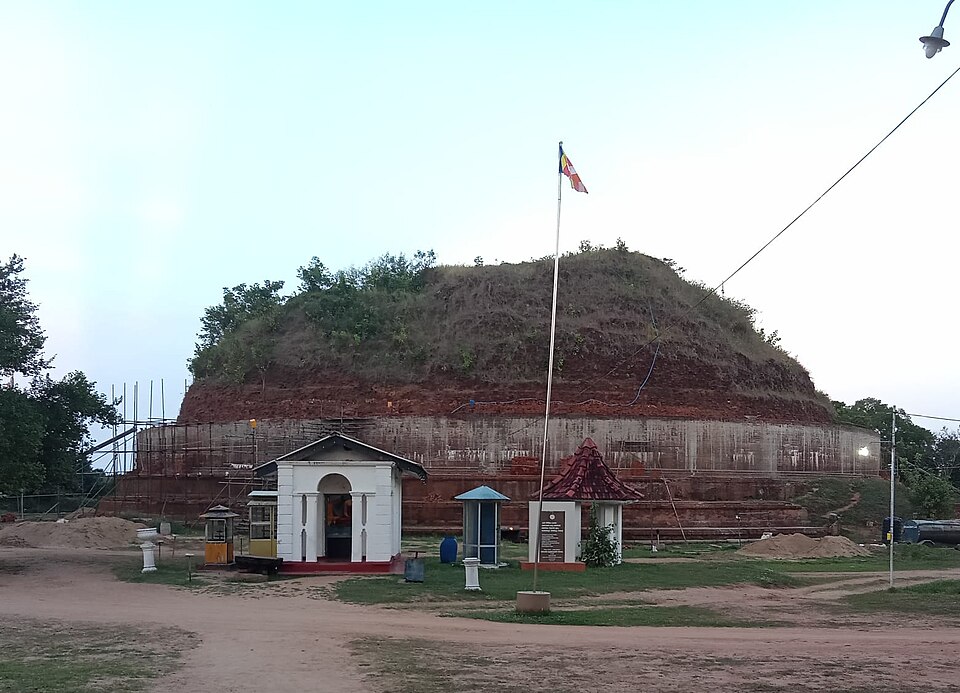
In recent times, significant efforts have been made to restore and reconstruct the ancient premises. In 2021, a 'Deeghawapi Trust Fund' was established, initiating a project to rebuild the stupa and its surrounding structures. With the involvement of the Sri Lankan Army, construction has progressed, with the stupa reaching a height of 10 feet. The project was anticipated to conclude by the end of 2023.
Source: Wikipedia ↗
Frequently Asked Questions
When was Deeghawapi first established?
Historical records indicate that Deeghawapi dates back to the 3rd century BCE. Its significance is further emphasized by its mention in ancient chronicles.
Are there any legends about the Buddha at Deeghawapi?
Yes, legends connect Deeghawapi with visits by the Buddha himself. It is said that a cetiya was later erected on the spot where he sat in meditation.
What role did ancient kings play in Deeghawapi's history?
Several Sinhalese kings are linked to Deeghawapi. King Kannittha Tissa is associated with an inscription found at the site, and King Saddhatissa founded the main Dighavapi-vihara and built a cetiya there.
What is the current status of Deeghawapi?
Restoration and reconstruction efforts for the stupa and ancient premises were initiated in 2021, with an expected completion date by the end of 2023. The Sri Lankan Army has been involved in the construction.
What is the meaning of the name Deeghawapi?
Deeghawapi is derived from Pali, where 'Dīghavāpī' translates to 'long reservoir'. This name reflects the historical importance of water reservoirs in ancient Sri Lanka.
Related Buddhist Temples

Kiri Vehera
Kiri Vehera is an ancient stupa located in Kataragama, Sri Lanka, believed to have been constructed in the 3rd century BC by King Mahanaga. It is recognized as one of the 16 most sacred Buddhist pilgrimage sites in ancient Sri Lanka and is a significant religious landmark.

Thuparamaya
Thuparamaya is recognized as the earliest documented Buddhist temple in Sri Lanka, with its construction dating back to the introduction of Buddhism to the island. It holds significant historical and religious importance as the first stupa built in Sri Lanka, enshrining a relic of the Buddha and marking the formal arrival of Theravada Buddhism.

Tissamaharama Raja Maha Vihara
Tissamaharama Raja Maha Vihara is an ancient Buddhist temple situated in Tissamaharama, Southern Province, Sri Lanka. It was established as one of the country's first major Buddhist monasteries and served as a significant educational center for Southern Sri Lanka from the 3rd century BCE to the 11th century CE. The temple is particularly notable for its Tissamaharama Dagoba, one of the largest stupas in Sri Lanka.