
Stongdey Monastery
Stongdey Monastery, also known by variations such as Stongde and Tonday, is a prominent Buddhist monastery situated in Zanskar, Ladakh, in northern India. Founded in 1052 by Lama Marpa Lotsawa, a disciple of Naropa, it later became affiliated with the Gelugpa school and is dedicated to Je Tsongkhapa. The monastery is the second-largest monastic institution in Zanskar.
Key Facts
- ›Founded in 1052 by Lama Marpa Lotsawa, a disciple of Naropa.
- ›Later became affiliated with the Gelugpa school and dedicated to Je Tsongkhapa.
- ›It is the second-largest monastic institution in Zanskar.
- ›Home to a community of approximately 60 Gelukpa monks.
- ›Hosts the annual Gustor Festival on the 28th and 29th days of the eleventh Tibetan lunar month.
- ›Features seven temples, including the Tshogs-khang adorned with distinctive paintings.

Important Relationships
- Naropa
- Lama Marpa Lotsawa
- Tshogs-Khang Temple
- Paintings of Deities On A Black Background Outlined In Gold
- Founded In 1052
- Taken Over By the Gelugpa School Approximately Four Centuries After Its Founding
- Annual Gustor Festival
About Stongdey Monastery
Stongdey Monastery, also known by variations such as Stongde, Stongday, Tonday, or Thonde, is a significant and flourishing Buddhist monastery located in Zanskar, Ladakh, in northern India. Situated on a hillock overlooking the village of Stongdey, it lies approximately 18 kilometers northeast of Padum along the road to Nimmu.
Founding and History
The monastery's origins trace back to 1052, when it was founded by Lama Marpa Lotsawa, a renowned translator and a disciple of the esteemed scholar Naropa. Approximately four centuries after its establishment, Stongdey Monastery came under the influence of the Gelugpa school, becoming dedicated to Je Tsongkhapa, the founder of the Gelug school. This transition marked a significant shift in its religious affiliation and practice.
Community and Activities
Stongdey Monastery stands as the second-largest monastic institution in the Zanskar region, currently housing a community of about 60 Gelukpa monks. The monastery is a site of religious observance and cultural tradition. Annually, it hosts the Gustor Festival, a significant event celebrated on the 28th and 29th days of the eleventh month of the Tibetan calendar.
Architectural Features
The monastery complex encompasses a total of seven temples. Among these, the Tshogs-khang is particularly noteworthy for its interior decoration. It is adorned with exquisite paintings, some of which feature deities rendered on a black background and outlined in gold, showcasing a distinctive artistic style.
Source: Wikipedia ↗
Frequently Asked Questions
When was Stongdey Monastery founded?
Stongdey Monastery was founded in the year 1052. It was established by the famous translator Lama Marpa Lotsawa.
Who founded Stongdey Monastery?
The monastery was founded by Lama Marpa Lotsawa, who was a disciple of the renowned scholar Naropa. Marpa Lotsawa was a famous translator.
What Buddhist tradition is Stongdey Monastery associated with?
Stongdey Monastery was originally founded by Lama Marpa Lotsawa, but it was later taken over by the Gelugpa school about four centuries after its establishment. It is now dedicated to Je Tsongkhapa.
What is the significance of the Gustor Festival at Stongdey Monastery?
The Gustor Festival is an important annual event held at Stongdey Monastery. It takes place on the 28th and 29th days of the eleventh month according to the Tibetan calendar.
What are some notable features of Stongdey Monastery?
The monastery comprises seven temples in total. The Tshogs-khang temple is particularly notable for its exquisite paintings, some of which depict deities on a black background outlined in gold.
Related Buddhist Temples

Key Monastery
Key Monastery, also known as Kye Gompa, is a prominent Tibetan Buddhist monastery situated atop a hill in the Spiti Valley of Himachal Pradesh, India. It serves as the largest monastery in the region and a significant religious training center for lamas, dedicated to the reincarnation of the great translator Lotsawa Rinchen Zangpo.
Likir Monastery
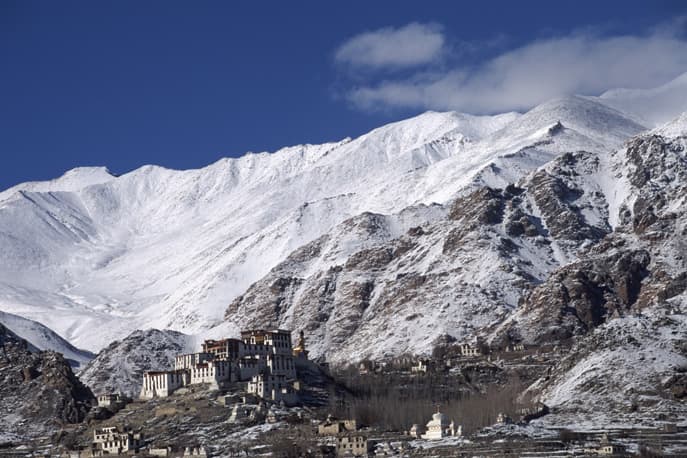
Likir Monastery, also known as Likir Gompa, is a significant Buddhist monastery located in Ladakh, India. Established in 1065, it is a prominent center for the Gelugpa sect of Tibetan Buddhism and serves as the seat for the Ngari Rinpoche.
Spituk Monastery
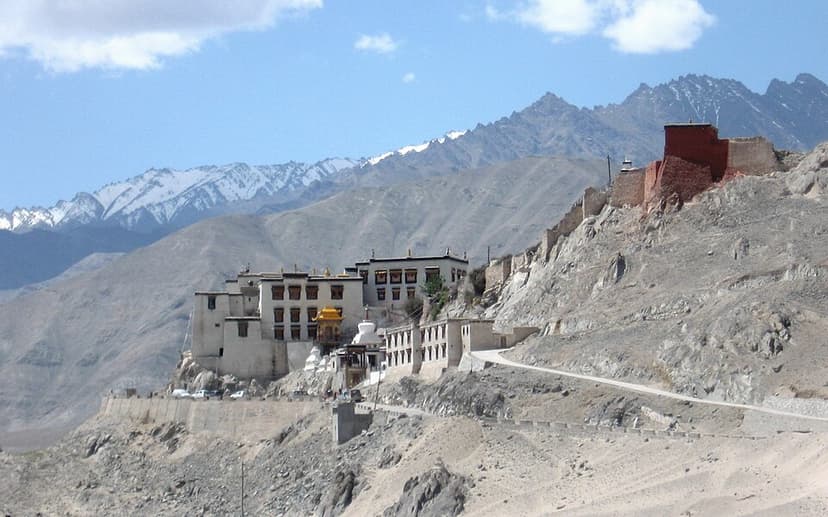
Spituk Monastery, also known as Spituk Gompa, is a significant Buddhist monastery located in Spituk, Ladakh. Founded in the 11th century by Od-de, it was initially a Red Hat institution before being taken over by the Gelugpa sect in the 15th century. The monastery is notable for its large monastic community and its annual Gustor Festival.