
Key Monastery
Key Monastery, also known as Kye Gompa, is a prominent Tibetan Buddhist monastery situated atop a hill in the Spiti Valley of Himachal Pradesh, India. It serves as the largest monastery in the region and a significant religious training center for lamas, dedicated to the reincarnation of the great translator Lotsawa Rinchen Zangpo.
Key Facts
- ›Founded in the 11th century by Dromtön, a pupil of Atisha, though historical accounts suggest a possible earlier Kadampa monastery at Rangrik.
- ›Has a history of extensive damage and rebuilding due to invasions, wars, fire, and earthquakes.
- ›Walls are adorned with 14th-century paintings and murals, reflecting Chinese architectural influence.
- ›Houses a collection of ancient murals, books, and Buddha images across its three floors.
- ›Currently belongs to the Gelugpa sect and accommodates nearly 250 monks.
- ›Celebrated its millennium in 2000 with the presence of the Dalai Lama, who inaugurated a new Prayer Hall.

Important Relationships
- Atisha (teacher of founder)
- Dromtön (founder)
- Fifth Dalai Lama (reign during damage)
- Dalai Lama (Fourteenth Dalai Lama inaugurated new Prayer Hall)
- Lotsawa Rinchen Zangpo (reincarnation lineage)
14th-Century Paintings and Murals, Ancient Murals and Books, Buddha Images, Tangyur Room Richly Painted With Murals, Assembly Hall
- Founded In the 11th Century
- Plundered and Damaged By Mongols In the Mid-17th Century
- Sacked During Wars Between Ladakh and Kulu Around 1821
- Severely Damaged By Dogra Army In 1841
- Attacked By Sikhs In 1841
- Ravaged By Fire In the 1840s
- Damaged By Earthquake In 1975
- Millennium Celebration In 2000
- Inauguration of A New Prayer Hall By the Dalai Lama In 2000
Tibetan Buddhist, Monastic Architecture With Chinese Influence
About Key Monastery
Key Monastery: A Beacon of Tibetan Buddhism in Spiti Valley
Key Monastery, also known as Kye Gompa, stands as the largest monastery in the Spiti Valley of Himachal Pradesh, India. Perched dramatically atop a hill overlooking the Spiti River at an altitude of 4,166 meters (13,668 ft), it is a significant religious training center for lamas within the Gelugpa sect. Its historical roots trace back to the 11th century, making it a venerable institution with a rich and often tumultuous past.
History and Resilience
The monastery is traditionally attributed to Dromtön, a pupil of the renowned teacher Atisha, with its founding placed in the 11th century. However, historical records suggest that this may refer to an earlier Kadampa monastery that was likely destroyed during the 14th century. Throughout its existence, Key Monastery has endured numerous challenges. It faced extensive plundering and damage by the Mongols in the mid-17th century, and further devastation during wars between Ladakh and Kulu around 1821. The Dogra army inflicted severe damage in 1841, and later that year, it was also attacked by Sikhs. The monastery was ravaged by fire in the 1840s, and a violent earthquake in 1975 caused further structural issues. Despite these adversities, Key Monastery has been consistently repaired and reconstructed, demonstrating remarkable resilience.
Architectural and Artistic Significance
The walls of Key Monastery are adorned with intricate paintings and murals, which are exemplary of 14th-century monastic architecture, showing signs of Chinese influence. The monastery houses a valuable collection of ancient murals, books, and Buddha images. Its structure comprises three floors, with the lowest being largely underground and used for storage. A specific room, known as the Tangyur, is particularly noted for its richly painted murals. The ground floor features a beautifully decorated Assembly Hall, alongside cells for the resident monks.
Spiritual Life and Modern Role
Key Monastery is an active center for the Gelugpa sect, alongside other prominent monasteries in Spiti like Tabo and Dhankar. It currently accommodates nearly 250 monks, who live within its sacred confines year-round. The monastery celebrated its millennium in the year 2000, an event graced by the presence of the Dalai Lama, who also inaugurated a new Prayer Hall on August 3, 2000. In recent times, Key Monastery has also extended its support to the community by hosting the "Kachen Dugyal Memorial Old Aged – Handicapped Society," providing accommodation for elderly and disabled individuals. Its accessibility is facilitated by its location just above NH 505, with a helipad also available nearby.
Source: Wikipedia ↗
Frequently Asked Questions
Where is Key Monastery located?
Key Monastery is located on top of a hill in the Spiti Valley of Himachal Pradesh, India, near the Spiti River. It is situated at an altitude of 4,166 meters (13,668 ft) above sea level.
When was Key Monastery founded?
Key Monastery is traditionally said to have been founded in the 11th century by Dromtön, a student of Atisha. However, some historical accounts suggest this might refer to an earlier Kadampa monastery.
What is the significance of Key Monastery?
It is the largest monastery in the Spiti Valley and functions as a religious training center for lamas. It holds a collection of ancient art and religious texts and is dedicated to a significant reincarnation of a revered translator.
What are some notable features of Key Monastery?
The monastery's walls are covered with paintings and murals, showcasing 14th-century monastic architecture with Chinese influence. It also contains ancient murals, books, and Buddha images, spread across its three floors.
Has Key Monastery undergone significant historical events?
Yes, Key Monastery has faced numerous challenges, including plunder by Mongols in the mid-17th century, being sacked during wars between Ladakh and Kulu around 1821, severe damage by the Dogra army in 1841, and further destruction by fire and a violent earthquake in 1975.
How many monks reside at Key Monastery?
Key Monastery accommodates nearly 250 monks who reside within its walls year-round. Some monks may travel to South Indian monasteries during the winter.
Related Buddhist Temples
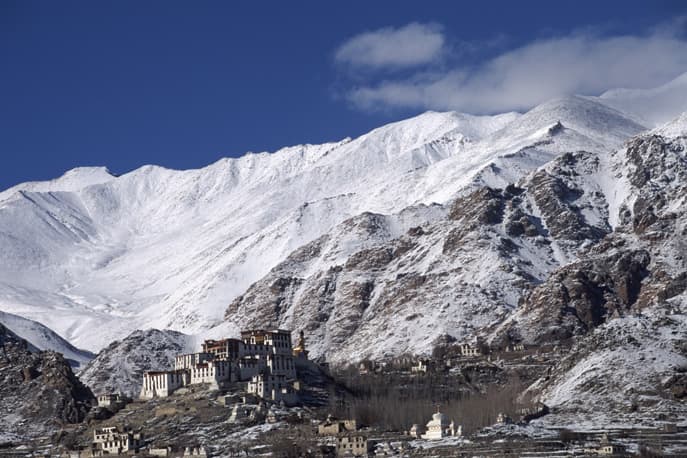
Likir Monastery
Likir Monastery, also known as Likir Gompa, is a significant Buddhist monastery located in Ladakh, India. Established in 1065, it is a prominent center for the Gelugpa sect of Tibetan Buddhism and serves as the seat for the Ngari Rinpoche.
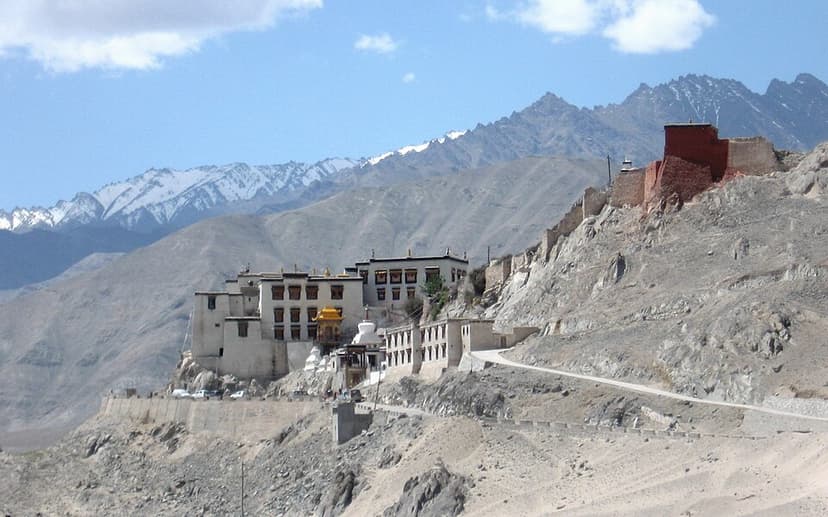
Spituk Monastery
Spituk Monastery, also known as Spituk Gompa, is a significant Buddhist monastery located in Spituk, Ladakh. Founded in the 11th century by Od-de, it was initially a Red Hat institution before being taken over by the Gelugpa sect in the 15th century. The monastery is notable for its large monastic community and its annual Gustor Festival.

Stongdey Monastery
Stongdey Monastery, also known by variations such as Stongde and Tonday, is a prominent Buddhist monastery situated in Zanskar, Ladakh, in northern India. Founded in 1052 by Lama Marpa Lotsawa, a disciple of Naropa, it later became affiliated with the Gelugpa school and is dedicated to Je Tsongkhapa. The monastery is the second-largest monastic institution in Zanskar.