
Ritigala Buddhist Monastery
Ritigala Buddhist Monastery is an ancient monastic site located on Ritigala mountain in central Sri Lanka. Its ruins and rock inscriptions date back to the 1st century BCE, indicating a history of Buddhist practice focused on extreme austerity. The monastery is notable for its unique architectural features, absence of traditional icons, and its setting within a strict nature reserve.
Key Facts
- ›The ruins and rock inscriptions of Ritigala Buddhist Monastery date back to the 1st century BCE.
- ›The monastery is situated on Ritigala mountain, a significant topographical feature in central Sri Lanka.
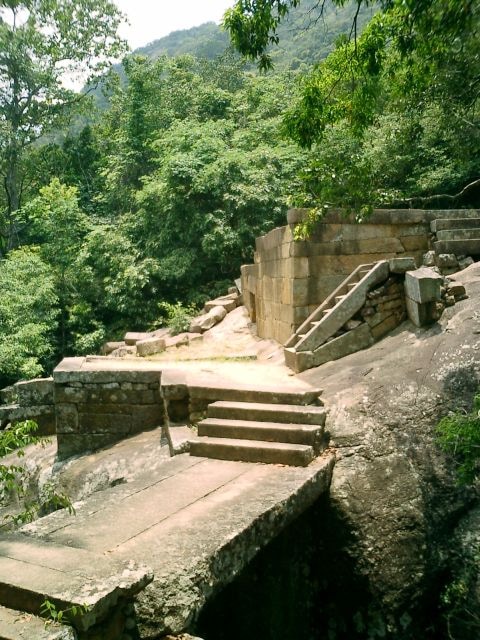
- ›It is characterized by unique stone double-platform structures (Padhanaghara) linked by stone bridges.
- ›Unlike traditional Buddhist temples, Ritigala lacks icons like Buddha statues, bo trees, or stupas, reflecting a focus on extreme austerity.
- ›The site was associated with ascetic monks known as Pansukulikas who practiced extreme austerity.
- ›Ritigala is located within a strict nature reserve, known for its distinct wet microclimate and diverse flora.
Important Relationships
- King Pandukabhaya
- King Sena I
- Pansukulikas (ascetic monks)
Stone Double-Platform Structures, Stone Bridges, Ancient Man-Made Reservoir, Decorated Urinals, Ruins of A Monastery Hospital
- Endowment of the Monastery By King Sena I In the 9th Century Ad For Pansukulika Monks.
Forest Monastery Architecture
About Ritigala Buddhist Monastery
Ritigala Buddhist Monastery is an ancient monastic complex situated on the slopes of Ritigala mountain in central Sri Lanka, approximately 43 kilometers from Anuradhapura. The ruins and rock inscriptions found at the site indicate its establishment and use as a Buddhist monastery dating back to the 1st century BCE.
History and Austerity
The monastery is particularly known for its association with the Pansukulikas, a group of Buddhist ascetic monks devoted to extreme austerity in their pursuit of supreme enlightenment. This commitment to detachment from traditional monastic life is reflected in their practice of using robes made from cleaned rags, often shrouds found in cemeteries, aligning with the thirteen ascetic practices (Dhutanga) outlined in Buddhism. Royal patrons, such as King Sena I in the 9th century AD, provided endowments for the monastery, supporting a larger complex for these ascetic monks.
Architecture and Features
Ritigala distinguishes itself from many traditional Buddhist temples through its architectural style and the notable absence of traditional icons. Instead of stupas or bo trees, the site features unique stone double-platform structures, known as Padhanaghara, which are characteristic of forest monasteries. These structures, often found in pairs and linked by stone bridges, are believed to have been used for solitary meditation and congregational functions. The monastery also includes an ancient man-made reservoir, Banda Pokuna, a feat of engineering possibly used for ritual bathing before entering the monastic precinct. Ruins of a monastery hospital, complete with grinding stones for medicinal herbs and stone Ayurvedic oil baths, are also present.
Ecological Setting
Ritigala mountain itself is a significant geographical feature, rising steeply from the surrounding plains and experiencing a unique wet microclimate due to its interception of moisture-bearing winds. This makes it the wettest part of Sri Lanka's dry zone. The mountain and its surroundings are designated as the Ritigala Strict Nature Reserve, covering over 1,500 hectares and managed by the Department of Wildlife and the Forest Department of Sri Lanka. The reserve is home to diverse plant communities within the Sri Lanka dry-zone dry evergreen forests ecoregion.
Legends and Significance
Legends are interwoven with the history of Ritigala, including beliefs about potent medicinal herbs and the presence of Yakkas, guardian spirits of the mountain. These legends contribute to the mystique of the site. The monastery's emphasis on extreme austerity, its unique architectural elements, and its placement within a protected natural environment make Ritigala a site of considerable historical and ecological interest.
Source: Wikipedia ↗
Frequently Asked Questions
What is the historical significance of Ritigala Buddhist Monastery?
Ritigala Buddhist Monastery is significant as an ancient monastic site with ruins and inscriptions dating back to the 1st century BCE. It represents a tradition of Buddhist practice focused on extreme austerity, particularly among the Pansukulikas.
What are the unique architectural features of Ritigala?
The monastery is distinguished by its stone double-platform structures, known as Padhanaghara, which are characteristic of forest monasteries. These platforms are often linked by stone bridges and were likely used for solitary meditation and congregational activities.
Why does Ritigala lack traditional Buddhist icons?
Ritigala is notable for its absence of traditional Buddhist icons such as Buddha statues, bo trees, or stupas. This reflects the extreme austerity and detachment from worldly pursuits practiced by the ascetic monks who resided there.
What is the ecological significance of Ritigala?
Ritigala mountain intercepts moisture-bearing winds, creating a unique wet microclimate in the surrounding dry zone. The mountain is a strict nature reserve managed by the Department of Wildlife and the Forest Department, supporting diverse plant communities.
Are there any legends associated with Ritigala?
Legends abound on Ritigala, including beliefs about powerful medicinal herbs and the protection of the mountain by Yakkas, or guardian spirits. Prince Pandukabhaya is also said to have been assisted by Yakkas in battles at the foot of the mountain.
Related Buddhist Temples

Dambulla cave temple
The Dambulla cave temple, also known as the Golden Temple of Dambulla, is a significant World Heritage Site in Sri Lanka renowned for its extensive collection of Buddhist statues and murals. This ancient cave monastery complex, dating back to the first century BCE, is celebrated as the largest and best-preserved of its kind in Sri Lanka, offering a comprehensive visual narrative of Buddhist teachings and Sri Lankan history.

Dhowa rock temple
The Dhowa Rock Temple (Dowa Raja Maha Viharaya) is a significant heritage-listed rock-cut Buddhist temple in Sri Lanka's Uva Province. Believed to have been constructed in the first century BC by King Valagamba, it is renowned for its large, unfinished Buddha statue carved into a granite cliffside and its vibrant mural paintings.

Bedse Caves
Bedse Caves is a significant Buddhist rock-cut monument complex located in Pune District, Maharashtra, India. Dating back to the 1st century BCE of the Satavahana period, the caves comprise a chaitya (prayer hall) and a vihara (monastery), both featuring intricate carvings and decorative motifs. They are notable for their architectural style and their place within a historically important region of Buddhist cave sites.