
Quốc n Temple
Temple·Vietnam·17th century·Lâm Tế Zen School
Quốc n Temple is a significant Buddhist temple located in Huế, central Vietnam, founded by Zen Master Thích Nguyên Thiều. It holds importance as the seat of a Buddhist patriarch lineage and has a history of royal patronage and renovations by the Nguyễn dynasty.
Key Facts
- ›Founded by Zen Master Thích Nguyên Thiều between 1682 and 1685, initially named Vĩnh n Temple.
- ›Renamed QuốC n Temple in 1689 by Nguyễn Lord Nguyễn PhúC Trân, who also granted tax exemption.
- ›Serves as the seat of a Buddhist patriarch lineage for central Vietnam, linked to the LâM Tế Zen School.
- ›Underwent multiple renovations and expansions during the Nguyễn dynasty, with funding from Emperors Gia Long and Minh Mạng.
- ›Features a main ceremonial hall, a patriarch hall, and sangha quarters.
- ›Contains a shrine commemorating the birth of Prince Siddhartha and a plaque honoring its founder.

Important Relationships
- Nguyễn Phúc Chu
- Thích Nguyên Thiều
- Nguyễn Phúc Trân
- Emperor Gia Long
- Emperor Minh Mạng
- Main Ceremonial Hall
- Patriarch Hall
- Sangha Quarters
- Shrine Commemorating the Birth of Prince Siddhartha
- Plaque Erected In 1729 Praising the Founder
- Founded As VĩNh N Temple
- Renamed QuốC N Temple and Granted Tax Exemption
- Renovated With Funding From Emperor Gia Long
- Renovated With Funding From Emperor Minh MạNg
- Stupa Built For the Abbot's Remains
- Expansion and Renovation Phases
- Triple Gate and Further Shrines Built
About Quốc n Temple
Quốc Ân Temple
Quốc Ân Temple (Chùa Quốc Ân) is a significant Buddhist temple situated on a small hill in the Trường An ward of Huế, central Vietnam. Located approximately 2 kilometers from the Phú Cam bridge spanning the Perfume River, the temple holds historical and religious importance as the seat of a prominent Buddhist patriarch lineage for central and southern Vietnam.
Founding and Early History
The temple was established between 1682 and 1685 by Zen Master Thích Nguyên Thiều, a Chinese immigrant and disciple of Thích Khoáng Viên. Initially named Vĩnh Ân Temple, it was later renamed Quốc Ân Temple in 1689 by Nguyễn Lord Nguyễn Phúc Trân, who also bestowed upon it an exemption from land taxation. Thích Nguyên Thiều, the 33rd patriarch of the Lâm Tế Zen School, played a pivotal role in establishing a spiritual lineage, with a substantial portion of Buddhists in the region tracing their spiritual roots to his disciples.
Royal Patronage and Renovations
During the Nguyễn dynasty, which originated from the Nguyễn lords, Quốc Ân Temple underwent numerous renovations and expansions. In 1805, Long Thành, the elder sister of Emperor Gia Long, personally funded a renovation project. Further imperial support came in 1822 when Emperor Minh Mạng, Gia Long's successor, funded another renovation. Following the abbot's death in 1825, a stupa was erected in the temple garden to house his remains. Between 1837 and 1842, the temple saw another phase of expansion and renovation, and from 1846 to 1863, a triple gate and additional shrines were constructed.
Temple Layout and Features
The temple complex is organized with the main ceremonial hall at the front, the patriarch hall at the rear, and the sangha's quarters on the sides. The main hall contains a shrine dedicated to the birth of Prince Siddhartha, who would later achieve enlightenment as Gautama Buddha. In the front yard, a plaque erected in 1729 by Nguyễn Lord Nguyễn Phúc Chu stands as a testament to the spiritual achievements of the temple's founder, Thích Nguyên Thiều.
Source: Wikipedia ↗
Frequently Asked Questions
When was Quốc Ân Temple founded?
Quốc Ân Temple was founded by Zen Master Thích Nguyên Thiều between 1682 and 1685. It was initially known as Vĩnh Ân Temple during its establishment.
Who founded Quốc Ân Temple?
The temple was founded by Zen Master Thích Nguyên Thiều, who was originally from China and a disciple of Thích Khoáng Viên. He is considered the 33rd patriarch of the Lâm Tế Zen School.
What is the historical significance of Quốc Ân Temple?
Quốc Ân Temple is the seat of a Buddhist patriarch lineage in central Vietnam. The majority of Buddhists in the region are believed to have descended from Thích Nguyên Thiều's disciples.
Has Quốc Ân Temple received royal patronage?
Yes, the temple has a history of royal patronage. The name was changed by Nguyễn Lord Nguyễn Phúc Trân, and the Nguyễn dynasty, including Emperor Gia Long and Emperor Minh Mạng, funded significant renovations and expansions.
What are some notable features of Quốc Ân Temple?
The temple complex includes a main ceremonial hall, a patriarch hall, and sangha quarters. It also features a shrine to Prince Siddhartha and a plaque erected in 1729 praising the founder.
Related Buddhist Temples

Báo Quốc Temple
Báo Quốc Temple is a significant Buddhist temple located in the historic city of Huế, Vietnam. It served as one of the city's three national temples during the Nguyễn dynasty and has a history of royal patronage and continuous renovation. The temple is notable for its role in Buddhist education and monastic training, housing important relics and architectural features.
Thiên Mụ Temple
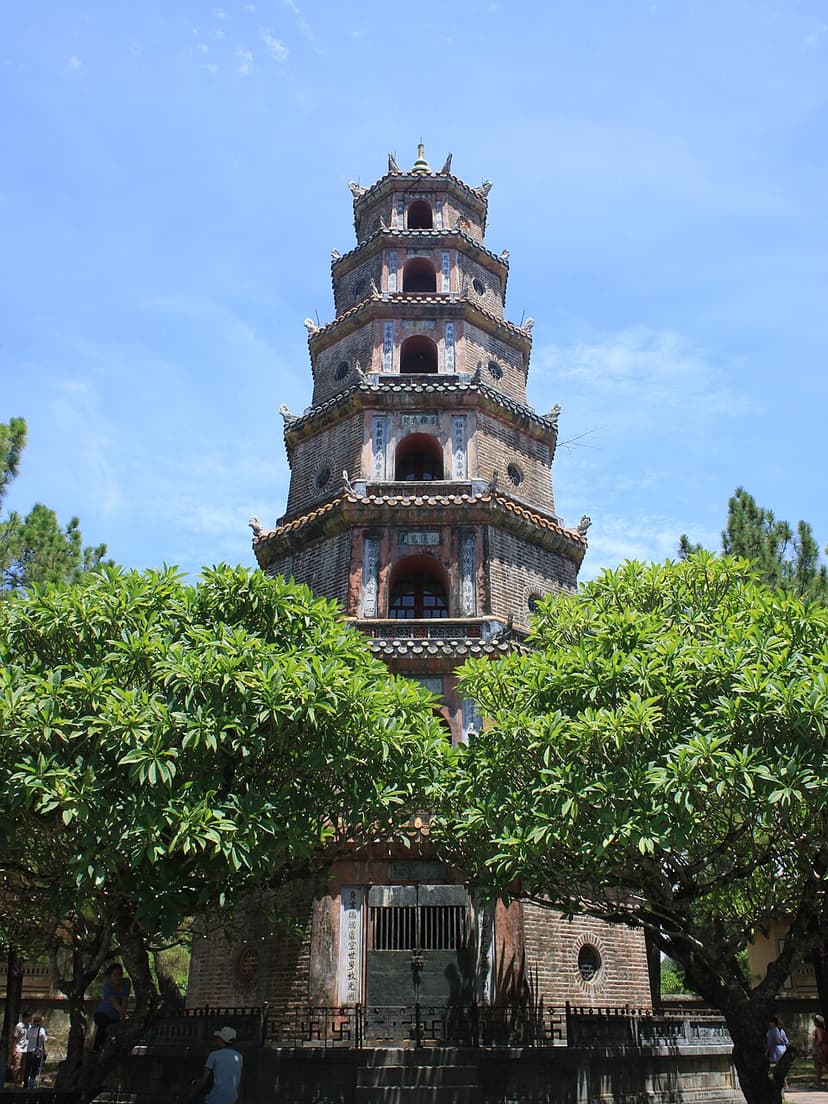
Thiên Mụ Temple, meaning "Temple of the Celestial Lady," is a historic Buddhist temple located in Huế, Vietnam. It is renowned for its iconic seven-story Phước Duyên pagoda, which has become an unofficial symbol of the city and a frequent subject in local folk poetry. The temple holds significant historical and religious importance, having been a center for Buddhist protests and a patronized site by Vietnamese royalty.
Từ Đàm Temple
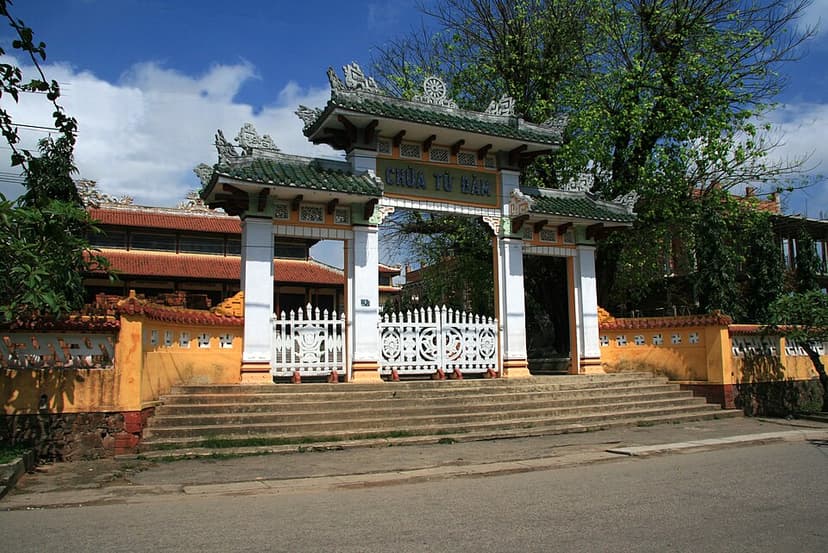
Từ Đàm Temple is a significant Buddhist temple located in Huế, Vietnam, with a rich history dating back to the late 17th century. It has served as a major spiritual center and played a crucial role in the Buddhist movement in central Vietnam, particularly during the Buddhist crisis of 1963.