
Polonnaruwa Vatadage
The Polonnaruwa Vatadage is a well-preserved ancient Buddhist structure in Polonnaruwa, Sri Lanka, renowned for its architectural sophistication. It likely served as a reliquary for important Buddhist artifacts, such as the Buddha's tooth relic or alms bowl, making it a site of great religious significance during the Kingdom of Polonnaruwa.
Key Facts
- ›Built during the Kingdom of Polonnaruwa, likely in the 12th century.
- ›Believed to have housed significant relics like the Buddha's tooth or alms bowl.
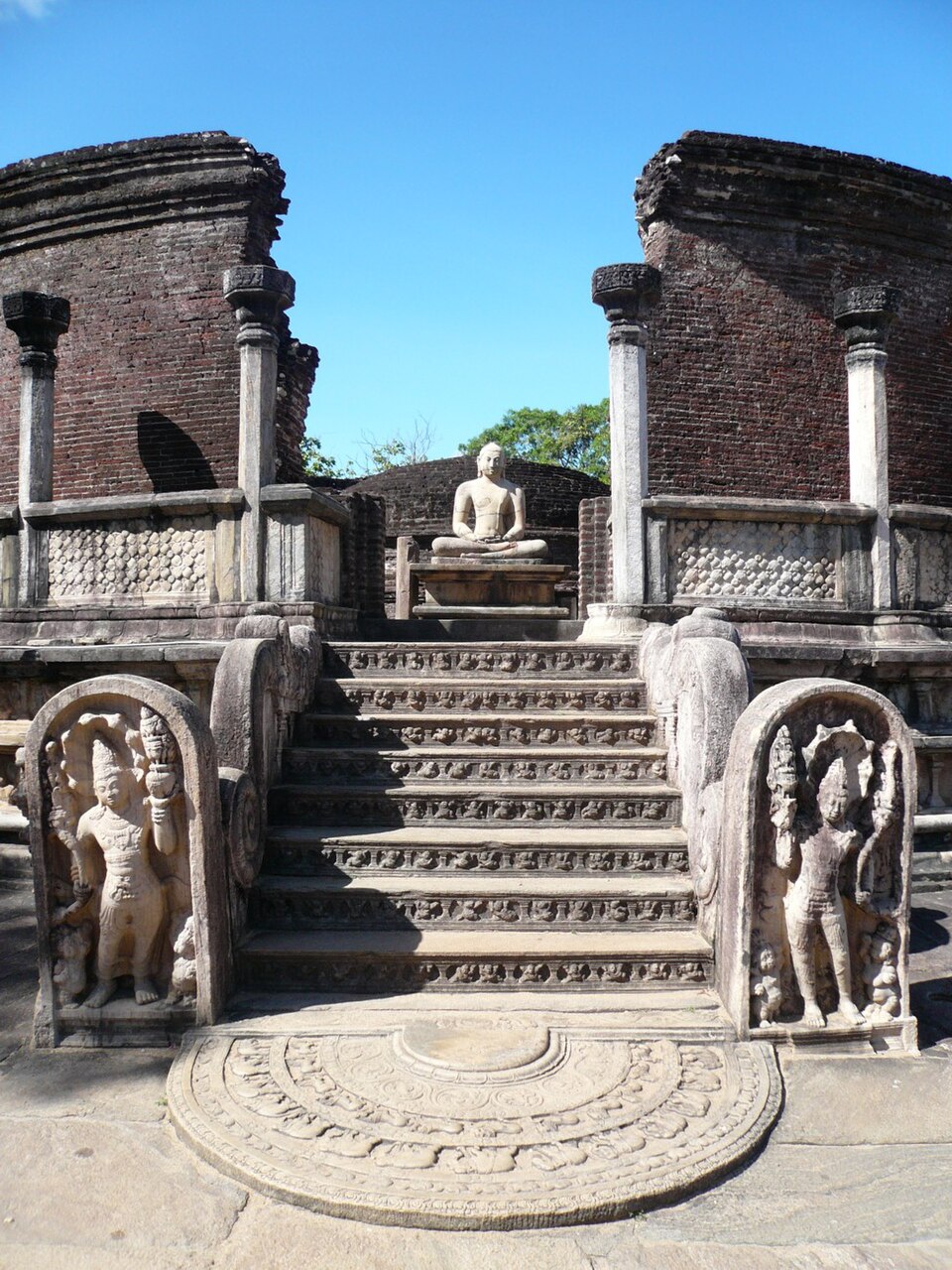
- ›Features two decorated stone platforms with elaborate carvings, including sandakada pahanas (moonstones) and muragalas (guard stones).
- ›The upper platform contains a stupa surrounded by four seated Buddha statues.
- ›Considered the best-preserved example and "ultimate development" of the vatadage architectural style in Sri Lanka.
- ›Excavation and preservation work began in 1903 after centuries of abandonment.
Important Relationships
- Parakramabahu I
- Nissanka Malla
Sandakada Pahanas, Muragalas, Seated Buddha Statues, Stupa, Stone Columns
- Abandoned Following An Invasion From Kalinga Magha In 1215.
- Excavation Work Began In 1903.
Vatadage Architecture
About Polonnaruwa Vatadage
The Polonnaruwa Vatadage is a significant ancient Buddhist structure located within the historic city of Polonnaruwa, Sri Lanka. It represents a peak in the development of the vatadage architectural style, a unique feature of ancient Sri Lankan religious buildings designed for the protection of sacred relics enshrined in stupas or situated on hallowed ground.
History and Significance
The precise origins of the Polonnaruwa Vatadage are subject to scholarly debate. One prominent theory posits that it was constructed during the reign of King Parakramabahu I in the 12th century to house the revered tooth relic of the Buddha. Alternatively, historical chronicles suggest it was built by King Nissanka Malla, although some researchers believe Nissanka Malla may have only undertaken renovations and additions to an existing structure. Regardless of its exact builder, the potential presence of highly venerated relics such as the tooth relic or the Buddha's alms bowl would have endowed the Polonnaruwa Vatadage with immense religious importance and made it a focal point of devotion.
The city of Polonnaruwa was abandoned in 1215 following an invasion, and the vatadage fell into disuse and neglect, becoming "only a mound of earth" by the time archaeological excavations commenced in 1903 under the direction of Harry Charles Purvis Bell.
Architecture and Design
The Polonnaruwa Vatadage is celebrated as the best-preserved example of its kind in Sri Lanka. The structure is built around a small stupa and features two distinct stone platforms. The lower platform, accessed by a single northern entrance, leads to four elaborately carved doorways that provide access to the raised upper platform. This upper platform, encircled by a brick wall, houses the stupa and is adorned with four seated Buddha statues, each facing one of the cardinal directions.
Elaborate stone carvings are a hallmark of the Polonnaruwa Vatadage, with its sandakada pahanas (moonstones) and muragalas (guard stones) considered exemplary works of Polonnaruwa period stonemasonry. The sandakada pahanas are believed to symbolize the cycle of Saṃsāra in Buddhism. Three concentric rows of stone columns, with bases carved in the shape of lotus flowers, once stood on the upper platform, likely supporting a wooden roof, though this theory is debated by some archaeologists.
The structure's preservation is notable, with the brick wall around the upper platform still substantially intact. The Buddha statues, carved from solid rock, depict the Dhyana mudra. The central stupa is of the Bubbulakara (bubble-shaped) design, though its upper portion has been destroyed.
Source: Wikipedia ↗
Frequently Asked Questions
When was the Polonnaruwa Vatadage built?
The exact construction date is debated among historians. One theory suggests it was built by King Parakramabahu I in the 12th century, while others attribute it to King Nissanka Malla. Some evidence indicates Nissanka Malla may have renovated an existing structure.
What was the purpose of the Polonnaruwa Vatadage?
Vatadages were typically built for the protection of stupas containing important relics. The Polonnaruwa Vatadage is believed to have housed significant relics such as the Buddha's tooth relic or the Buddha's alms bowl, giving it immense religious importance.
What are the most notable architectural features of the Polonnaruwa Vatadage?
Key features include its two circular stone platforms, elaborate stone carvings like the sandakada pahanas and muragalas, four doorways facing cardinal directions, and a central stupa surrounded by four seated Buddha statues. Three concentric rows of stone columns likely supported a wooden roof.
What is the current condition of the Polonnaruwa Vatadage?
It is the best-preserved example of a vatadage in Sri Lanka. Excavation work began in 1903, and while parts have broken off, it remains a prominent and significant ancient structure.
Who was responsible for the construction of the Polonnaruwa Vatadage?
There are varying theories. Some sources suggest King Parakramabahu I built it to house the tooth relic. Other chronicles credit King Nissanka Malla, though some scholars believe he only made additions or renovations to an existing shrine.
Related Buddhist Temples

Medirigiriya Vatadage
Medirigiriya Vatadageya is a significant Buddhist structure located in Medirigiriya, Sri Lanka. Believed to be the ancient Mandalagiraka Vihara, it was enhanced by King Kanittha Tissa during the Anuradhapura era. The site is recognized as an Archaeological Protected Monument.

Gal Vihara
Gal Vihara, originally known as Uttararama, is a significant rock-cut Buddhist temple located in Polonnaruwa, Sri Lanka. Commissioned by King Parakramabahu I in the 12th century, it is renowned for its four monumental rock relief statues of the Buddha, considered masterpieces of ancient Sinhalese sculpture. The temple's artistic and historical importance makes it a primary attraction in Polonnaruwa.

Hatadage
The Hatadage is an ancient relic shrine located in Polonnaruwa, Sri Lanka, constructed by King Nissanka Malla to house the sacred Relic of the tooth of the Buddha. Although much of its superstructure has been lost, the remaining brick and stone walls, along with granite Buddha statues, offer a glimpse into its historical significance as a royal reliquary.