
Gal Vihara
Gal Vihara, originally known as Uttararama, is a significant rock-cut Buddhist temple located in Polonnaruwa, Sri Lanka. Commissioned by King Parakramabahu I in the 12th century, it is renowned for its four monumental rock relief statues of the Buddha, considered masterpieces of ancient Sinhalese sculpture. The temple's artistic and historical importance makes it a primary attraction in Polonnaruwa.
Key Facts
- ›Fashioned in the 12th century by King Parakramabahu I.
- ›Features four distinct rock relief statues of the Buddha carved into a granite gneiss rock.
- ›Includes a large seated figure, a smaller seated figure in an artificial cavern, a standing figure, and a large reclining figure.
- ›The statues are considered among the finest examples of ancient Sinhalese sculpting and carving arts.
- ›Originally named Uttararama, meaning 'the northern monastery'.
- ›Includes an inscription detailing a code of conduct for Buddhist monks drawn up by King Parakramabahu I.

Important Relationships
- King Parakramabahu I
- Ananda (monk, possibly depicted in standing statue)
- Four Rock Relief Statues of the Buddha
- Large Seated Buddha Statue
- Small Seated Buddha Statue In Artificial Cavern
- Standing Buddha Statue
- Reclining Buddha Statue
- Inscription of A Buddhist Code of Conduct
- King Parakramabahu I Held A Congregation of Monks To Purify the Buddhist Priesthood.
- A Code of Conduct For Buddhist Monks Was Drawn Up and Recorded By King Parakramabahu I.
- the Temple Was Abandoned During the Fall of the Kingdom of Polonnaruwa.
Ancient Sinhalese Rock-Cut Sculpture
About Gal Vihara
The Gal Vihara, originally known as Uttararama, is a significant rock-cut Buddhist temple situated in the ancient city of Polonnaruwa, Sri Lanka. Constructed in the 12th century by King Parakramabahu I, it stands as a testament to the artistic prowess of ancient Sinhalese sculptors and carvers. The temple's most striking features are its four monumental rock relief statues of the Buddha, intricately carved into the face of a large granite gneiss rock.
History and Construction
Commissioned during the reign of King Parakramabahu I (1153–1186), Uttararama was one of numerous temples built by the monarch. The rock face was extensively excavated to accommodate the statues, with the largest being over 46 feet long. The temple originally comprised three structures described as 'caves' in historical texts: the Vijjadhara Guha ('cave of the spirits of knowledge'), the Nissina Patima Lena ('cave of the sitting image'), and the Nipanna Patima Guha ('cave of the sleeping image'). While only the Vijjadhara Guha is a true cave, the others were image houses with walls connected to the rock face, traces of which remain. The temple also served as a venue for significant religious and administrative events.
The Four Buddha Images
The four rock relief statues are the primary attraction of Gal Vihara and are renowned for their artistic quality and scale. They include a large seated image in the dhyana mudra, a smaller seated image within the Vidyadhara Guha (artificial cavern), a standing figure, and a large reclining figure depicting the Buddha's parinirvana. The style of these images differs from earlier Anuradhapura period statues, exhibiting broader foreheads and influences from the Amaravati school of art.
The identity of the standing image is a point of scholarly discussion, with some suggesting it represents the monk Ananda mourning the Buddha's demise, while others maintain it is the Buddha himself in a specific gesture of compassion. The reclining image, at over 46 feet long, is one of the largest stone sculptures in Southeast Asia.
Religious and Historical Significance
Gal Vihara played a crucial role in the Buddhist religious landscape of the era. King Parakramabahu I convened a congregation of monks here to reconcile the divisions within the Buddhist priesthood and to 'purify the order' by expelling corrupt monks. Following this, he established a code of conduct for Buddhist monks, known as a katikavata, which was inscribed on the rock face between the Vidyadhara Guha and the standing image. The temple functioned as an educational establishment until the fall of the Kingdom of Polonnaruwa.
Artistic Legacy
The statues at Gal Vihara are considered peak achievements in ancient Sinhalese rock carving and sculpting. Their preservation and detailed execution offer valuable insights into the artistic techniques and religious iconography of the period. The temple remains one of the most visited and celebrated monuments in Polonnaruwa, drawing visitors for its historical importance and unparalleled artistic beauty.
Source: Wikipedia ↗
Frequently Asked Questions
What is Gal Vihara?
Gal Vihara is a rock-cut Buddhist temple located in Polonnaruwa, Sri Lanka. It is famous for its four large rock relief statues of the Buddha carved directly into a granite rock face.
Who built Gal Vihara and when?
Gal Vihara was fashioned in the 12th century by King Parakramabahu I of the ancient Kingdom of Polonnaruwa.
What are the main features of Gal Vihara?
The central features are four rock relief statues of the Buddha: a large seated figure, a smaller seated figure inside a cave, a standing figure, and a large reclining figure. The temple also contains an inscription with a code of conduct for monks.
What is the significance of the standing statue?
The identity of the standing statue is a subject of debate among historians, with some suggesting it depicts the monk Ananda rather than the Buddha, due to its sorrowful expression and proximity to the reclining Buddha image.
What makes the statues at Gal Vihara special?
These statues are considered some of the best surviving examples of ancient Sinhalese sculpting and carving arts. Their scale and artistic execution, carved directly from the rock, are particularly impressive.
Was Gal Vihara always called Gal Vihara?
No, the temple was originally named Uttararama, meaning 'the northern monastery'.
Related Buddhist Temples

Hatadage
The Hatadage is an ancient relic shrine located in Polonnaruwa, Sri Lanka, constructed by King Nissanka Malla to house the sacred Relic of the tooth of the Buddha. Although much of its superstructure has been lost, the remaining brick and stone walls, along with granite Buddha statues, offer a glimpse into its historical significance as a royal reliquary.

Rankoth Vehera
Rankoth Vehera is a significant brick stupa located in the ancient city of Polonnaruwa, Sri Lanka. Built by King Nissanka Malla between 1187 and 1196, it is one of the most revered stupas in Polonnaruwa and the fourth largest in the country. Its name, translating to "Gold Pinnacled Stupa," reflects its former grandeur.
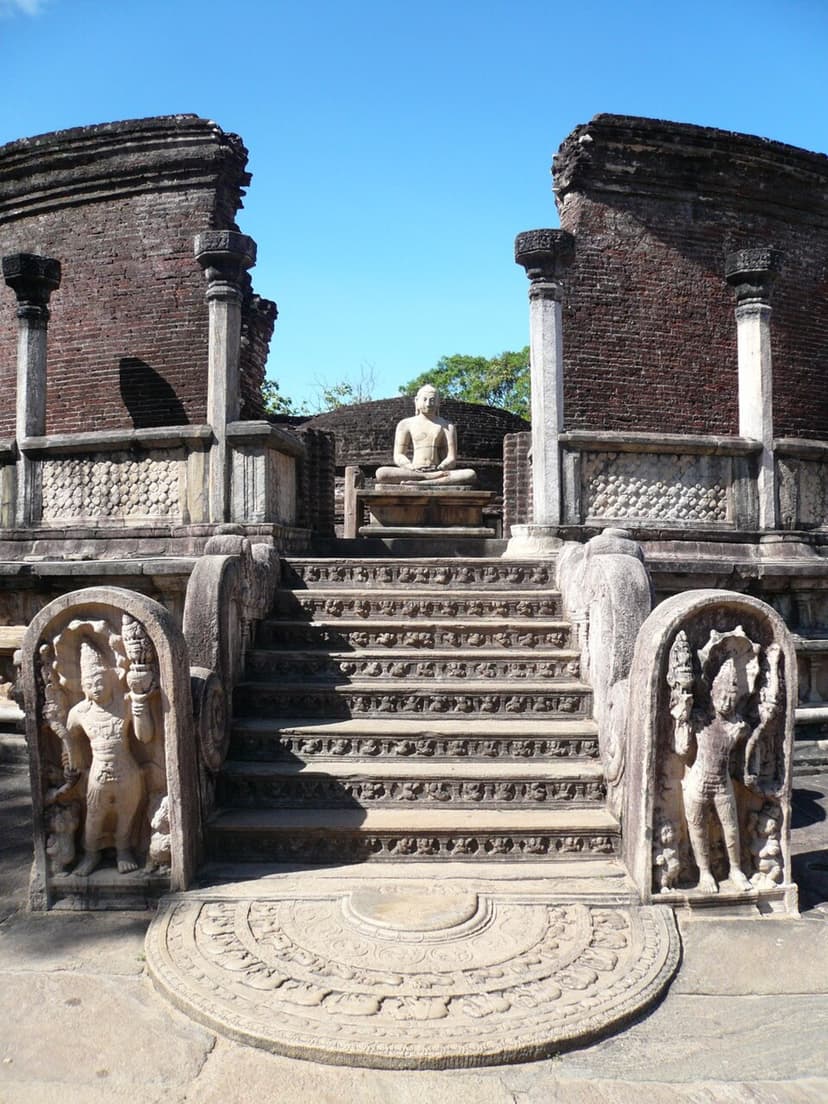
Polonnaruwa Vatadage
The Polonnaruwa Vatadage is a well-preserved ancient Buddhist structure in Polonnaruwa, Sri Lanka, renowned for its architectural sophistication. It likely served as a reliquary for important Buddhist artifacts, such as the Buddha's tooth relic or alms bowl, making it a site of great religious significance during the Kingdom of Polonnaruwa.