
Pindaya Caves
Cave Temple·Myanmar·Mahayana (historical conjecture), Theravada (modern)
The Pindaya Caves are a significant Buddhist pilgrimage site and tourist attraction located in Shan State, Myanmar. This natural limestone cave system is renowned for housing over 8,000 Buddha images, with some dating back to the late 18th century, showcasing a diverse range of Buddhist iconography and art from the Konbaung era to the present. Scholars are actively promoting its inclusion on the UNESCO World Heritage List.
Key Facts
- ›The Pindaya Caves are located in the Myelat region of Shan State, Myanmar.
- ›The southern cave, the only accessible one, extends approximately 490 feet and contains over 8,000 Buddha images.
- ›The earliest dated inscriptions on statues within the cave are from 1773, with most dating to the late 18th and early 19th centuries.
- ›The caves feature unique Bhisakkaguru tradition images from the late 18th century, indicative of a past Mahayana tradition.
- ›A modern entrance was created in 1925, and an elevator has been added more recently.
- ›Local legends involve a giant spider, seven princesses, and a prince, with sculptures depicting these stories at the entrance.

Important Relationships
- King Asoka (legendary)
- King Alaungsithu (legendary)
- Prince Kummabhaya of Yawnghwe (legendary)
Over 8,000 Buddha Images, Bhisakkaguru Tradition Images, Shwe U Min Pagoda, Bronze Bell Cast In 1842, Sculptures of A Spider and Prince
- Inscriptions Dating To 1773
- Renovation and Enlargement of the Entrance In 1925
- Destruction of Some Unique Images During World War Ii Bombing Raid
About Pindaya Caves
The Pindaya Caves are a remarkable natural limestone cave system situated next to the town of Pindaya in Shan State, Myanmar. Recognized as a significant Buddhist pilgrimage site and a popular tourist destination, the caves are part of the ancestral homeland of the Danu people. While there are three caves on the ridge, only the southernmost is accessible to visitors.
Interior and Iconography
The accessible southern cave extends for approximately 490 feet along a well-trodden path, drawing visitors with its extraordinary collection of over 8,000 Buddha images. The artistic styles represented span from the early Konbaung period to contemporary times, offering a comprehensive display of Buddhist iconography and art found nowhere else in Myanmar. Among the most notable are around seventy unique images of the Bhisakkaguru tradition from the late 18th century. These images are distinguished by specific stylistic elements and the practice of holding a seed in their upturned right palm, leading scholars to conjecture that the Pindaya cave may have once served as a center for the Mahayana Bhisakkaguru cult.
Historical Context and Development
Inscriptions found on some of the older statues within the cave date back to 1773, placing them in the late 18th century or early Konbaung period. While there may be older, un-inscribed images, scholarly consensus suggests the earliest possible date for any statue is around 1750. Over the centuries, numerous donors, including lay people and ruling authorities, have contributed to the cave's collection, ensuring its continuous growth and artistic diversity. The Shwe U Min (Golden Cave) Pagoda, located at the entrance, is a more recent structure, despite local legends attributing its origins to ancient kings.
A significant alteration occurred in 1925 when the cave's entrance was enlarged using explosives, a process that unfortunately resulted in the destruction of some valuable images and inscriptions. A steel structure was subsequently erected to better accommodate the influx of pilgrims. Dedication inscriptions from this period reveal a wide range of donors, encompassing Theravada Buddhists, as well as individuals from Hindu, Chinese, and Muslim communities, highlighting the site's cross-cultural appeal. In more recent times, an elevator has been installed to improve visitor access.
Legends and Significance
The Pindaya Caves are also associated with various local legends. One popular tale speaks of a blocked path at the cave's end leading to the ancient city of Bagan. Another prominent legend recounts the story of seven princesses bathing in a lake, their capture by a giant spider, and their entrapment within the cave, from which they were rescued by Prince Kummabhaya of Yawnghwe. Sculptures depicting the spider and the prince have been added at the entrance to the covered stairway, reflecting these enduring myths.
Scholars are actively advocating for the Pindaya Caves to be recognized as a UNESCO World Heritage Site, acknowledging its profound cultural and religious importance. The site continues to be an active pilgrimage destination and a significant attraction, drawing visitors interested in its rich history, diverse art, and captivating legends.
Source: Wikipedia ↗
Frequently Asked Questions
Where are the Pindaya Caves located?
The Pindaya Caves are situated next to the town of Pindaya in Shan State, Burma (Myanmar), within the Myelat region.
What is the main attraction within the Pindaya Caves?
The primary attraction is the extensive collection of over 8,000 Buddha images found within the southernmost cave. These images display a wide range of Buddhist art and iconography.
How old are the oldest Buddha images in the Pindaya Caves?
The oldest inscribed statues and images date back to 1773, belonging to the late Konbaung period. Some un-inscribed statues may be older, but scholars suggest the earliest possible date is around 1750.
Are there any special traditions represented by the images in the caves?
Yes, there are about seventy unique images of the Bhisakkaguru tradition dating to the late 18th century. These images, with their distinct styling and the practice of holding a seed in their palm, suggest the cave may have served the Mahayana Bhisakkaguru cult.
What is the significance of the Shwe U Min Pagoda?
The Shwe U Min (Golden Cave) Pagoda stands at the entrance to the southernmost cave. While local legends attribute its construction to King Asoka and repair by King Alaungsithu, its present form and style indicate a more recent origin.
Has the cave entrance been modified over time?
The modern entrance dates from 1925 when explosives were used to enlarge the cave opening, unfortunately destroying some valuable images and inscriptions. A steel structure was erected to accommodate pilgrims, and an elevator was added in more recent times.
Related Buddhist Temples
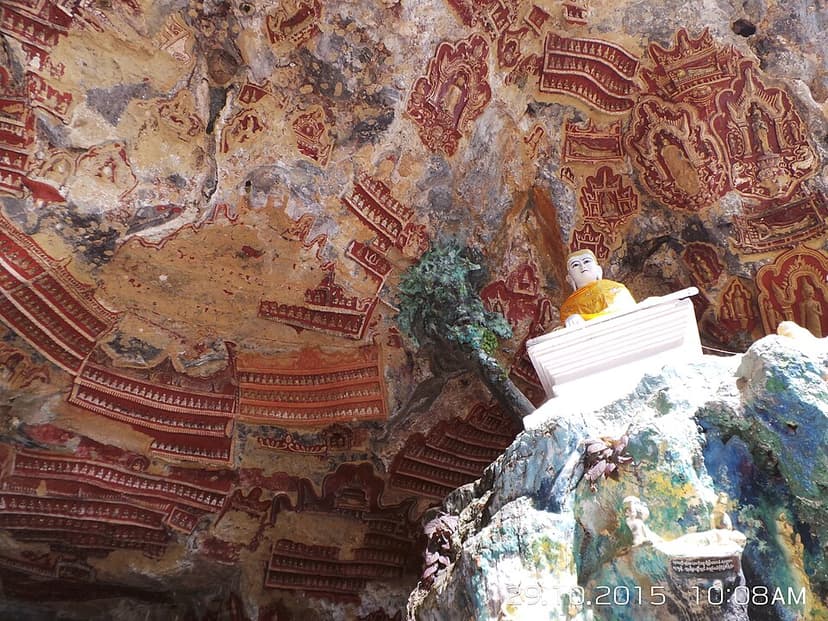
Kawgun Cave
The Kawgun Cave is a significant Buddhist cave temple located in Kayin State, Myanmar, renowned for its walls adorned with thousands of small Buddha statues. Believed to have been constructed around the 7th century, it holds important historical and cultural value, with inscriptions providing insights into its past and the patronage of royalty.

Saddan Cave
Saddan Cave is a significant Buddhist cave temple located in Hpa-An, Kayin State, Myanmar, notable for its extensive collection of hundreds of small Buddha statues. It is the longest cave in Karen State and holds cultural importance, with legends connecting it to the king of elephants and a legendary hunter king.

Jogeshwari Caves
The Jogeshwari Caves are a significant complex of early Hindu cave temples in Mumbai, India, dating back to the sixth century and attributed to the Chalukya dynasty. Considered by some scholars to be the earliest major cave temple in India and the largest in terms of total length, these caves are dedicated to the Hindu deity Jogeshwari and feature a blend of Hindu and Mahayana Buddhist architectural elements.