
Kawgun Cave
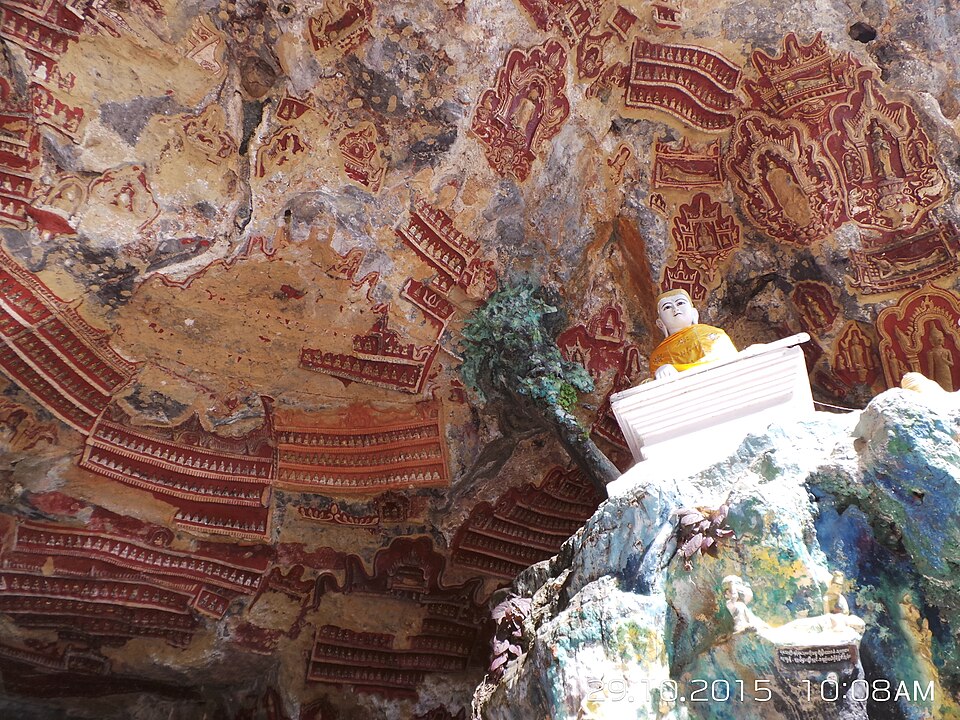
The Kawgun Cave is a significant Buddhist cave temple located in Kayin State, Myanmar, renowned for its walls adorned with thousands of small Buddha statues. Believed to have been constructed around the 7th century, it holds important historical and cultural value, with inscriptions providing insights into its past and the patronage of royalty.
Key Facts
- ›The cave is lined with thousands of small Buddha statues covering its walls.
- ›It is believed to have been constructed around the 7th century, with some speculation pointing to the 6th century.
- ›Inscriptions in ancient Mon script detail donations of Buddha statues, including one by a queen consort of Martaban.
- ›The cave also contains stone reliefs related to Buddhism and Hinduism, including images of Brahma, Vishnu, Shiva, and Ganesh.
- ›It is an important historical and cultural heritage site in Myanmar.
- ›The first known Western visitor was John Crawfurd in January 1827.
Important Relationships
- King Anawrahta of Pagan
- King Manuha of Thaton Kingdom
- John Crawfurd
- Thousands of Small Buddha Statues Covering the Walls
- Limestone Cave Structure
- Stone Reliefs
- Ancient Mon Script Inscriptions
- Donation of Buddha Statues By A Queen Consort of Martaban.
About Kawgun Cave
The Kawgun Cave is a remarkable Buddhist cave temple located in Kawgun Village, Hpa-An, Kayin State, Myanmar. Its most striking feature is the entirety of its interior walls, which are covered with thousands of small, intricately crafted Buddha statues. This extensive collection of devotional art makes Kawgun Cave an immensely important historical and cultural heritage site within Myanmar.
History and Construction
While the exact origins of the Kawgun Cave temple remain somewhat obscure, historical and archaeological evidence suggests its construction dates back to around the 7th century CE. Some scholars, analyzing the cave's inscriptions, have proposed that the site might even extend as far back as the 6th century. The cave itself is a natural limestone formation, measuring approximately 130 feet in length, 70 feet in width, and 25 feet in height.
Inscriptions and Reliefs
Kawgun Cave is notable for its rich epigraphic and sculptural content. Among its artifacts are three significant stone reliefs. Two of these are distinctly Buddhist in theme, while the third is related to Hinduism, featuring depictions of Brahma, Vishnu, Shiva, and Ganesh. The cave also bears inscriptions in ancient Mon script. One particularly informative inscription, carved on the robe of a statue, comprises 23 lines detailing donations and aspirations. This inscription is believed to have been made by a queen consort of Martaban, who reportedly sought refuge in the cave after escaping to Kawgun Cave when King Anawrahta of Pagan conquered the Thaton Kingdom. The ink inscriptions further supplement these historical accounts by recording the names of donors and the number of Buddha images they contributed.
Preservation and Significance
The cultural heritage housed within Kawgun Cave is actively maintained by the Ministry of Culture, employing both technological advancements and legal protections to ensure its preservation. The cave's historical inscriptions and the sheer volume of Buddha imagery underscore its significance not only as a religious site but also as a crucial source for understanding the history, art, and religious practices of ancient Myanmar, particularly during periods of royal patronage.
Source: Wikipedia ↗
Frequently Asked Questions
Where is Kawgun Cave located?
Kawgun Cave is located in Kawgun Village, Hpa-An, Kayin State, Myanmar. It is situated eight miles from Hpa-an and two miles from the west bank of the Thanlwin River, at the foot of Mt. Kawgun.
When was Kawgun Cave built?
The exact origins of Kawgun Cave are not definitively clear. It is generally believed to have been constructed around the 7th century, though some historical speculation suggests it might date as far back as the 6th or 7th century based on its inscriptions.
What is special about the walls of Kawgun Cave?
The walls of Kawgun Cave are unique because they are covered with thousands of small Buddha statues. These statues, along with inscriptions, make the cave a significant historical and cultural heritage site.
Are there any notable inscriptions or reliefs in Kawgun Cave?
Yes, Kawgun Cave features stone and ink inscriptions that supplement historical evidence. It also contains three stone reliefs, two related to Buddhism and one to Hinduism, depicting figures like Brahma, Vishnu, Shiva, and Ganesh.
What is the historical significance of the inscriptions in Kawgun Cave?
The inscriptions, particularly one in ancient Mon script, provide valuable historical information. One inscription details donations of Buddha statues, including a donation by a queen consort of Martaban, offering insights into the cave's past patronage and religious practices.
Related Buddhist Temples

Pindaya Caves
The Pindaya Caves are a significant Buddhist pilgrimage site and tourist attraction located in Shan State, Myanmar. This natural limestone cave system is renowned for housing over 8,000 Buddha images, with some dating back to the late 18th century, showcasing a diverse range of Buddhist iconography and art from the Konbaung era to the present. Scholars are actively promoting its inclusion on the UNESCO World Heritage List.

Saddan Cave
Saddan Cave is a significant Buddhist cave temple located in Hpa-An, Kayin State, Myanmar, notable for its extensive collection of hundreds of small Buddha statues. It is the longest cave in Karen State and holds cultural importance, with legends connecting it to the king of elephants and a legendary hunter king.

Asgiriya Raja Maha Vihara, Gampaha
Asgiriya Raja Maha Vihara is an ancient cave temple located on a hillock in the Gampaha District of Sri Lanka. Its history is believed to date back to the reign of King Valagamba (89-77 BC), and it received patronage from provincial king Sakalakala Wallabha during the reign of King Parakramabahu VI. The temple is formally recognized as an archaeological site by the Sri Lankan government.