
Pemayangtse Monastery
Pemayangtse Monastery, founded in 1647 by Lama Lhatsun Chempo, is one of Sikkim's oldest and most significant Buddhist monasteries, belonging to the Nyingma Order. It holds a premier position, controlling other monasteries of its order in Sikkim and historically anointing the Sikkimese monarchy. The monastery is renowned for its architectural beauty, religious significance, and its role in the Cham dance festival.
Key Facts
- ›Founded in 1647 by Lama Lhatsun Chempo, it is one of Sikkim's oldest and most important monasteries.
- ›It is the premier monastery of the Nyingma Order in Sikkim, overseeing all other monasteries of this tradition in the region.
- ›The monastery was originally built for celibate monks of pure lineage, a practice that is still maintained.
- ›Pemayangtse Monastery holds the unique privilege of anointing the Chogyals (monarchs) of Sikkim with holy water.
- ›It is a key site in a popular Buddhist pilgrimage circuit in Sikkim, including Dubdi Monastery and Tashiding Monastery.
- ›The monastery features a three-storied structure with wall paintings and statues, and has undergone several refurbishments due to damage from earthquakes.

Important Relationships
- Lama Lhatsun Chempo
- Chogyal Chakdor Namgyal
- Khenchen Rolpai Dorjee
- Lhatsun Chenpo Dzogchen Jigme Pawo
- Padmasambhava
- Mahākāla
- Guru Drag-dmar (Vajrakila)
Wall Paintings, Statues of Saints and Rinpoches, Statue of Padmasambhava In Wrathful Form, Cham Dance Festival, Embroidered Scroll Displayed During Festival, Well-Manicured Gardens
- Founded By Lama Lhatsun Chempo
- Enlarged During the Reign of Chogyal Chakdor Namgyal and Khenchen Rolpai Dorjee
- Consecrated By the Third Lhatsun Chenpo Dzogchen Jigme Pawo
- Damaged By Earthquakes
Tibetan Designs
About Pemayangtse Monastery
Pemayangtse Monastery, situated in Pemayangtse near Gyalshing in the Sikkim district of India, is a historically significant Buddhist monastery founded in 1647 by Lama Lhatsun Chempo. It stands as one of Sikkim's oldest and most esteemed monastic institutions, playing a central role within the Nyingma Order of Tibetan Buddhism. The monastery's influence extends to controlling other Nyingma monasteries throughout Sikkim, and it holds the unique historical distinction of anointing the Chogyals, the former monarchs of Sikkim, with holy water.
History and Significance
The monastery's establishment is closely tied to the reign of Chador Namgyal, who promoted Buddhism in Sikkim and decreed that every third son of Bhutia families be ordained as a monk at Pemayangtse. The monastery was originally intended for "pure monks" (ta-tshang), meaning celibate individuals without physical abnormalities, a practice that continues to this day. The name 'Pemayangtse' itself means 'Perfect Sublime Lotus', symbolizing a spiritual concept linked to the human body's energetic centers.
Architecture and Features
Located at an elevation of 2085 meters, Pemayangtse Monastery is a three-storied structure that has been refurbished multiple times, notably after experiencing damage from earthquakes in 1913 and 1960. Its architecture incorporates Tibetan designs, featuring colorfully painted doors and windows. The main prayer hall, the Dukhang or Lakhang, houses a prominent statue of Padmasambhava in his wrathful form, known as Dorje Bhurpa Vjarakila, alongside depictions of his consorts and eight incarnations. The monastery also showcases intricate wall paintings depicting scenes of Buddhas, Bodhisattvas, rainbows, and angels, reflecting the Nyingma tradition's rich iconography.
Festivals and Pilgrimage
Pemayangtse Monastery is a vital stop on a popular Buddhist pilgrimage circuit in Sikkim, which includes other significant sites like Dubdi Monastery and Tashiding Monastery. The annual Cham dance festival, held on the 28th and 29th days of the 12th Tibetan lunar month (February Gregorian), is a major event. During this festival, lamas perform dances in elaborate costumes representing deities such as Mahākāla and Guru Drag-dmar, attracting pilgrims from across Sikkim. The festival concludes with the unveiling of a large embroidered scroll and a fireworks display, symbolizing the dispelling of evil spirits. The monastery is home to 108 monks, identifiable by their red hats.
Source: Wikipedia ↗
Frequently Asked Questions
When was Pemayangtse Monastery founded?
Pemayangtse Monastery was planned, designed, and founded in the year 1647 by Lama Lhatsun Chempo. It was subsequently enlarged in 1705 and consecrated in 1710 C.E.
What is the significance of Pemayangtse Monastery?
It is one of the oldest and most famous monasteries in Sikkim, and the premier monastery of the Nyingma Order, controlling all other monasteries of that order in Sikkim. It also historically held the privilege of anointing the Sikkimese monarchs.
What does the name 'Pemayangtse' mean?
Pemayangtse translates to 'Perfect Sublime Lotus'. This name is said to represent one of the four plexus of the human body.
What kind of Buddhist tradition does Pemayangtse Monastery follow?
The monastery follows the Nyingma Order of Tibetan Buddhism, which was established in the 8th century by Padmasambhava.
What are some notable features of the monastery's architecture?
The monastery is a three-storied structure depicting paintings on its walls and statues of saints. The main prayer hall features Tibetan designs with colorfully painted doors and windows, and houses a central statue of Padmasambhava in his wrathful form.
When is the Cham dance festival held at Pemayangtse Monastery?
The Cham dance festival is celebrated annually on the 28th and 29th days of the 12th lunar month of the Tibetan calendar, which corresponds to February in the Gregorian calendar. It marks the conclusion of Losar.
Related Buddhist Temples
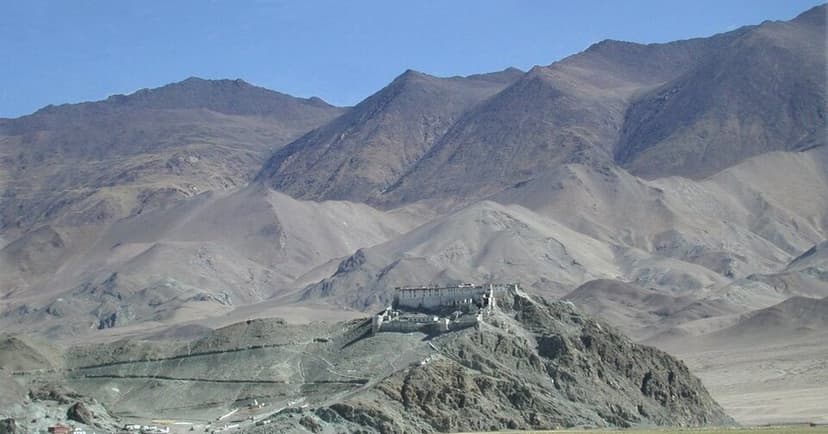
Hanle Monastery
Hanle Monastery is a significant 17th-century gompa belonging to the Drukpa Lineage of Tibetan Buddhism, located in Ladakh, India. It was established under the patronage of Ladakhi King Sengge Namgyal and played a crucial role in the region's religious landscape, serving as a rival to the Gelug school. The monastery is notable for its proximity to the Indian-Chinese border and also houses the Indian Astronomical Observatory.

Chemrey Monastery
Chemrey Monastery, also known as Chemrey Gompa, is a significant Buddhist monastery located in the Indus River valley of Ladakh, India. Founded in 1664 by Lama Tagsang Raschen and dedicated to King Sengge Namgyal, it belongs to the Drugpa monastic order and is known for its impressive Padmasambhava statue and a valuable collection of scriptures.

Gemur Monastery
Gemur Monastery is a significant Buddhist gompa located above Gemur village in the Lahaul and Spiti district of Himachal Pradesh, India. Dating back to the first half of the 17th century, it serves as a central seat of Tibetan Buddhism in the stod valley and is associated with the Drukpa Kagyu sect. The monastery is known for its ancient artifacts, wall paintings, and the annual Tshechu festival featuring masked dances.