
Mahamuni Buddha
The Mahamuni Buddha Temple, located southwest of Mandalay, Myanmar, is a significant Buddhist pilgrimage site housing the highly venerated Mahamuni Image. This sacred image is believed by many to represent the Buddha's life essence and is central to the spiritual lives of numerous people in Burma.
Key Facts
- ›The Mahamuni Image is believed to be one of only five likenesses of the Buddha made during his lifetime.
- ›Legend states the Buddha himself visited Arakan in 554 BC, and the image was cast at the request of King Sanda Thuriya.
- ›The image was moved from Arakan to Amarapura (near Mandalay) in 1784 after the conquest of Mrauk U.
- ›The temple complex includes several old bronze statues, originally Khmer, which were taken as war loot from Cambodia and Siam.
- ›The Mahamuni image is regularly coated with gold leaves by devotees, giving it a shapeless contour.
- ›A daily ritual of washing the Buddha image's face and brushing its teeth occurs at dawn.
Important Relationships
- King Sanda Thuriya
- King Anawratha of Pagan
- Crown Prince Thado Minsaw
- King Mindon
- King Thibaw
- Minister Kinwun Mingyi U Kaung
- State Law and Order Restoration Council
- Mahamuni Image
- Ancient Khmer Bronze Statues
- Seven-Tiered Spire
- Gilded and Carved Columns With Frescoes
- Inscription Stones Collected By King Bodawpaya
- Large Water Tank
- Conquest of Mrauk U and Confiscation of Relics By Burmese Forces
- Installation of the Mahamuni Image In Amarapura
- Fires Damaging the Temple
- Renovation Work By the State Law and Order Restoration Council
- Damage To the Mahamuni Image
- Significant Damage From An Earthquake
Burmese
About Mahamuni Buddha
Mahamuni Buddha Temple
The Mahamuni Buddha Temple is a highly significant Buddhist pilgrimage site located southwest of Mandalay, Myanmar. It is most famous for housing the Mahamuni Image, a sacred statue that is deeply venerated throughout Burma and considered by many to be a representation of the Buddha's own life essence.
Origins and Legends
Ancient tradition holds that only five likenesses of the Buddha were made during his lifetime. The Mahamuni Image is believed to be the fifth and final one. Legend states that the Gautama Buddha visited Dhanyawadi, the capital of Arakan, in 554 BC. At the request of King Sanda Thuriya, an image was cast of the Buddha. It is said that the Buddha himself breathed upon the completed image, imbuing it with his spiritual essence and ensuring it would last for five thousand years as his representative. This mythology places local contexts within a universal Buddhist cosmology and links the continuing biography of the Buddha to the political landscape of Arakan and Upper Burma.
History and Relocation
Throughout its history, the Mahamuni Image has been a focal point of veneration and political significance. Early attempts by King Anawratha of Pagan to move the image to Bagan were unsuccessful. In 1784, the Burmese Konbaung dynasty conquered the Kingdom of Mrauk U, confiscating the Mahamuni Buddha image and other religious relics. The image was then installed in a new temple at Amarapura, which had recently become the royal capital. Due to its size, the image was cut into sections for transport and later reassembled. The temple complex also houses numerous old bronze statues, originally Khmer, which were brought to the site as war loot over centuries.
Architecture and Features
The Mahamuni Temple is a complex of structures characterized by a central shrine. The main shrine features a seven-tiered roof (pyatthat) and an ornate mosaic ceiling. The arcades leading to the shrine are supported by numerous gilded and carved columns adorned with frescoes. The Mahamuni image itself is cast in bronze, weighs 6.5 tonnes, and is seated on a throne in the Bhumisparsa Mudra. It is draped in royal costumes, crowned, and bejeweled. Gold leaves are regularly applied to the image's face by devotees, which has altered its original contour.
Daily Rituals and Festivals
A significant daily ritual involves the washing of the Mahamuni Buddha image's face and brushing of its teeth at dawn, performed by senior monks and lay helpers. This ceremony is witnessed by a congregation of devotees. The temple also hosts a major annual pagoda festival, the 'Mahamuni Paya Pwe', held in early February. This festival includes recitations of scripture, entertainment, and allows for social gatherings, attracting large crowds of pilgrims.
Later History and Preservation
Despite suffering damage from fires in the late 19th century, the Mahamuni image was saved. The temple has undergone renovations, including significant work in 1996. In 1997, the image was damaged when a hole appeared, believed to be from an attempted theft of hidden jewels. The temple sustained further significant damage from a magnitude 7.9 earthquake on March 28, 2025.
Source: Wikipedia ↗
Frequently Asked Questions
What is the Mahamuni Buddha Temple?
The Mahamuni Buddha Temple is a prominent Buddhist temple and pilgrimage site in Myanmar. It is renowned for housing the Mahamuni Image, a sacred statue deeply venerated by Buddhists.
What is the history of the Mahamuni Image?
According to legend, the Mahamuni Image was created during the Buddha's lifetime in Arakan, after he visited the region. It was later moved to Amarapura by Burmese forces in 1784.
What are some notable features of the Mahamuni Temple?
The temple complex features the Mahamuni Image, several ancient bronze statues with a history as war loot, and a large water tank where pilgrims feed fish and turtles. The main shrine has a seven-tiered roof and is supported by numerous gilded and carved columns.
Are there any special rituals performed at the temple?
Yes, a significant daily ritual involves washing the Mahamuni Buddha image's face and brushing its teeth at dawn. On special occasions, the image is draped with an orange stole and fanned.
What is the annual festival at Mahamuni Temple?
The Mahamuni Paya Pwe, an annual pagoda festival, is held in early February. It celebrates the pagoda's history and includes the recitation of the Paṭṭhāna, a philosophical text from the Abhidhamma Piṭaka, along with entertainment.
What are the purported healing qualities associated with the temple?
Devotees believe that the six Khmer bronze statues in the temple courtyard have healing qualities. They rub specific body parts against these statues to cure ailments and diseases.
Related Buddhist Temples
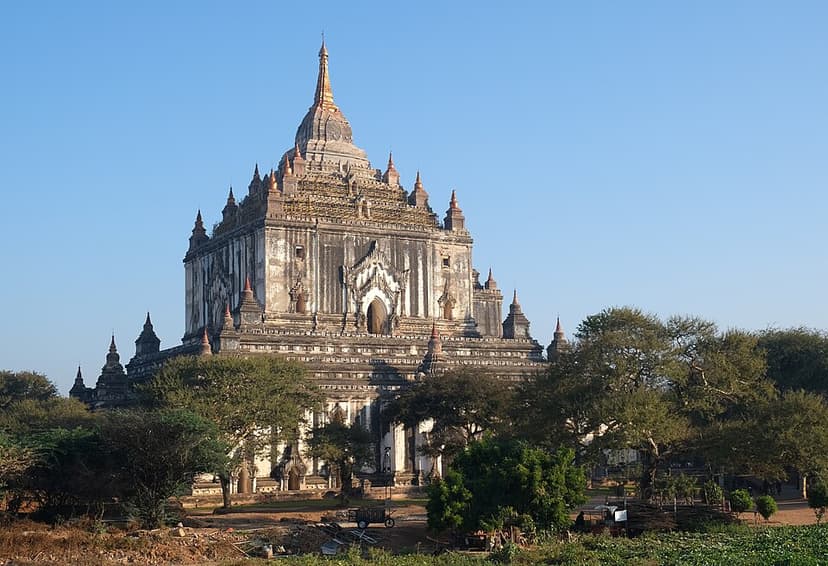
Thatbyinnyu Temple
The Thatbyinnyu Temple, located in Bagan, Myanmar, is a significant Theravadin Buddhist temple renowned for its impressive height and architectural innovation during the Bagan period. Completed in the mid-12th century, it served not only as a place of worship but also as a monastery and library, reflecting the era's religious scholarship and national pride. Despite suffering damage from earthquakes, it remains a key monument within the Bagan Archaeological Area, a UNESCO World Heritage Site undergoing restoration.
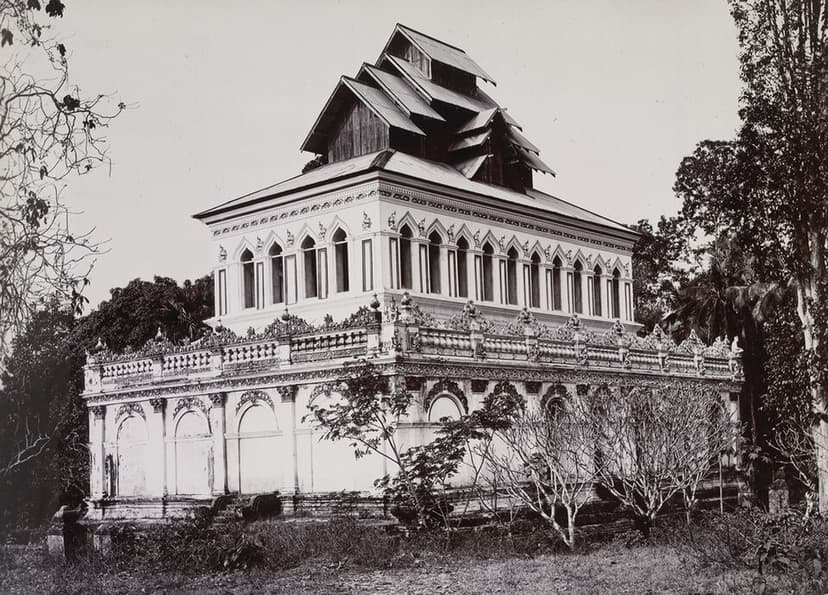
Kalyani Ordination Hall
The Kalyani Ordination Hall is a significant Buddhist site in Bago, Myanmar, renowned for housing the Kalyani Inscriptions. These inscriptions, dating back to 1480, are crucial historical records of Theravada Buddhism. The hall itself, originally built in 1476 by King Dhammazedi to purify the Sangha, has been destroyed and reconstructed multiple times, with its current form dating from 1954.

Shwegugyi Temple
Shwegugyi Temple is a significant Theravadin Buddhist temple located in Bagan, Myanmar, recognized as Monument #1589 within the Bagan Archaeological Area, a UNESCO World Heritage Site. Commissioned by King Sithu I in 1131, the temple is notable for its impressive brick foundation, arched windows, and intricate interior decorations.