
Lingshed Monastery
Lingshed Monastery, also known as Lingshed Gompa, is a prominent Gelugpa Buddhist monastery located in Ladakh, India. Founded in the 1440s by Changsems Sherabs Zangpo, a disciple of Je Tsongkhapa, it holds historical significance as a monastic site previously established by the Translator Rinchen Zangpo. The monastery has been part of the religious estate of Ngari Rinpoche since 1779 and plays a vital role in the spiritual life of the surrounding villages.
Key Facts
- ›Founded in the 1440s by Changsems Sherabs Zangpo, a disciple of Je Tsongkhapa.
- ›Located near Lingshet village in the Leh district of Ladakh, India.
- ›Originally built on a site previously established by the Translator Rinchen Zangpo.
- ›Belongs to the religious estate of Ngari Rinpoche since 1779.
- ›Houses approximately 60 monks and serves several surrounding villages.
- ›Electrified in August 2016 through solar microgrids by Global Himalayan Expedition.

Important Relationships
- Je Tsongkhapa
- Rinchen Zangpo
- Ngari Rinpoche
- Global Himalayan Expedition
- Tashi 'Od Bar Shrine
- Apartment For Ngari Rinpoche Or Visiting High Lamas
- Outlying Shrines In Served Villages
- Donation of Lands and Surrounding Villages To Ngari Rinpoche Lineage In 1779
- Electrification Via Solar Microgrids In August 2016
About Lingshed Monastery
Lingshed Monastery, also referred to as Lingshed Gompa or Kumbum, is a significant Gelugpa Buddhist monastery situated in the Leh district of Ladakh, India. Its origins trace back to the 1440s when it was founded by Changsems Sherabs Zangpo, a disciple of the esteemed Tibetan spiritual leader Je Tsongkhapa. The monastery was established on a site that had been previously developed by the Translator Rinchen Zangpo, adding to its historical depth.
History and Significance
The region surrounding Lingshed village has a long history of habitation, with evidence of earlier Buddhist establishments predating the current monastery. Local traditions speak of cave monasteries and structures dedicated to Rinchen Zangpo, as well as earlier Kadampa and Drugpa Kagyu monasteries. The founding of Lingshed Monastery as a Geluk School institution in the 15th century marked a new phase for Buddhist practice in the area. A key element of its foundation is the Tashi 'Od Bar shrine, built around a rock believed to have been illuminated by an auspicious light, symbolizing divine presence.
In 1779, the monastery and its surrounding lands, along with several other monastic sites in Zanskar, were donated to the lineage of Ngari Rinpoche by the Ladakhi king Tsewang Namgyal. This transfer placed Lingshed Monastery under the religious estate of Ngari Rinpoche, a relationship that continues to this day. The monastery currently houses approximately 60 monks and serves as a vital spiritual center for the local population, extending its influence to villages such as Skyumpata, Yulchung, Nyeraks, Dibling, and Gongma.
Features and Modern Developments
The monastery's physical structure comprises six main shrines, essential service areas like kitchens and store rooms, and an upper-floor apartment reserved for Ngari Rinpoche or other visiting high lamas. The monastic quarters are arranged in long lines below the central temple complex, and each village served by the monastery has its own outlying shrine. In a significant modern development, Lingshed Monastery was electrified in August 2016 through the installation of solar microgrids by the Global Himalayan Expedition, bringing sustainable energy to this remote location. The monastery is also a subject of academic study, with Martin A. Mills' "Identity, Ritual and State in Tibetan Buddhism" exploring its ceremonial life and the role of its monks.
Source: Wikipedia ↗
Frequently Asked Questions
When was Lingshed Monastery founded?
Lingshed Monastery was founded in the 1440s. It was established by Changsems Sherabs Zangpo, a disciple of the renowned Tibetan preceptor Je Tsongkhapa.
What is the significance of the 'Tashi 'Od Bar' shrine?
The Tashi 'Od Bar shrine, meaning 'Auspicious Shining Light', is the basis of Kumbum's central shrine. It was built around a rock where Sherabs Zangpo saw an auspicious light shining on the hillside.
Who currently holds patronage over Lingshed Monastery?
Since 1779, Lingshed Monastery has belonged to the religious estate of Ngari Rinpoche. The 3rd incarnate of the Ngari Rinpoche lineage received the lands and surrounding villages in donation from the Ladakhi king.
What is the architectural significance of Lingshed Monastery?
The monastery consists of six principal shrines, kitchens, store rooms, and an apartment for high lamas on its uppermost floor. Monastic quarters fan out below the central temple complex, and outlying shrines are maintained in each of the villages it serves.
What is the connection between Lingshed Monastery and its surrounding villages?
Lingshed Monastery serves the spiritual needs of the surrounding villages of Lingshed, Skyumpata, Yulchung, Nyeraks, Dibling, and Gongma. It also maintains outlying shrines in each of these communities.
Related Buddhist Temples

Diskit Monastery
Diskit Monastery is the oldest and largest Buddhist monastery in the Nubra Valley of Ladakh, belonging to the Gelugpa sect. Founded in the 14th century by Changzem Tserab Zangpo, it holds significant religious and cultural importance, serving as a center for festivals and education for local Tibetan children.

Key Monastery
Key Monastery, also known as Kye Gompa, is a prominent Tibetan Buddhist monastery situated atop a hill in the Spiti Valley of Himachal Pradesh, India. It serves as the largest monastery in the region and a significant religious training center for lamas, dedicated to the reincarnation of the great translator Lotsawa Rinchen Zangpo.
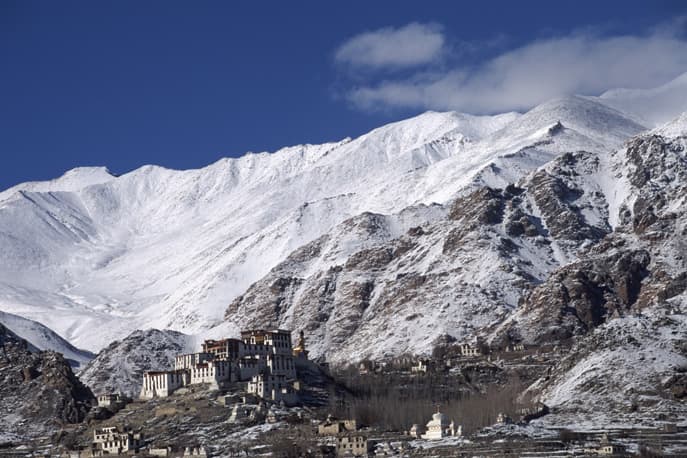
Likir Monastery
Likir Monastery, also known as Likir Gompa, is a significant Buddhist monastery located in Ladakh, India. Established in 1065, it is a prominent center for the Gelugpa sect of Tibetan Buddhism and serves as the seat for the Ngari Rinpoche.