
Kuragala
Kuragala is a significant pre-historic archaeological site in Sri Lanka, featuring evidence of early human settlement and an ancient Buddhist cave temple complex dating back to the 2nd century BC. It is recognized as the oldest archaeological site in the island's Intermediate Zone and holds importance for both Buddhist heritage and prehistoric human activity.
Key Facts
- ›Discovered evidence of human settlement dating back to the late Pleistocene period.
- ›Buddhist cave temple complex dates from the 2nd century BC to the 1st century AD.
- ›Features Brahmi inscriptions, carved stone lintels, stairways, and platforms.
- ›Includes a brick-built Stupa at the summit, dating to 1971 and considered an archaeologically protected monument.
- ›Also contains evidence of ancient Muslim shrine use, with Arabic inscriptions and a tombstone dating to 715 Hijri (1315 AD).

Important Relationships
- C.H. Collins
- Jailani Mosque
- Gotabaya Rajapakshe
Prehistoric Human Settlement Remains, Buddhist Cave Shelters, Brahmi Inscriptions, Carved Stone Lintels, Stairways and Platforms, Brick-Built Stupa, Arabic Inscriptions, Dervish Tombstone
- Use As A Buddhist Monastery Between 3rd Century Bc and 1st Century Ad
- Construction of Additional Structures Within the Archaeological Zone Ordered Removed In 2013
Cave Temple Architecture, Stupa Architecture
About Kuragala
What is Kuragala?
Kuragala is a multi-layered archaeological site located in Balangoda, Sri Lanka, renowned for its evidence of both prehistoric human activity and an ancient Buddhist temple complex. Formally recognized by the government as an archaeological reserve, it holds the distinction of being the oldest archaeological site discovered in Sri Lanka's Intermediate Zone. The site encompasses remnants of early human settlements from the late Pleistocene period, alongside the ruins of a Buddhist cave temple that dates back to the 2nd century BC.
History and Discovery
Archaeological investigations at Kuragala have yielded significant findings about its past. Evidence of prehistoric human presence includes stone tools, fossilized bone fragments, and human skeletal remains believed to be over 8,000 years old. These early inhabitants appear to have had connections to coastal areas and engaged in agricultural practices. Later, during the period between the 3rd century BC and the 1st century AD, the caves at Kuragala were utilized as a Buddhist monastery. Archaeological reports, such as one by C.H. Collins in 1932, document Brahmi inscriptions from the 2nd century BC, along with carved stone lintels, stairways, and platforms.
Religious Significance
The caves at Kuragala were established for Buddhist monks by donors, serving as places of shelter during the annual rainy season retreat, as is customary in Theravada Buddhist tradition. The presence of driplegged caves indicates habitation by Bhikkhus, and inscriptions further identify the names of these benefactors. At the summit of Kuragala stands a brick-built Stupa constructed in 1971, which is now an archaeologically protected monument. This Stupa is believed to be of the Akasa Chaithya type, historically used as communication beacons.
Coexisting Religious Heritage
Kuragala also bears evidence of an ancient Muslim shrine. Historical accounts and inscriptions suggest its use by Muslims, with Arabic writings and a tombstone bearing the name "Darvesh Mohiyadin Darvesh" and dates corresponding to 715 Hijri (1315 AD) and 815 Hijri (1478 AD). In 2013, certain additional structures within the archaeological zone were removed by government order, though the mosque and tomb remnants remained. The site thus represents a complex historical and religious landscape.
Source: Wikipedia ↗
Frequently Asked Questions
What is Kuragala?
Kuragala is a pre-historic archaeological site in Balangoda, Sri Lanka, known for its early human settlements and ancient Buddhist cave temple complex. It is also recognized for its historical Muslim shrine.
When does the Buddhist temple complex at Kuragala date from?
The Buddhist cave temple complex at Kuragala is believed to have been in use during the period between the 3rd century BC and the 1st century AD. Brahmi inscriptions and architectural remains support this dating.
What prehistoric evidence has been found at Kuragala?
Excavations at Kuragala have uncovered stone tools, fossilized bone fragments, and remains of a human skeleton estimated to be over 8,000 years old. Evidence suggests these early inhabitants had links to coastal areas and engaged in agricultural activities.
Are there any Muslim historical elements at Kuragala?
Yes, there are indications of ancient Muslim use, including Arabic inscriptions and a tombstone. One inscription is dated to 715 Hijri (1315 AD) and another to 815 Hijri (1478 AD), suggesting a shrine existed there.
Is the Stupa at Kuragala ancient?
The brick-built Stupa at the summit of Kuragala dates to 1971. It is considered an archaeologically protected monument and is thought to belong to the Akasa Chaithya tradition, which served as communication beacons.
Related Buddhist Temples
Atamasthana
Atamasthana, meaning "Eight Sacred Places," refers to a collection of eight significant Buddhist sites located in Anuradhapura, Sri Lanka. These locations are believed to be places visited by the Buddha during his legendary trips to the island, making them central to Buddhist pilgrimage and devotion in Sri Lanka. The city of Anuradhapura itself, where these sites are concentrated, was a major political and religious capital for centuries and is now a UNESCO World Heritage Site.
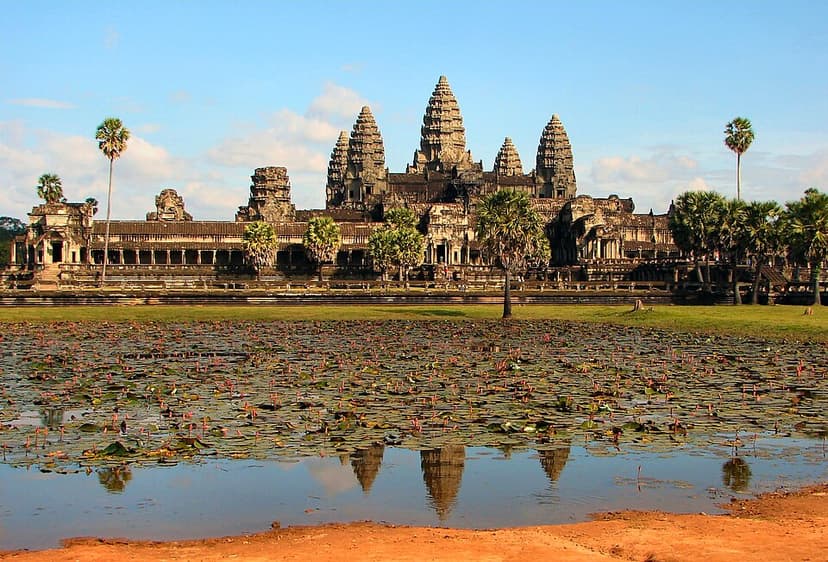
Angkor Wat
Angkor Wat, originally a Hindu temple dedicated to Vishnu and commissioned by King Suryavarman II in the early 12th century, is the largest religious complex in the world and a cornerstone of Khmer architecture. It was gradually transformed into a Theravada Buddhist temple from the late 13th century onwards and has remained an active center of Buddhist worship, serving as a potent symbol of Cambodia and appearing on its national flag.

Wutai Shan Buddhist Garden
Wutai Shan Buddhist Garden is a significant Chinese Buddhist temple complex in Ontario, Canada, named after Mount Wutai in China. Established by the Buddhist Association of Canada, it aims to replicate the four Sacred Mountains of Buddhism and houses the Buddhist College of Canada. The complex features Tang Chinese-style architecture and serves as a pilgrimage site and educational center.