
Wutai Shan Buddhist Garden
Wutai Shan Buddhist Garden is a significant Chinese Buddhist temple complex in Ontario, Canada, named after Mount Wutai in China. Established by the Buddhist Association of Canada, it aims to replicate the four Sacred Mountains of Buddhism and houses the Buddhist College of Canada. The complex features Tang Chinese-style architecture and serves as a pilgrimage site and educational center.
Key Facts
- ›Purchased by the Buddhist Association of Canada in 1990 with the goal of creating four pilgrimage sites mirroring China's Sacred Mountains.
- ›Groundbreaking ceremony for Wutai Shan Buddhist Garden took place on May 28, 2011.
- ›It is the largest Chinese Buddhist site in Canada, covering 217 hectares (535 acres).
- ›Features Tang Chinese-style wooden temples built using traditional nail-free joinery.
- ›Houses the Buddhist College of Canada, offering continuing education programs.
- ›Notable structures include the Main Hall, Hall of Guanyin, and Hall of Dizang, alongside a 13-meter tall Maitreya statue.

Important Relationships
- Buddhist Association of Canada
- Buddhist College of Canada
- Emmanuel College at the University of Toronto
- Mount Wutai
- Manjushri
- Maitreya
- Guanyin
- Dizang
- Medicine Buddha
- Shakyamuni Buddha
- Amitabha Buddha
- Samantabhadra
- Maitreya Statue
- Tang Chinese-Style Wooden Temples
- Nail-Free Dougong Joinery
- Wisdom Lake
- Five Gilt Bronze Sculptures of Manjushri
- Main Hall Modeled After Foguang Temple's Great East Hall
- Bronze Roof Shingles Inscribed With Blessings
- Land Purchase By Buddhist Association of Canada
- Groundbreaking Ceremony
- Consecration of Maitreya Statue
- Consecration of Main Hall
- Closure Due To Covid-19 Pandemic
- Fire At Hall of Dizang
- Consecration of Hall of Guanyin
- Consecration of Rebuilt Hall of Dizang
Tang Chinese Architecture
About Wutai Shan Buddhist Garden
Wutai Shan Buddhist Garden, also known by its Chinese name "Wutaishan Canada", is a significant Chinese Buddhist temple complex situated in the township of Cavan Monaghan, Peterborough County, Ontario, Canada. Established by the Buddhist Association of Canada, the complex is named in homage to Mount Wutai, one of the four sacred mountains of Buddhism in China. Its development began with the purchase of land in 1990, with the intention of creating a series of pilgrimage sites mirroring those in China. The garden serves as both a spiritual retreat and an educational institution, housing the Buddhist College of Canada.
History and Development
The vision for Wutai Shan Buddhist Garden originated with the Buddhist Association of Canada's acquisition of 550 hectares of land in Central Ontario in 1990. The aim was to establish four pilgrimage sites, each representing one of China's Sacred Mountains. Wutai Shan Buddhist Garden was designated as the first of these sites. The groundbreaking ceremony for the complex took place on May 28, 2011, with a projected total cost of 80 million Canadian dollars. Significant milestones include the consecration of the Maitreya statue at the entrance on June 19, 2017, and the Main Hall on October 5, 2019. The complex experienced a public closure from 2020 to 2024 due to the COVID-19 pandemic. A fire in 2022 caused substantial damage to the Hall of Dizang, which has since been rebuilt and consecrated in November 2024, following the consecration of the Hall of Guanyin in October 2022.
Site Description and Architecture
Spanning 217 hectares (535 acres), Wutai Shan Buddhist Garden is the largest Chinese Buddhist site in Canada. The entrance is marked by a colossal stone sculpture of the bodhisattva Maitreya, standing 13 meters tall and weighing over 700 tonnes. At the heart of the complex, an ensemble of wooden temples showcases traditional Chinese architecture, particularly in the style of the Tang dynasty, built on a north-south axis. These structures employ the intricate, nail-free dougong mortise-and-tenon joinery. Key constructed buildings include the Main Hall, the Hall of Guanyin, and the Hall of Dizang, each occupying substantial floor space. The Main Hall, modeled after the Great East Hall of Foguang Temple, features a roof covered with 24,220 bronze shingles. Within the Main Hall, sculptures of the Medicine Buddha, Shakyamuni Buddha, and Amitabha Buddha are enshrined, flanked by Manjushri and Samantabhadra.
East of the temples lies Wisdom Lake, a spring-fed pond, surrounded by stupas and sculptures. The complex also features five gilt bronze sculptures of different forms of Manjushri, reflecting the garden's namesake, which translates to "five terraces." Future plans include the construction of additional structures such as the shanmen entrance gate and the Hall of Four Heavenly Kings.
Source: Wikipedia ↗
Frequently Asked Questions
When was Wutai Shan Buddhist Garden established?
The Buddhist Association of Canada purchased the land in 1990, and the groundbreaking ceremony for Wutai Shan Buddhist Garden was held on May 28, 2011. Construction and consecrations of its various halls have continued since then.
What is the significance of the name Wutai Shan?
Wutai Shan Buddhist Garden is named after Mount Wutai, one of China's four Sacred Mountains of Buddhism. In Chinese, Wutai means 'five terraces,' reflecting the traditional identification of Mount Wutai as the daochang of the Bodhisattva Manjushri.
What are the main architectural features of the temple?
The complex features wooden temples constructed in the Tang Chinese style, utilizing traditional nail-free dougong mortise-and-tenon joinery. The Main Hall is particularly notable, modeled after the Great East Hall of Foguang Temple and adorned with bronze shingles inscribed with blessings.
Is Wutai Shan Buddhist Garden open to the public?
Wutai Shan Buddhist Garden is open to visitors five days a week from mid-April to mid-November. It was closed to the public from 2020 to 2024 due to the COVID-19 pandemic.
What is the size of Wutai Shan Buddhist Garden?
The complex covers an area of 217 hectares (535 acres), making it the largest Chinese Buddhist site in Canada. It includes the Main Hall, Hall of Guanyin, Hall of Dizang, Wisdom Lake, and a large statue of Maitreya.
What educational programs are offered at Wutai Shan Buddhist Garden?
The Buddhist College of Canada is located at Wutai Shan Buddhist Garden. It offers continuing education programs in partnership with Emmanuel College at the University of Toronto.
Related Buddhist Temples

Buddha Tooth Relic Temple and Museum
The Buddha Tooth Relic Temple and Museum is a prominent Buddhist temple and museum complex located in Singapore's Chinatown district. Constructed in the architectural style of the Tang Dynasty, it houses what is claimed to be the tooth relic of the historical Buddha, a significant object of veneration for devotees and a point of interest for visitors.

Guanghua Temple (Putian)
Guanghua Temple (Putian) is a significant Buddhist temple located at the foot of Mount Phoenix near Putian City, Fujian Province, China. Established in 558 CE, it has undergone numerous transformations and reconstructions throughout its long history, becoming one of the most influential Chinese Buddhism temples and a scenic attraction in Fujian.
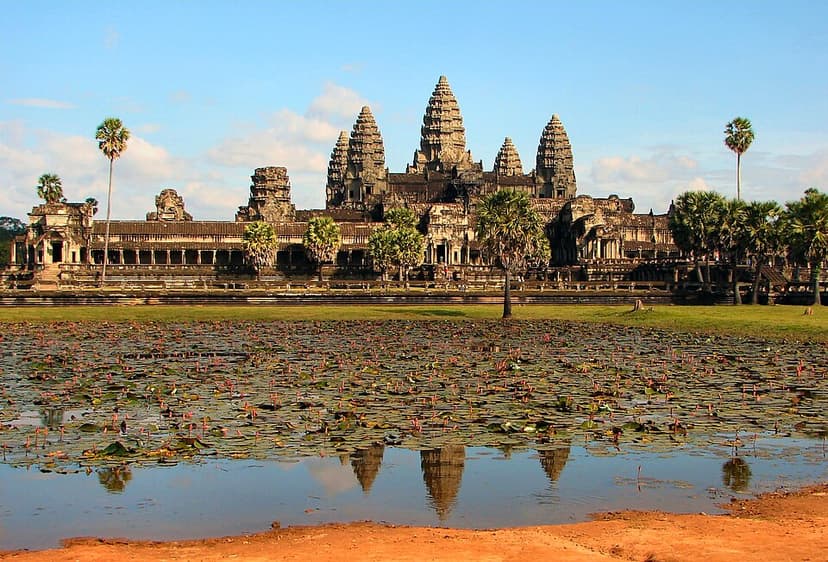
Angkor Wat
Angkor Wat, originally a Hindu temple dedicated to Vishnu and commissioned by King Suryavarman II in the early 12th century, is the largest religious complex in the world and a cornerstone of Khmer architecture. It was gradually transformed into a Theravada Buddhist temple from the late 13th century onwards and has remained an active center of Buddhist worship, serving as a potent symbol of Cambodia and appearing on its national flag.