
Danzandarjaa Monastery
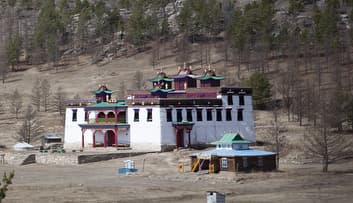
Danzandarjaa Monastery is a Buddhist monastic complex located in Mörön, Khövsgöl Province, Mongolia. It was built in the 1990s to replace the original Mörön Monastery, which was destroyed in 1937 during the Stalinist repressions. The rebuilt monastery serves as a center for religious practice and houses an impressive collection of thangka.
Key Facts
- ›Rebuilt in the 1990s on the western edge of Mörön, Mongolia.
- ›Replaces the original Mörön Monastery, founded between 1809-1811.
- ›The original Mörön Monastery was destroyed in 1937.
- ›Currently houses up to 40 monks of various ages.
- ›Features an impressive collection of thangka paintings.
- ›Reopened in June 1990 following the 1990 Democratic Revolution in Mongolia.

Important Relationships
- Mörön Monastery
Thangka Collection
Destruction of Original MöRöN Monastery, Reopening of Danzandarjaa Monastery
About Danzandarjaa Monastery
Danzandarjaa Monastery, also known as Gandandarjaalin Khiid, is a Buddhist monastic complex situated in Mörön, the capital of Khövsgöl Province in Mongolia. It was constructed in the 1990s, specifically reopening in June 1990, to serve as a successor to the original Mörön Monastery. The original monastic complex, founded between 1809 and 1811 on the banks of the Delgermörön river, was a significant religious center that, at its peak in the early 20th century, was home to approximately 2,000 monks.
Historical Context and Destruction
The history of the original Mörön Monastery is intertwined with the turbulent political landscape of Mongolia. Dorjjavyn Luvsansharav, a prominent figure in the Mongolia People's Revolutionary Party, studied at the monastery between 1910 and 1921. Later, as a leader of the party during the Stalinist repressions in Mongolia, Luvsansharav played a role in the violent persecution of the Buddhist Church. This campaign led to the closure and destruction of over 700 monasteries, including the Mörön Monastery, which was demolished in 1937.
Rebuilding and Current Function
Following the Democratic Revolution in Mongolia in 1990, there was a resurgence of religious institutions. Danzandarjaa Monastery was rebuilt on the western edge of Mörön to fill the void left by the destroyed original. The reconstructed monastery is now a functioning religious site, housing up to 40 monks of all ages. It is also recognized for its collection of thangka, traditional Tibetan Buddhist paintings on scroll, which are described as impressive.
Source: Wikipedia ↗
Frequently Asked Questions
When was Danzandarjaa Monastery built?
Danzandarjaa Monastery was built in the 1990s. It reopened in June 1990, following the Democratic Revolution in Mongolia.
What is the history of Danzandarjaa Monastery?
Danzandarjaa Monastery was constructed to replace the original Mörön Monastery, which was founded between 1809 and 1811. The original monastery was destroyed in 1937 during the Stalinist repressions.
How many monks live at Danzandarjaa Monastery?
The rebuilt monastery now houses up to 40 monks of all ages. This is a significant reduction from the original Mörön Monastery, which had 2000 monks at its height in the early 20th century.
What is special about Danzandarjaa Monastery?
Danzandarjaa Monastery is notable for its thangka collection, which is described as impressive. It also holds historical significance as a replacement for a major monastery destroyed during a period of repression.
Related Buddhist Temples
Baldan Bereeven Monastery
Baldan Bereeven Monastery is a significant Gelugpa Buddhist monastery located in the Khentii Province of Mongolia. Originally founded in 1654 and modeled after Tibetan monasteries, it grew to become one of Mongolia's largest and most important religious centers, reaching its zenith in the mid-19th century with up to 8,000 monks. Although destroyed by the communist regime in 1937, restoration efforts have been underway since 1990, with three temples currently rebuilt.

Amarbayasgalant Monastery
Amarbayasgalant Monastery is one of Mongolia's three largest Buddhist monastic centers, established in the early 18th century. It was built to house the remains of Zanabazar, the first spiritual head of Tibetan Buddhism for the Khalkha in Outer Mongolia, and reflects a unified Chinese architectural style with Mongol and Tibetan influences.
Brown Palace
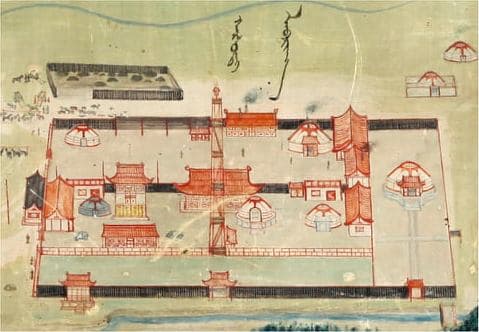
The Brown Palace, also known as Khüren ordon (Imperial Palace) and Haistai Temple (Great Temple of Knowledge), served as the summer residence of the Bogd Khan, the ruler of Mongolia. Constructed at the turn of the 20th century, it was a significant imperial complex that was later transferred to the Mongolian People's Revolutionary Party Academy, leading to the loss of most of its original structures.