
Daming Temple
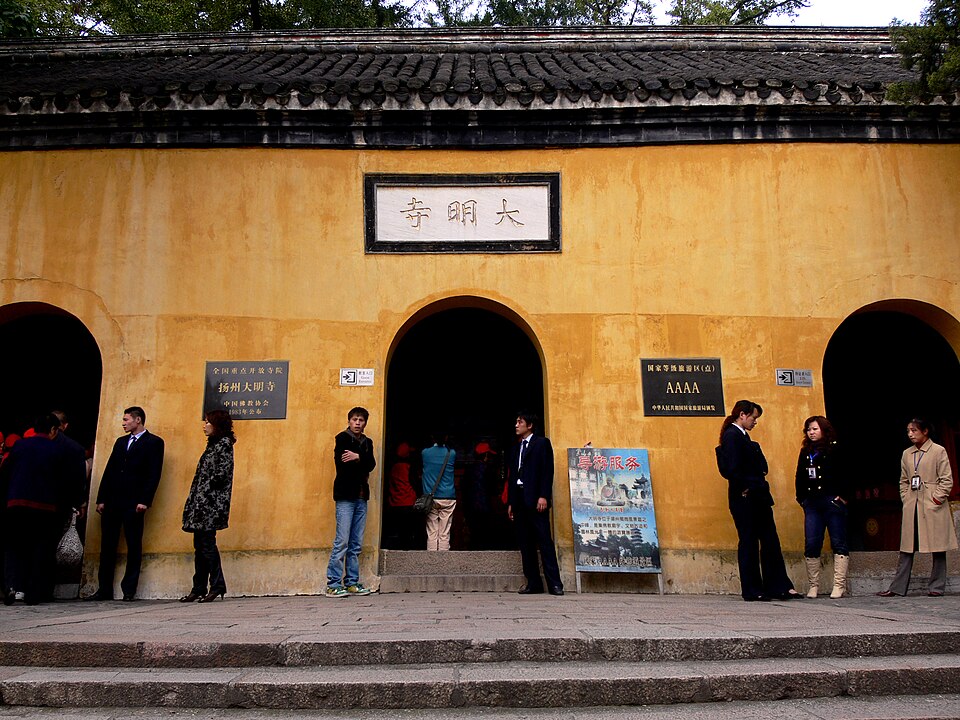
Daming Temple, situated on the middle peak of Shugang Mountain in Yangzhou, Jiangsu province, China, is a historically significant Buddhist temple. It is particularly renowned as the place where the eminent monk Jianzhen studied and ordained monks in 742 AD before embarking on his journey to Japan. The temple has undergone numerous name changes and reconstructions throughout its history, reflecting its enduring importance in Chinese Buddhism.
Key Facts
- ›The temple was originally constructed during the Daming period (453–464 AD) of the Liu Song dynasty, giving it its name.
- ›A nine-story Qiling Tower, described as "China's most magnificent and special architecture," was built in the temple during the Sui dynasty (601 AD).
- ›Daming Temple has been known by several other names throughout history, including Qi Ling Temple and Fajing Temple, before reverting to its original name in 1980.
- ›The Jianzhen Memorial Hall, designed by Liang Sicheng, was constructed in 1973 to commemorate the famous monk Jianzhen.
- ›Pingshan Hall, a notable structure within the temple complex, was built in 1048 by Song dynasty scholar Ouyang Xiu.
- ›The temple's architecture is integrated with the surrounding hill, featuring distinct central, eastern, and western sections with various halls and gardens.
Important Relationships
- Jianzhen (monk)
- Emperor Xiaowu of Liu Song (historical figure)
- Emperor Wen of Sui (historical figure)
- Emperor Wuzong of Tang (historical figure)
- Emperor Qianlong (historical figure)
- Tokiwa Daijo (scholar)
- Liang Sicheng (architect)
- Ouyang Xiu (scholar official)
Qiling Pagoda, Jianzhen Memorial Hall, Pingshan Hall
- Construction During the Daming Period
- Building of the Qi Ling Tower
- Jianzhen Studied and Ordained Monks
- Renamed Fajing Temple
- Japanese Scholar Tokiwa Daijo Built Commemorative Structures
- Jianzhen Memorial Hall Constructed
- Reverted To the Name Daming Temple
About Daming Temple
Daming Temple is a significant Buddhist temple located on the middle peak of Shugang Mountain in Yangzhou, Jiangsu province, China. Its history is deeply intertwined with important figures and events in Chinese Buddhist history, making it a site of historical and cultural importance.
History and Renaming
The temple's origins trace back to the Daming period (453–464 AD) of the Liu Song dynasty, from which it derives its name. During the Sui dynasty, in 601 AD, Emperor Wen ordered the construction of thirty pagodas nationwide to house Buddhist relics; one such structure, the nine-story Qi Ling Tower, was built at this temple, leading to it also being known as Qi Ling Temple. Throughout various dynasties, its name shifted, including periods as Qiling Temple during the Tang dynasty and Fajing Temple in 1765 under Emperor Qianlong due to social taboos surrounding the name 'Daming'. In 1980, the temple officially reverted to its original name, Daming Temple.
Key Figures and Commemoration
Daming Temple holds particular renown as the place where the famous monk Jianzhen studied, initiated disciples, and prepared for his historic journey to Japan in 742 AD. His legacy is honored through several memorial structures. In 1922, Japanese scholar Tokiwa Daijo erected a pavilion, gallery, and memorial hall to commemorate Jianzhen. More significantly, in 1973, the Jianzhen Memorial Hall, designed by the renowned architect Liang Sicheng, was constructed.
Architectural Features
The temple's design is harmoniously integrated with its mountainous setting, comprising three main parts: a central section with the Hall of the "Four Heavenly Kings" and the Great Hall; an eastern part housing Pingyuan Hall and the Jianzhen Memorial Hall; and a western section with Pingshan Hall and Si Garden. The Pingshan Hall itself was built in 1048 by the Song dynasty scholar official Ouyang Xiu, who served as the prefecture chief of Yangzhou. The hall's name, meaning "level mountains," reflects the visual experience of the distant mountains appearing at the same level as the observer's sightline.
Source: Wikipedia ↗
Frequently Asked Questions
When was Daming Temple founded?
Daming Temple was initially constructed during the Daming period (453–464 AD) of the Liu Song dynasty. This period of construction is what gave the temple its enduring name.
What is the significance of Jianzhen to Daming Temple?
The monk Jianzhen studied sutras and initiated people into monkhood at Daming Temple in 742 AD. His pivotal role in the temple's history is commemorated by a dedicated memorial hall.
Has Daming Temple always been known by its current name?
No, Daming Temple has had several name changes throughout its history. It was known as Qi Ling Temple during the Tang dynasty and was renamed Fajing Temple in 1765 by the Qianlong Emperor before reverting to Daming Temple in 1980.
What are some notable architectural features of Daming Temple?
Key architectural elements include the Hall of the Four Heavenly Kings, the Great Hall, Pingyuan Hall, and the Jianzhen Memorial Hall. The temple also features the Pingshan Hall, built by Ouyang Xiu, and the historic Qiling Pagoda.
Where is Daming Temple located?
Daming Temple is situated on the middle peak of Shugang Mountain in Yangzhou, Jiangsu province, China.
Related Buddhist Temples

Baotong Temple
Baotong Temple is a significant Buddhist temple located on the south hillside of Mount Hong in Wuhan, China, recognized as one of the "Four Buddhist Temples" in the city. Its history spans over 1,500 years, with its origins tracing back to the Liu Song dynasty, and it has undergone numerous restorations and expansions throughout various dynasties, including the Ming and Qing dynasties. The temple is renowned for its Mahavira Hall and the historic Hongshan Pagoda, and it continues to be a vital center for Buddhist practice and education.

Bishan Temple
Bishan Temple, also known as Guangji Maopeng, is a significant Buddhist temple situated in Taihuai Town, Wutai County, Shanxi, China. It holds the distinction of being a National Key Buddhist Temple in the Han Chinese Area, recognized for its historical importance and architectural features, including a prominent ordination altar.
Caotang Temple
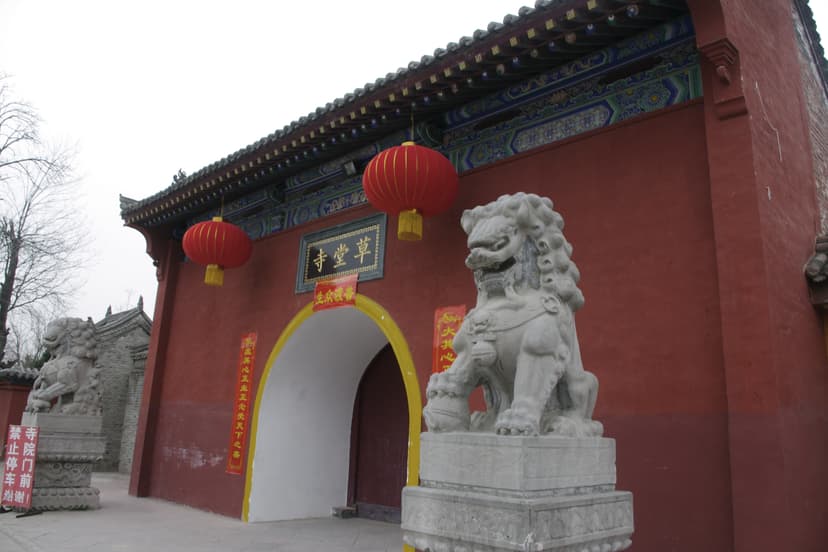
Caotang Temple, located on the northern slope of Mount Guifeng in Xi'an, China, is a historically significant Buddhist temple. It holds immense importance as the site where the monk Kumārajīva resided and translated key Mahayana texts in the 4th century, laying the groundwork for East Asian Mādhyamaka. Consequently, Caotang Temple is revered as the cradle of this influential Buddhist school.