
Caotang Temple
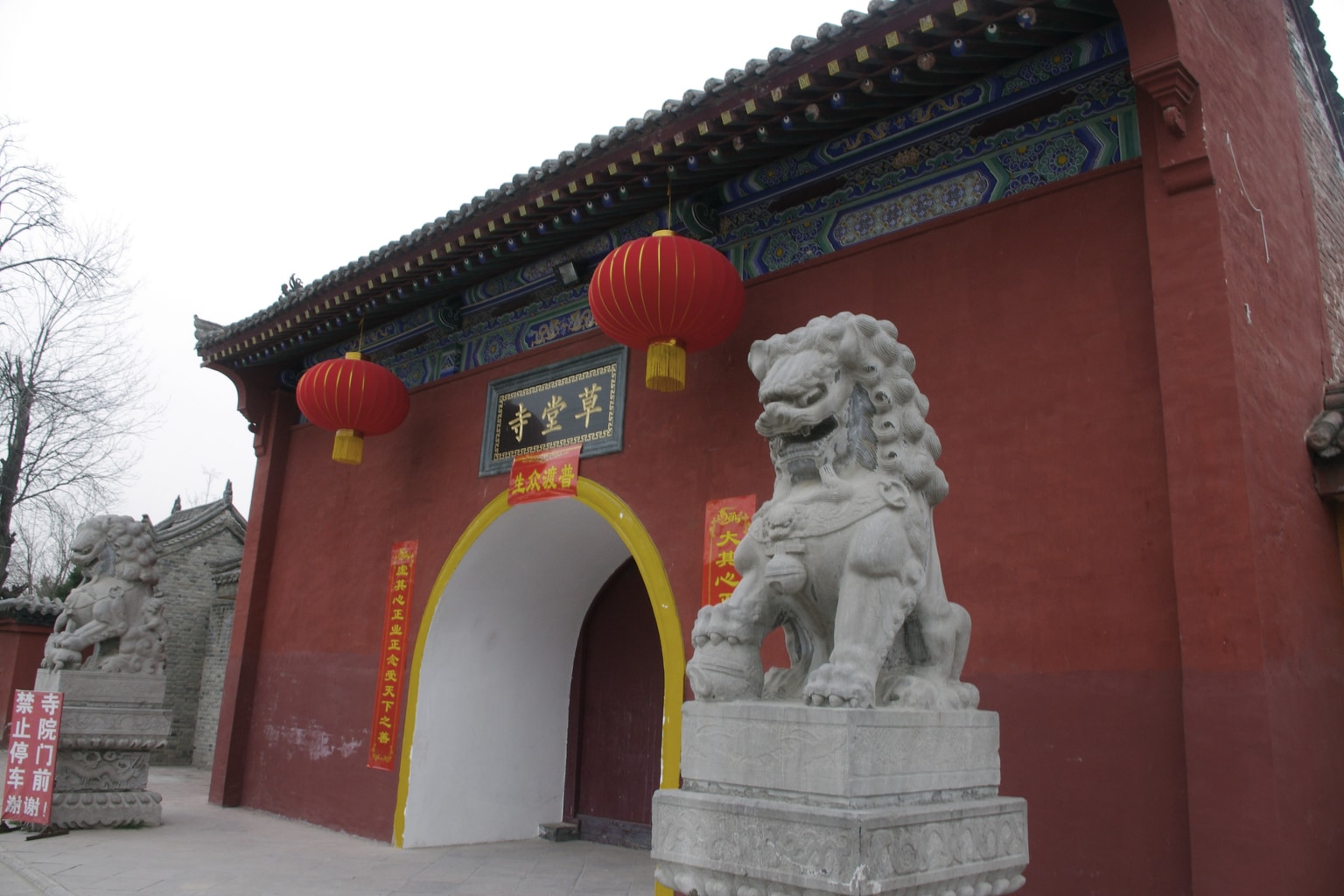
Caotang Temple, located on the northern slope of Mount Guifeng in Xi'an, China, is a historically significant Buddhist temple. It holds immense importance as the site where the monk Kumārajīva resided and translated key Mahayana texts in the 4th century, laying the groundwork for East Asian Mādhyamaka. Consequently, Caotang Temple is revered as the cradle of this influential Buddhist school.
Key Facts
- ›Founded in 401 CE by Emperor Yao Xing of later Qin to house the monk Kumārajīva.
- ›Kumārajīva translated foundational Mahayana texts at Caotang Temple, establishing it as the origin of East Asian Mādhyamaka.
- ›The temple has undergone numerous renovations and name changes throughout various dynasties, including Sui, Tang, Song, Jin, and Qing.
- ›It houses the Memorial Hall of Kumārajīva, featuring a wood carving of the monk and steles of poems.
- ›The Stupa of Kumārajīva, a marble structure from the later Qin period, is a notable relic.
- ›Caotang Temple was designated a National Key Buddhist Temple in 1983 and resumed religious activities in 1984.
Important Relationships
- Kumārajīva
- Emperor Yao Xing
- Li Yuan
- Emperor Taizong
- Master Feixi
- Emperor Xuanzong
- Emperor Xianzong
- Guifeng Zongmi
- Master Bianzheng
- Sengzhao
- Zhao Puchu
- Fu Fengying
- Mise
Stupa of KumāRajīVa, Ming Dynasty Bell, Memorial Hall of KumāRajīVa, Hall of Reclining Buddha, Jade Statue of Reclining Buddha
- KumāRajīVa Resided and Translated Texts Here .
- Rebuilding and Renaming During the Tang Dynasty .
- Renovated and Renamed By the Song Imperial Court .
- Restored Original Name and Added Lecture Hall During the Jin Dynasty .
- Renamed 'Sheng'En Temple' During the Qing Dynasty.
- Completely Destroyed By Wars In the Tongzhi Period .
- Washed Away By Flood In 1881.
- Restoration of the Temple Complex .
- Listed As Provincial Level Key Cultural Heritage .
- Designated National Key Buddhist Temple .
- Resumed Religious Activities .
Flush Gable Roof Style, Double-Eave Gable and Hip Roof
About Caotang Temple
Caotang Temple, situated on the north hillside of Mount Guifeng in the Huyi District of Xi'an, Shaanxi, China, is a profoundly significant Buddhist temple. Its historical importance is primarily anchored in the presence of the renowned monk Kumārajīva, who resided here during the Later Qin dynasty (384–417 CE). It was within these walls that Kumārajīva undertook the monumental task of translating key Mahayana texts, including the Madhyamaka-sastra, Sata-sastra, and Dvadashamukha Shastra. These translations were foundational to the development of East Asian Mādhyamaka philosophy, leading to Kumārajīva being revered as its founder and Caotang Temple as its "cradle."
History and Development
The temple's origins date back to 401 CE when Emperor Yao Xing of the Later Qin dynasty established Xiaoyang Garden to accommodate Kumārajīva. Over the centuries, Caotang Temple has experienced periods of flourishing and decline, marked by numerous renovations and name changes. During the Sui dynasty, it received a Buddha statue as a gift. The Tang dynasty saw Emperor Taizong visit and Emperor Xuanzong's reign marked by the presence of Master Feixi. Emperor Xianzong ordered its rebuilding, and it was renamed "Qi Chan Temple" under the leadership of Abbot Guifeng Zongmi. Following the Tang dynasty's fall, it became dilapidated due to wars.
The Song dynasty renovated the temple in 966 CE, renaming it "Qingliang Jianfu Temple." In 1193, during the Jin dynasty, Master Bianzheng added a lecture hall and the temple reverted to its original name. The Qing dynasty saw further transformations; in 1734, it was renamed "Sheng'en Temple" following the canonization of Kumārajīva's disciple Sengzhao. Despite these efforts, the temple was completely destroyed by wars in the Tongzhi period (1862–1874) and later washed away by a flood in 1881.
Reconstruction and Modern Status
Following the founding of the People's Republic of China, a comprehensive restoration of the temple complex was undertaken in 1952. Its historical and cultural significance was recognized when it was listed as a provincial-level key cultural heritage by the Shaanxi Provincial Government on August 6, 1956. In 1983, Caotang Temple was further elevated to the status of a National Key Buddhist Temple in the Han Chinese Area by the State Council of China. Religious activities officially resumed at the temple in 1984.
Architectural Highlights and Treasures
The temple's architecture features a central axis with five courtyards, housing structures such as the Shanmen, Four Heavenly Kings Hall, Mahavira Hall, and the Memorial Hall of Kumārajīva. Notable architectural elements include the Shanmen with a single entrance and a flush gable roof, and the Mahavira Hall with its imposing double-eave gable and hip roof, enshrining statues of Sakyamuni, Amitabha, and Bhaisajyaguru.
Among its national treasures is the Stupa of Kumārajīva, a marble structure from the Later Qin period, standing 2.46 meters high with twelve stories. The temple also possesses a 2.6-meter high Ming dynasty bell, weighing 5,000 kilograms, cast with intricate Buddhist inscriptions and decorative patterns. The Hall of Reclining Buddha houses a jade statue of the Reclining Buddha, a gift from Burma in 1994. The Dharma Hall contains a significant wood carving of Vairocana, known as "Vairocana nestling among thousand Buddha." The Memorial Hall of Kumārajīva, built by Japanese monks, contains a wood carving of Kumārajīva and artwork by Japanese painter Mise.
Source: Wikipedia ↗
Frequently Asked Questions
When was Caotang Temple founded?
Caotang Temple traces its origins to the year 401 CE. It was founded by Emperor Yao Xing of the Later Qin dynasty to provide accommodation for the renowned Buddhist monk Kumārajīva.
Why is Caotang Temple considered important in Buddhism?
Caotang Temple is considered the cradle of East Asian Mādhyamaka. This is because the monk Kumārajīva resided here and translated key texts such as the Madhyamaka-sastra, laying the foundation for this influential Buddhist tradition in East Asia.
What are some notable architectural features of Caotang Temple?
The main structures are arranged along a central axis across five courtyards. Notable buildings include the Shanmen, Four Heavenly Kings Hall, Mahavira Hall, and the Memorial Hall of Kumārajīva. The temple also features a distinctive stone pagoda and a Hall of Reclining Buddha.
What relics are housed at Caotang Temple?
Caotang Temple houses the Stupa of Kumārajīva, a marble stupa from the Later Qin period. The temple also contains a Ming dynasty bell, cast in 1368–1644, and a jade statue of the Reclining Buddha presented in 1994.
Has Caotang Temple undergone significant historical events?
Yes, the temple has a long history of significant events. It was established to house Kumārajīva, survived wars and floods that led to its destruction and rebuilding multiple times, and was listed as a provincial-level key cultural heritage in 1956 before being designated a National Key Buddhist Temple in 1983.
Related Buddhist Temples

Baotong Temple
Baotong Temple is a significant Buddhist temple located on the south hillside of Mount Hong in Wuhan, China, recognized as one of the "Four Buddhist Temples" in the city. Its history spans over 1,500 years, with its origins tracing back to the Liu Song dynasty, and it has undergone numerous restorations and expansions throughout various dynasties, including the Ming and Qing dynasties. The temple is renowned for its Mahavira Hall and the historic Hongshan Pagoda, and it continues to be a vital center for Buddhist practice and education.

Bishan Temple
Bishan Temple, also known as Guangji Maopeng, is a significant Buddhist temple situated in Taihuai Town, Wutai County, Shanxi, China. It holds the distinction of being a National Key Buddhist Temple in the Han Chinese Area, recognized for its historical importance and architectural features, including a prominent ordination altar.
Daming Temple
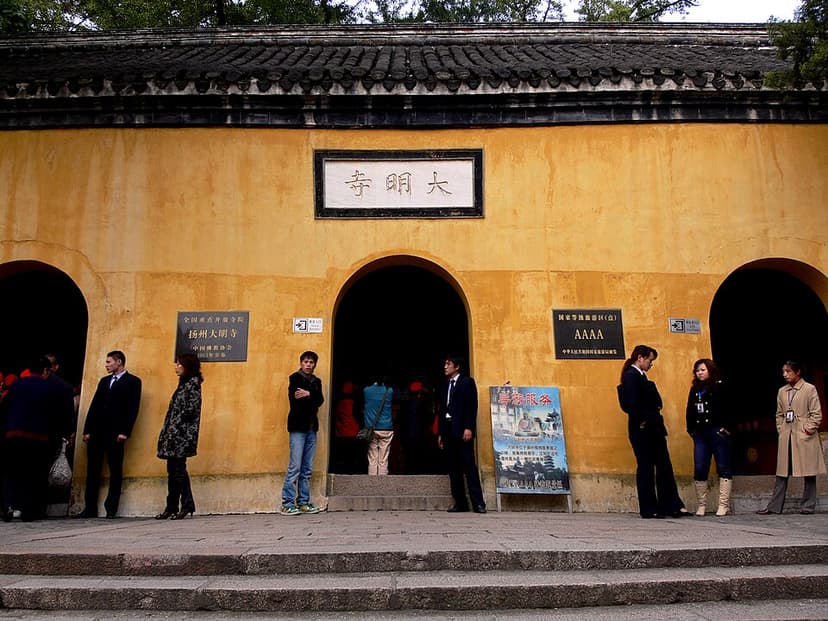
Daming Temple, situated on the middle peak of Shugang Mountain in Yangzhou, Jiangsu province, China, is a historically significant Buddhist temple. It is particularly renowned as the place where the eminent monk Jianzhen studied and ordained monks in 742 AD before embarking on his journey to Japan. The temple has undergone numerous name changes and reconstructions throughout its history, reflecting its enduring importance in Chinese Buddhism.