
Baotong Temple
Baotong Temple is a significant Buddhist temple located on the south hillside of Mount Hong in Wuhan, China, recognized as one of the "Four Buddhist Temples" in the city. Its history spans over 1,500 years, with its origins tracing back to the Liu Song dynasty, and it has undergone numerous restorations and expansions throughout various dynasties, including the Ming and Qing dynasties. The temple is renowned for its Mahavira Hall and the historic Hongshan Pagoda, and it continues to be a vital center for Buddhist practice and education.
Key Facts
- ›Founded in the Liu Song dynasty (420–479) as Dongshan Temple.
- ›Renamed Mituo Temple during the Tang dynasty and later Chongning Wanshou Chan Temple during the Song dynasty.
- ›A seven-story Chinese pagoda, now known as Hongshan Pagoda, was built during the Yuan dynasty (1271–1368).
- ›Largely extended and renamed Baotong Chan Temple in 1485 during the Ming dynasty.
- ›Underwent three major renovations during the Qing dynasty and housed over 1,500 monks at its peak.
- ›Designated as a National Key Buddhist Temple in the Han Chinese Area by the State Council of China in 1983.

Important Relationships
- Emperor Taizong of the Tang dynasty
- Emperor Lizong of the Song dynasty
- Hongwu Emperor
- Zhu Zhen
- Prince Zhu Jun'e
- Kangxi Emperor
- Qianlong Emperor
- Li Yuanhong
- Lingji Ciren
- Hongshan Pagoda
- Mahavira Hall
- Collection of Main Halls Including Shanmen, Heavenly Kings Hall, Hall of Guru, Jade Buddha Hall, Meditation Hall, Dharma Hall, Hall of Maitreya, Reception Hall
- Free Life Pond
- Ming Dynasty Stone Lions
- First Built As Dongshan Temple During the Liu Song Dynasty .
- Renamed Mituo Temple During the Tang Dynasty.
- Named Chongning Wanshou Chan Temple During the Duanping Period of the Song Dynasty .
- Hongshan Pagoda Construction Began In 1280 and Completed In 1291 .
- Restored By Zhu Zhen, Son of Hongwu Emperor, In 1381 .
- Mahavira Hall Added In 1457 By Prince Zhu Jun'E .
- Renamed Baotong Chan Temple In 1485 .
- Underwent Renovations In 1676 , 1792 , and 1865–1879 .
- Garrisoned By the Revolutionary Army During the Xinhai Revolution In 1911.
- Refurbished and Redecorated By Abbot Wenxian In 1932.
- President Li Yuanhong's Surpassing Ceremony Held On November 24, 1935.
- Allocated Funds For Construction By Wuhan Municipal Government After 1952 .
- Buddha Images and Stone Lions Destroyed During the Cultural Revolution.
- Inscribed As A National Key Buddhist Temple In 1983 .
- Wuchang Buddhist College Established In 1994.
- Mahavira Hall Completed In April 2005.
Chinese Buddhist Temple Architecture
About Baotong Temple
Baotong Temple, also known by its historical names Dongshan Temple and Mituo Temple, is a prominent Buddhist temple situated on the south hillside of Mount Hong in Wuchang District, Wuhan, Hubei, China. It holds the distinction of being one of the "Four Buddhist Temples" in Wuhan and boasts a rich history stretching back over 1,500 years.
History and Development
The temple's origins date back to the Liu Song dynasty (420–479), when it was first established as Dongshan Temple. During the Tang dynasty, it was renamed Mituo Temple in honor of Emperor Taizong. The Song dynasty saw it renamed Chongning Wanshou Chan Temple during the Duanping period (1234–1236). A significant architectural addition, the seven-story Chinese pagoda, was constructed during the Yuan dynasty (1271–1368). The Ming dynasty marked a period of considerable expansion and renaming; in 1381, Zhu Zhen, a son of the Hongwu Emperor, restored the temple. The Mahavira Hall was added in 1457, and by 1485, the temple was largely extended and adopted its current name, Baotong Chan Temple.
Throughout the Qing dynasty, Baotong Temple underwent several renovations, including those during the reigns of Kangxi, Qianlong, Tongzhi, and Guangxu emperors. At its zenith during this period, it was home to more than 1,500 monks. The temple also played a role in more recent history, serving as a garrison for the revolutionary army during the Xinhai Revolution in 1911. Despite suffering damage during the Cultural Revolution, including the destruction of Buddha images and Ming dynasty stone lions, the temple has been subject to significant reconstruction and refurbishment efforts.
Architectural Significance
The current main structures of Baotong Temple include the Shanmen, Heavenly Kings Hall, Mahavira Hall, Hall of Guru, Free Life Pond, Jade Buddha Hall, Meditation Hall, Dharma Hall, Hall of Maitreya, and Reception Hall. The most notable architectural feature is the Hongshan Pagoda, originally built between 1280 and 1291 during the Yuan dynasty. This seven-story, octagonal-based pagoda, standing 44.1 meters tall, is made of brick and stone and is a significant landmark on Mount Hong.
Contemporary Role
Baotong Temple continues to be a vital center for Buddhism in China. In 1983, it was recognized as a National Key Buddhist Temple in the Han Chinese Area by the State Council of China. The Wuchang Buddhist College was established within the temple grounds in 1994, underscoring its role in Buddhist education. The Mahavira Hall was completed in April 2005, further contributing to the temple's active status as a place of worship and monastic life.
Source: Wikipedia ↗
Frequently Asked Questions
When was Baotong Temple first built?
Baotong Temple was first built during the Liu Song dynasty, which spanned from 420 to 479 CE. It was originally known as Dongshan Temple at its inception.
What is the significance of the Hongshan Pagoda?
The Hongshan Pagoda, originally named Lingji Pagoda, was constructed during the Yuan dynasty between 1280 and 1291. This seven-story brick and stone pagoda is a prominent architectural feature of Baotong Temple and commemorates the monk Lingji Ciren.
Has Baotong Temple been recognized by the Chinese government?
Yes, Baotong Temple was inscribed as a National Key Buddhist Temple in the Han Chinese Area by the State Council of China in 1983. This designation highlights its importance within the Buddhist landscape of China.
What historical events have impacted Baotong Temple?
The temple was involved in the Xinhai Revolution in 1911, where the revolutionary army garrisoned there. It also suffered destruction during the Cultural Revolution, with Buddha images and stone lions being destroyed, though it has since been restored and rebuilt.
What are some of the main buildings within Baotong Temple?
The existing main buildings include the Shanmen, Heavenly Kings Hall, Mahavira Hall, Hall of Guru, Free Life Pond, Jade Buddha Hall, Meditation Hall, Dharma Hall, Hall of Maitreya, and Reception Hall.
Related Buddhist Temples
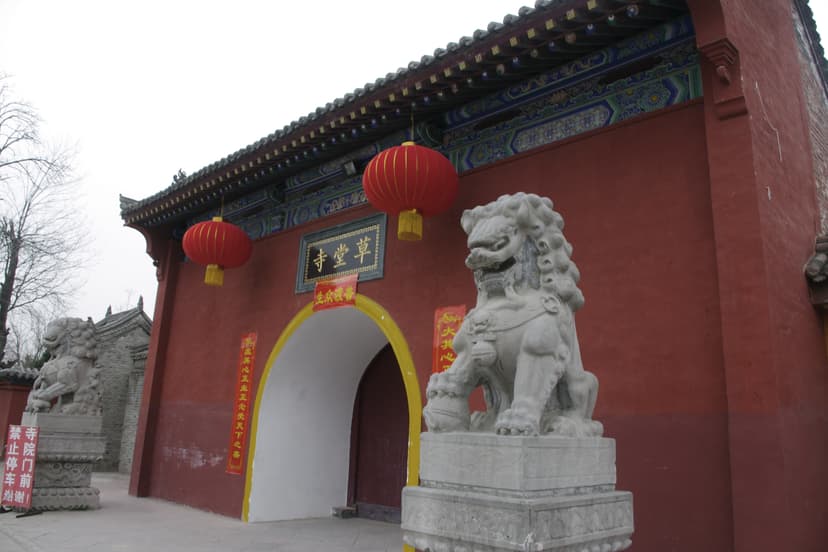
Caotang Temple
Caotang Temple, located on the northern slope of Mount Guifeng in Xi'an, China, is a historically significant Buddhist temple. It holds immense importance as the site where the monk Kumārajīva resided and translated key Mahayana texts in the 4th century, laying the groundwork for East Asian Mādhyamaka. Consequently, Caotang Temple is revered as the cradle of this influential Buddhist school.

Bishan Temple
Bishan Temple, also known as Guangji Maopeng, is a significant Buddhist temple situated in Taihuai Town, Wutai County, Shanxi, China. It holds the distinction of being a National Key Buddhist Temple in the Han Chinese Area, recognized for its historical importance and architectural features, including a prominent ordination altar.
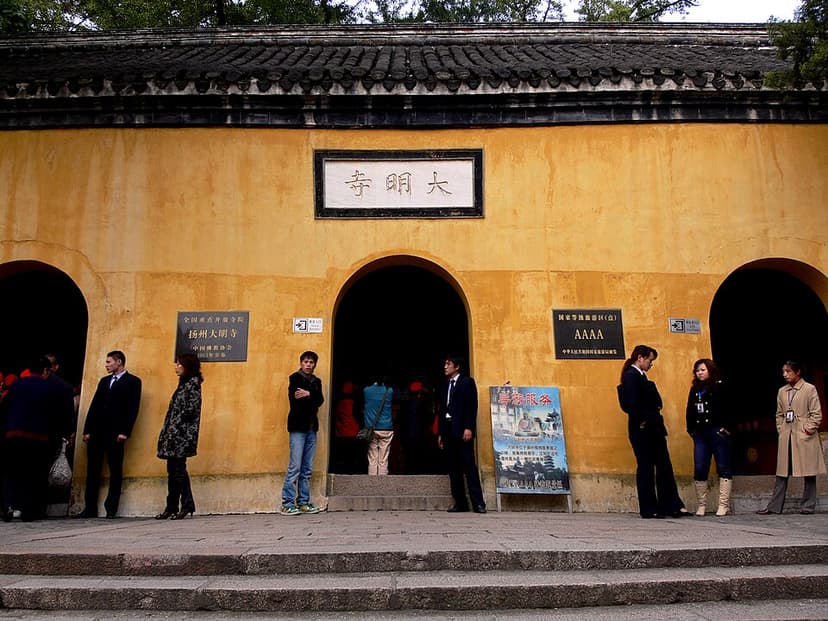
Daming Temple
Daming Temple, situated on the middle peak of Shugang Mountain in Yangzhou, Jiangsu province, China, is a historically significant Buddhist temple. It is particularly renowned as the place where the eminent monk Jianzhen studied and ordained monks in 742 AD before embarking on his journey to Japan. The temple has undergone numerous name changes and reconstructions throughout its history, reflecting its enduring importance in Chinese Buddhism.