
Daikaku-ji
Temple·Japan·9th century·Shingon Buddhism
Daikaku-ji is a historic Shingon Buddhist temple in Kyoto, Japan, originally established as Emperor Saga's palace in 814 CE. It later served as an imperial villa and then became a significant temple, notable for its role in cloistered rule by retired emperors. The temple is also recognized as the headquarters of the Saga Go-ryū school of ikebana and features the ancient Ōsawa Pond, a surviving example of Heian period garden design.
Key Facts
- ›Founded in 814 CE as Emperor Saga's palace, the Saga-in.
- ›Transformed into a temple named Daikaku-ji in 876 by Princess Masako.
- ›Served as a residence and center for cloistered rule for several retired emperors.
- ›Features Ōsawa Pond, one of the oldest surviving Japanese garden ponds from the Heian period.
- ›Headquarters of the Saga Go-ryū school of ikebana.
- ›Houses a copy of the Heart Sutra personally transcribed by Emperor Saga, displayed publicly once every sixty years.

Important Relationships
- Emperor Saga
- Princess Masako
- Emperor Junna
- Emperor Go-Saga
- Emperor Kameyama
- Emperor Go-Uda
- Kobo Daishi
- Kanō Sanraku
- Shikō Watanabe
- ōSawa Pond
- Saga-In
- ShingyōDen Hall
- Sliding Door Paintings By Kanō Sanraku and Shikō Watanabe
- Establishment of the Saga-In Palace
- Transformation Into Daikaku-Ji Temple
- Residence For Cloistered Rule By Retired Emperors
- Burning and Rebuilding of the Temple
- Relocation of Momoyama Period Buildings From Kyoto Imperial Palace
Heian Period Garden Design, Momoyama Period Architecture
About Daikaku-ji
Daikaku-ji: A Palace, Imperial Retreat, and Shingon Temple
Daikaku-ji, located in Ukyō-ku, Kyoto, Japan, is a significant Shingon Buddhist temple with a rich history spanning over a millennium. Its origins lie not as a temple, but as the palace of Emperor Saga, built in 814 CE and later serving as his imperial villa. This historical connection to the imperial family is a defining characteristic of Daikaku-ji.
History and Imperial Connections
The complex was transformed into a temple in 876 CE by Princess Masako, daughter of Emperor Saga and consort of Emperor Junna. It became a monzeki temple, traditionally appointing only imperial princes as its abbot. Over centuries, Daikaku-ji served as a retirement home and seat of power for several emperors, including Go-Saga, Kameyama, and Go-Uda, who continued to exert influence through cloistered rule. The temple has faced destruction and rebuilding, notably in 1336, and later saw the incorporation of Momoyama period structures from the Kyoto Imperial Palace during the Edo period.
Ōsawa Pond and the Birthplace of Ikebana
A key feature of Daikaku-ji is the Ōsawa Pond, an artificial lake predating the temple itself. Created by Emperor Saga, it is one of the oldest surviving Japanese garden ponds from the Heian period. Its design, inspired by Chinese garden aesthetics, includes islands and rocky islets resembling Chinese junks. The pond and its surroundings are traditionally considered the birthplace of the Saga Go-ryū school of ikebana, the Japanese art of flower arrangement, which maintains its headquarters at the temple.
Cultural Significance and Art
Daikaku-ji holds several items of cultural importance. The temple houses a handwritten copy of the Heart Sutra by Emperor Saga, believed to have been instrumental in ending an epidemic; this sutra is displayed to the public only once every sixty years. The Shōshinden hall features sliding door paintings by Kanō Sanraku and Shikō Watanabe, depicting peonies and plum blossoms, which are designated as Important Cultural Properties. The main hall enshrines images of the Five Wisdom Kings, with Fudō at the center.
Source: Wikipedia ↗
Frequently Asked Questions
When was Daikaku-ji founded?
Daikaku-ji's origins trace back to 814 CE when Emperor Saga established a palace on the site. It was officially transformed into a temple and named Daikaku-ji in 876 by his daughter, Princess Masako.
What is the significance of Ōsawa Pond?
Ōsawa Pond is an artificial lake created by Emperor Saga, dating back to the Heian period. It is one of the oldest surviving Japanese garden ponds and is known for its design, meant to reflect Chinese garden styles and serve as a moon-viewing spot.
What is the connection between Daikaku-ji and ikebana?
Daikaku-ji is the headquarters of the Saga Go-ryū school of ikebana, a style of Japanese flower arrangement. This school is traditionally said to have its origins in the garden and pond of the temple.
What historical figures are associated with Daikaku-ji?
Emperor Saga, who originally built the palace on the site, is a key figure. Later, retired emperors such as Go-Saga, Kameyama, and Go-Uda resided and conducted cloistered rule from Daikaku-ji.
Are there any unique cultural artifacts at Daikaku-ji?
Yes, the temple houses a handwritten copy of the Heart Sutra by Emperor Saga, which is displayed to the public very infrequently. Additionally, sliding door paintings by Kanō Sanraku and Shikō Watanabe, featuring peonies and plum blossoms, are designated as Important Cultural Properties.
Related Buddhist Temples

Chūson-ji
Chūson-ji is a significant Buddhist temple located in Hiraizumi, Iwate Prefecture, Japan. It serves as the head temple of the Tendai sect in the Tōhoku region and is renowned for its Konjiki-dō, a gilded structure housing the mummified remains of the Northern Fujiwara clan leaders. The temple complex is a UNESCO World Heritage Site, recognized for its historical and cultural importance.
Daigo-ji
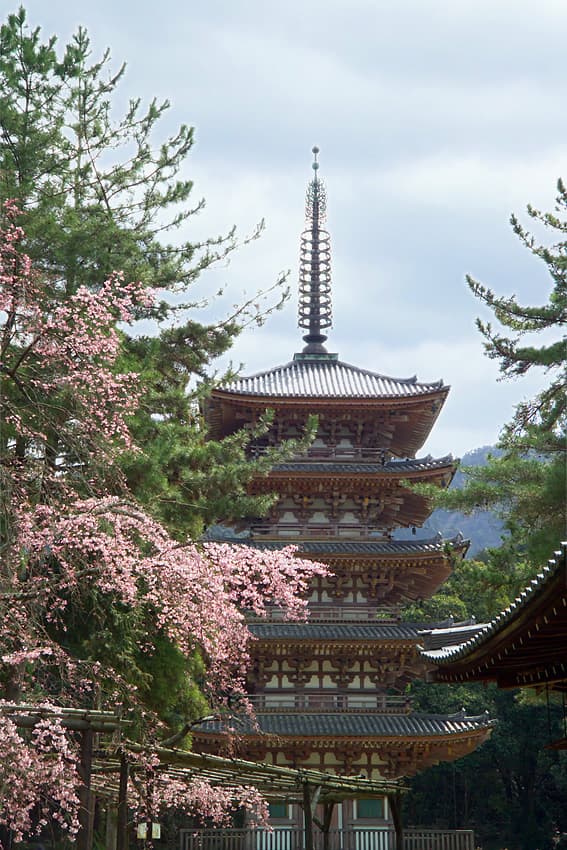
Daigo-ji is a sprawling Buddhist temple complex in Kyoto, Japan, renowned for its historical significance, extensive grounds, and rich collection of cultural treasures. It serves as the head temple of the Shingon-shū Daigo-ha sect and is recognized as a UNESCO World Heritage Site, embodying centuries of Japanese Buddhist architecture and garden design.
Adashino Nenbutsu-ji
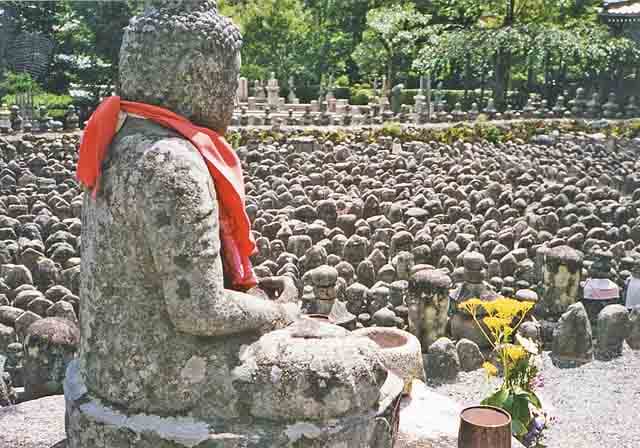
Adashino Nenbutsu-ji is a Buddhist temple in Kyoto, Japan, historically situated in an area where the bodies of the deceased were abandoned. Founded as a temple by Kūkai in 811 and later altered by Hōnen, it now houses approximately eight thousand Buddhist statuettes that memorialize the souls of the dead. The temple is particularly known for its 'sento kuyo' ceremony, where thousands of stone statues are illuminated with candles.