
Daigo-ji
Temple·Japan·9th century·Shingon-shū Daigo-ha
Daigo-ji is a sprawling Buddhist temple complex in Kyoto, Japan, renowned for its historical significance, extensive grounds, and rich collection of cultural treasures. It serves as the head temple of the Shingon-shū Daigo-ha sect and is recognized as a UNESCO World Heritage Site, embodying centuries of Japanese Buddhist architecture and garden design.
Key Facts
- ›Founded in 874 by Shōbō, a disciple of Kūkai.
- ›Houses approximately 150,000 temple treasures, including numerous National Treasures and important cultural properties.
- ›It is the 11th stop on the Saigoku Kannon Pilgrimage route.
- ›The temple grounds cover over 6.6 million square meters on Mount Daigo.
- ›Known for Toyotomi Hideyoshi's famous 'Daigo Cherry Blossom Viewing' event.
- ›One of the 17 component parts of the UNESCO World Heritage Site 'Historic Monuments of Ancient Kyoto'.
Important Relationships
- Kūkai
- Emperor Daigo
- Toyotomi Hideyoshi
- Fujiwara no Onshi
- Emperor Suzaku
- Emperor Murakami
- Fujiwara no Kenshi
- Emperor Shirakawa
- Ashikaga Takauji
- Ashikaga Yoshimitsu
- Ashikaga Yoshinori
- Toyotomi Hideyori
Five-Story Pagoda, Kondō, Sambō-In Garden, Daigo-Sui, Yakushi Nyorai Statue, Murals In the Five-Story Pagoda
- Founded In 874 By ShōBō
- Emperor Daigo's Request For Yakushi-Dō Construction In 907
- Emperor Daigo's Death and Burial At the Temple In 930
- Erection of the Five-Story Pagoda In 951
- Toyotomi Hideyoshi's 'Daigo Cherry Blossom Viewing' In 1598
- Rebuilding of Sanbō-In and Kondō Relocation By Toyotomi Hideyoshi and Hideyori In Late 16th/Early 17th Century
- Damage During the ōNin War
- Forest Fire In 1939 Damaging Kami-Daigo Structures
- Lightning Strike Fire In 2008 Destroying Juntei-Dō
Heian Period, Momoyama Period, Kamakura Period
About Daigo-ji
Daigo-ji: A UNESCO World Heritage Buddhist Temple in Kyoto
Daigo-ji (醍醐寺) is a significant Buddhist temple complex located in Fushimi-ku, Kyoto, Japan. It holds the distinction of being the head temple of the Shingon-shū Daigo-ha sect and is recognized as one of the 17 component parts of the UNESCO World Heritage Site "Historic Monuments of Ancient Kyoto (Kyoto, Uji and Otsu Cities)." The temple is celebrated for its profound historical roots, extensive grounds covering over 6.6 million square meters on Mount Daigo (Kasatoriyama), and its vast collection of approximately 150,000 temple treasures, including numerous National Treasures and important cultural properties. The name 'Daigo' itself, meaning 'ghee' or 'crème de la crème,' metaphorically represents the most profound aspects of Buddhist thought.
History and Development
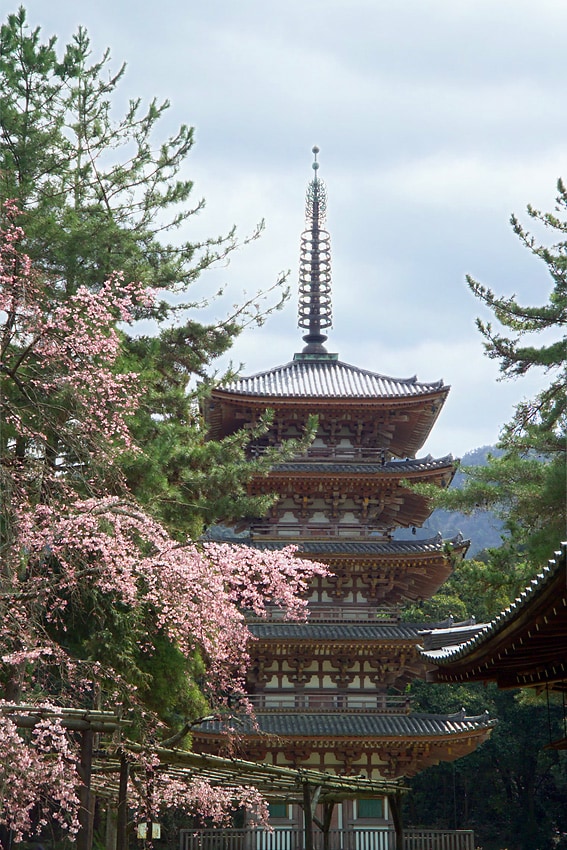
The history of Daigo-ji dates back to 874, when the temple was founded by Shōbō, a disciple of Kūkai, in the area now known as Kami-Daigo. Its development was significantly influenced by imperial patronage. In 907, Emperor Daigo requested the construction of a Yakushi-dō, and later, after abdicating, he entered Buddhist priesthood at this temple, taking the name Hō-kongō, and was subsequently buried there, leading to his posthumous name, Daigo. The expansion of the temple complex continued under subsequent emperors. A notable structure, the Five-story Pagoda, was erected in 951 during the late Heian period and stands today as the oldest wooden structure in Kyoto Prefecture. The temple also served as a bodaiji (family temple) for the Minamoto clan and later became a monzeki temple, with abbots drawn from the imperial family. Despite suffering damage during the Ōnin War, Daigo-ji was rebuilt and restored, notably by Toyotomi Hideyoshi and his son Toyotomi Hideyori, who were instrumental in renovating the Sanbō-in sub-temple and relocating the Kondō. The temple has also been a center for the promotion of Shugendō practices.
Layout and Notable Features
Daigo-ji is organized into three distinct areas: Sambō-in, Shimo-Daigo (Lower Daigo), and Kami-Daigo (Upper Daigo). Sambō-in and Shimo-Daigo are situated at the base of the mountain and are more accessible, attracting the majority of visitors. Sambō-in is known for its walled complexes, including a noted tea garden and a museum, and is particularly vibrant during cherry blossom season. Shimo-Daigo comprises several detached halls, including the Kondō, which houses the principal image of Yakushi Nyorai, and the remarkably preserved Five-story Pagoda. The Kondō, pagoda, and the murals within the pagoda are designated National Treasures. Kami-Daigo, located on the mountain's summit, requires a significant hike and features the Kaisan-dō and Nyōirin-dō. The Sambō-in Garden, a masterpiece of Momoyama-period garden design, is recognized as a Special Historic Site and a Special Place of Scenic Beauty. The temple also features the Daigo-Sui, a holy spring that is considered the origin of the temple.
Significance and Cultural Heritage
Daigo-ji is not only a vital religious center for the Shingon-shū Daigo-ha sect but also a repository of immense cultural and historical value. Its architectural styles, spanning from the Heian to the Momoyama periods, showcase the evolution of Japanese wooden architecture. The temple's extensive collection of art and artifacts, including paintings, sculptures, and historical documents, offers invaluable insights into Japan's religious and artistic history. Furthermore, its inclusion in the Saigoku Kannon Pilgrimage route underscores its importance as a spiritual destination. Despite challenges such as fires and the anti-Buddhist movements of the Meiji period, Daigo-ji has largely preserved its heritage, remaining a testament to Japan's rich Buddhist tradition.
Source: Wikipedia ↗
Frequently Asked Questions
When was Daigo-ji founded?
Daigo-ji was founded in 874 during the early Heian period. The initial temple was established in what is now the Kami-Daigo location by Shōbō.
What is the significance of the name Daigo-ji?
The name 'Daigo' literally translates to 'ghee,' and is used figuratively to mean 'crème de la crème.' This signifies the most profound aspects of Buddhist thought and practice associated with the temple.
What are the main areas of Daigo-ji?
Daigo-ji is divided into three main parts: Sambō-in, Shimo-Daigo (Lower Daigo), and Kami-Daigo (Upper Daigo). These areas are progressively older, wilder, and situated further up the mountain.
Is Daigo-ji a UNESCO World Heritage Site?
Yes, Daigo-ji is one of the 17 component parts of the UNESCO World Heritage Site 'Historic Monuments of Ancient Kyoto (Kyoto, Uji and Otsu Cities)', inscribed in 1994.
What is the most notable structure at Shimo-Daigo?
At Shimo-Daigo, the Five-story Pagoda, erected in 951, is the oldest surviving wooden structure in Kyoto Prefecture and a rare example of Heian-period architecture. The Kondō, housing the principal image of Yakushi Nyorai, is also a significant structure.
What is significant about the Kami-Daigo area?
Kami-Daigo is located on top of the mountain and requires a strenuous hike. It features the Kaisan-dō and Nyōirin-dō, and historically housed the Juntei-dō, which was part of the Saigoku Kannon Pilgrimage.
What is the Sambō-in Garden known for?
The Sambō-in Garden is a Momoyama-period strolling pond garden laid out under Toyotomi Hideyoshi. It is designated as a Special Historic Site and a Special Place of Scenic Beauty and is famous for its cherry blossoms and autumn foliage.
Related Buddhist Temples

Chūson-ji
Chūson-ji is a significant Buddhist temple located in Hiraizumi, Iwate Prefecture, Japan. It serves as the head temple of the Tendai sect in the Tōhoku region and is renowned for its Konjiki-dō, a gilded structure housing the mummified remains of the Northern Fujiwara clan leaders. The temple complex is a UNESCO World Heritage Site, recognized for its historical and cultural importance.
Adashino Nenbutsu-ji
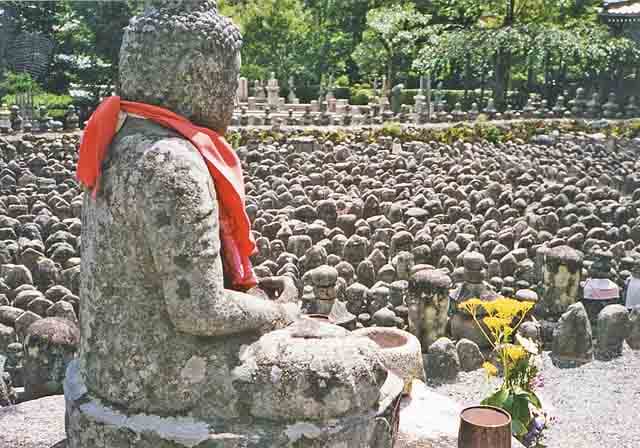
Adashino Nenbutsu-ji is a Buddhist temple in Kyoto, Japan, historically situated in an area where the bodies of the deceased were abandoned. Founded as a temple by Kūkai in 811 and later altered by Hōnen, it now houses approximately eight thousand Buddhist statuettes that memorialize the souls of the dead. The temple is particularly known for its 'sento kuyo' ceremony, where thousands of stone statues are illuminated with candles.

Daikaku-ji
Daikaku-ji is a historic Shingon Buddhist temple in Kyoto, Japan, originally established as Emperor Saga's palace in 814 CE. It later served as an imperial villa and then became a significant temple, notable for its role in cloistered rule by retired emperors. The temple is also recognized as the headquarters of the Saga Go-ryū school of ikebana and features the ancient Ōsawa Pond, a surviving example of Heian period garden design.