
Adashino Nenbutsu-ji
Temple·Japan·9th century
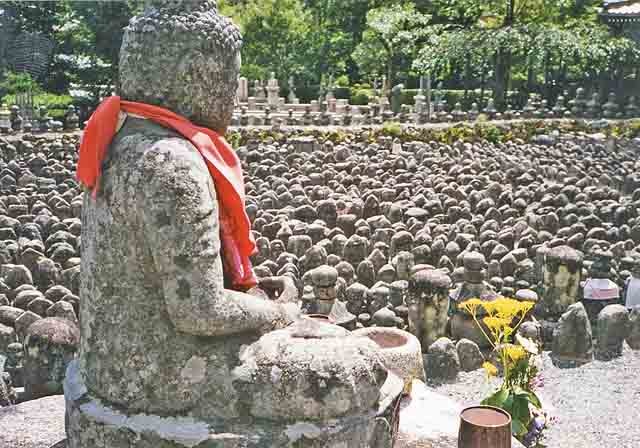
Adashino Nenbutsu-ji is a Buddhist temple in Kyoto, Japan, historically situated in an area where the bodies of the deceased were abandoned. Founded as a temple by Kūkai in 811 and later altered by Hōnen, it now houses approximately eight thousand Buddhist statuettes that memorialize the souls of the dead. The temple is particularly known for its 'sento kuyo' ceremony, where thousands of stone statues are illuminated with candles.
Key Facts
- ›Founded in 811 by Kūkai, with later alterations by Hōnen.
- ›Located in Ukyo-ku, Kyoto, Japan.
- ›Houses around 8,000 Buddhist statuettes memorializing the souls of the dead.
- ›Holds a 'sento kuyo' ceremony annually on August 23-24, lighting up stone statues.
- ›The name 'Adashino' refers to the place, and 'Nenbutsu' to the recitation of a Buddha's name.
- ›Situated in an area historically used for exposing the bodies of the deceased.
Important Relationships
- Kūkai
- Hōnen
- Approximately 8,000 Buddhist Statuettes
- Stone Statues Illuminated During 'Sento Kuyo' Ceremony
Founding By KūKai, Alteration By HōNen, 'Sento Kuyo' Ceremony
About Adashino Nenbutsu-ji
Adashino Nenbutsu-ji is a significant Buddhist temple located in Ukyo-ku, Kyoto, Japan. Its history is deeply intertwined with the practice of memorializing the deceased, set against the backdrop of an area known since the Heian period for the abandonment of bodies.
History and Significance
The temple's origins trace back to 811 when Kūkai is said to have founded an initial temple on the site. Later, the priest Hōnen is credited with altering it to the present form of Nenbutsuji. Situated high on a hill overlooking Kyoto from the northwest, Adashino Nenbutsu-ji is unique in its dedication to memorializing the souls of the dead. The area itself has a long history as a place where bodies were exposed to the elements. Today, the temple houses approximately eight thousand Buddhist statuettes, which were gathered around 1903 from around Adashino. These statuettes serve to commemorate the spirits of those who passed away here.
The 'Sento Kuyo' Ceremony
Adashino Nenbutsu-ji is particularly renowned for its annual 'sento kuyo' ceremony. This event, dedicated to the spirits of the dead, takes place on the evenings of August 23 and 24. During this time, around ten thousand stone statues are illuminated with candles, creating a poignant and visually striking memorial.
Naming and Location
The name 'Adashino' refers to the specific place where the temple is situated. 'Nenbutsu' is a Buddhist term signifying the recitation of a mantra, often the name of a Buddha. The temple's precise location is 17, Adashino-chō, Saga-Toriimoto, Ukyō-ku, Kyoto. Access is available via Kyoto Bus to the Toriimoto Stop, followed by a short walk.
Source: Wikipedia ↗
Frequently Asked Questions
When was Adashino Nenbutsu-ji founded?
Historical accounts state that Kūkai founded a temple on the site in 811. Later, Hōnen is credited with altering it to the present Nenbutsuji.
What is the significance of the stone statues at Adashino Nenbutsu-ji?
Approximately eight thousand Buddhist statuettes, collected around 1903, memorialize the souls of the dead who were historically abandoned in the Adashino area. These statues are a central feature of the temple.
What is the 'sento kuyo' ceremony?
The 'sento kuyo' is a well-known ceremony dedicated to the spirits of the dead, held on the evenings of August 23 and 24. During this event, about ten thousand stone statues at the temple are lit up with candles.
What does the name 'Adashino Nenbutsu-ji' mean?
The name 'Adashino' is a place name, referring to the location of the temple. 'Nenbutsu' refers to a mantra, specifically the recitation of a Buddha's name.
Where is Adashino Nenbutsu-ji located?
Adashino Nenbutsu-ji is located in Ukyo-ku, Kyoto, Japan. It is situated high on a hill overlooking the city from the northwest.
Related Buddhist Temples

Balapokuna Raja Maha Vihara
Balapokuna Raja Maha Vihara is a historic Buddhist temple located in Pamankada, Sri Lanka, near the Colombo-Batticaloa main road. It is recognized by the government as an archaeological site, with its name originating from a natural pond on its premises, historically known as "Batapokuna" and linked to King Parakramabahu VI. Popular legend associates the pond with an ancient tunnel system connecting to Kotte.

Abhayathilakarathnaramaya
Abhayathilakarathnaramaya, also known as Kuruvita Purana Vihara, is an ancient Buddhist temple situated in Kuruwita, Sri Lanka. It holds significance as a formally recognized archaeological site by the Sri Lankan government, highlighting its historical and cultural importance.
Alchi Monastery
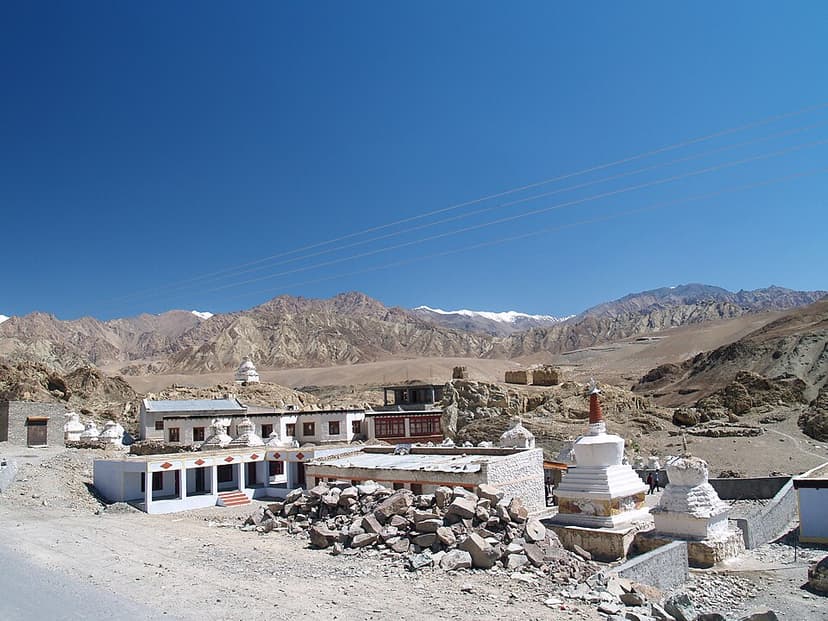
Alchi Monastery is a significant monastic complex located in the Leh District of Ladakh, India, comprising four ancient temples known for their unique artistic style that blends Tibetan and Kashmiri influences. Established between the early 12th and early 13th centuries, it is renowned for its well-preserved wall paintings, wood carvings, and statues, which are among the oldest surviving in Ladakh and reflect both Buddhist and Hindu artistic traditions of the period.