
City Of Ten Thousand Buddhas
Monastery·Usa·20th century·Chan Buddhism (Guiyang school)
The City of Ten Thousand Buddhas is a significant international Buddhist community and monastery located in Talmage, California. Founded by Hsuan Hua, it is recognized as one of the first Chan Buddhist temples in the United States and a major center for Buddhist practice in the Western Hemisphere, notable for its strict adherence to traditional monastic codes.
Key Facts
- ›Founded by Hsuan Hua, a key figure in Western Buddhism.
- ›Purchased by the Dharma Realm Buddhist Association in 1974 and established as an international center by 1976.
- ›Originally the site of the Mendocino State Asylum for the Insane, founded in 1889.
- ›Follows the Guiyang school of Chan Buddhism and adheres closely to the vinaya.
- ›Houses Dharma Realm Buddhist University and Instilling Goodness Elementary and Developing Virtue Secondary Schools.
- ›Known for its strict adherence to monastic traditions, including eating only one meal a day before noon and maintaining separate campuses for men and women.
Important Relationships
- Hsuan Hua (Founder)
- Dharma Realm Buddhist Association (Owner/Operator)
Jeweled Hall of 10,000 Buddhas, Hall of No Words, Dharma Realm Buddhist University, Instilling Goodness Elementary School, Developing Virtue Secondary School, Organic Farm
- Third Threefold Ordination Ceremony Held In 1979, Representing Mahayana and Theravada Traditions.
- Electrical Fire Caused Structural Damage To the Long Life Hall In 2009.
About City Of Ten Thousand Buddhas
The City of Ten Thousand Buddhas (traditional Chinese: 萬佛聖城; pinyin: Wànfó Shèngchéng) is a prominent international Buddhist community and monastery situated in Talmage, California. Founded by the influential Buddhist figure Hsuan Hua, it stands as one of the first Chan Buddhist temples established in the United States and is recognized as one of the largest Buddhist communities in the Western Hemisphere. Its establishment marked a significant step in introducing Eastern Buddhist traditions to the West.
History and Establishment
The Dharma Realm Buddhist Association acquired the site in 1974, with the intention of creating an international center for propagating the Buddhadharma. By 1976, the City of Ten Thousand Buddhas was established. The site itself has a prior history, having originally housed the Mendocino State Asylum for the Insane, founded in 1889, which comprised numerous large buildings and extensive facilities.
Hsuan Hua recognized the valley's surroundings as ideal for spiritual cultivation and envisioned a major center for world Buddhism. His goal was to establish an orthodox international monastery that would elevate moral standards and increase public awareness. The City of Ten Thousand Buddhas encompasses 488 acres, with a significant portion developed to house its monastic facilities, educational institutions, administrative offices, and dining halls.
Traditions and Practices
The City of Ten Thousand Buddhas is distinguished by its strict adherence to traditional Buddhist monastic codes, particularly the vinaya. Monastics observe unique practices, such as always wearing long sashes outside their monastic clothing and consuming only one meal per day, which must be taken before noon. Many practitioners also maintain vows of silence for varying periods and do not own personal wealth or touch money, aiming to purify their minds.
Notable Structures and Institutions
Key architectural and functional sites within the city include the Jeweled Hall of 10,000 Buddhas, completed in 1982, which features a large statue of Avalokiteśvara and walls adorned with 10,000 images of the Buddha. The Hall of No Words serves as a memorial hall containing relics. The City of Ten Thousand Buddhas is also home to Dharma Realm Buddhist University, founded in 1976, which offers degree programs in Liberal Arts and Buddhist Classics. Additionally, the Instilling Goodness Elementary and Developing Virtue Secondary Schools, established by Hsuan Hua in 1976, provide education for students from kindergarten through twelfth grade, incorporating Buddhist teachings and meditation into their curriculum.
Atmosphere and Guiding Principles
The monastery maintains a strict adherence to traditional Asian monastic culture while existing within a liberal Californian setting. It houses both male and female Sangha, students, and is accessible to the public, though with separate campuses for men and women. Visitors are expected to wear modest clothing. Hsuan Hua established six guiding principles for practitioners: "not to fight nor be greedy, not to seek nor be selfish, not to pursue personal advantage, and not to lie." Smoking, drug use, and the consumption of meat and alcohol are prohibited within the community.
Wildlife and Conservation
The grounds are inhabited by various animals, including peacocks, deer, and squirrels. Wildlife conservation efforts are evident, including a Liberating of Life ceremony where animals are set free. An organic farm on the property provides produce for the community's meals.
Source: Wikipedia ↗
Frequently Asked Questions
When was the City of Ten Thousand Buddhas founded?
The Dharma Realm Buddhist Association purchased the site in 1974 and established the international center by 1976. The original Mendocino State Asylum for the Insane on the site was founded in 1889.
Where is the City of Ten Thousand Buddhas located?
The City of Ten Thousand Buddhas is situated in Talmage, California, in southeastern Mendocino County, approximately two miles east of Ukiah and 110 miles north of San Francisco.
What Buddhist tradition does the City of Ten Thousand Buddhas follow?
The temple follows the Guiyang school of Chan Buddhism, one of the Five Houses of Chan. It is also noted for representing both Mahayana and Theravada traditions during its ordination ceremonies.
What are some of the notable structures within the City of Ten Thousand Buddhas?
Notable structures include the Jeweled Hall of 10,000 Buddhas with its 20-foot statue of Avalokiteśvara, the Hall of No Words which serves as a memorial hall, and Dharma Realm Buddhist University.
What are some of the unique customs observed at the City of Ten Thousand Buddhas?
Monastics always wear long sashes outside their monastic clothing and eat only one meal a day before noon. Many also practice vows of silence, do not own personal wealth, and do not touch money.
Is the City of Ten Thousand Buddhas open to the public?
Yes, the monastery houses both male and female Sangha, students, and is open to the public. However, males and females have separate campuses.
Related Buddhist Temples

Dai Bosatsu Zendo Kongo-ji
Dai Bosatsu Zendo Kongo-ji is a Rinzai Zen monastery and retreat center situated in the Catskill Mountains of upstate New York. It serves as a vital hub for Zen practice, offering daily services, intensive training periods, and retreats, and is affiliated with the Zen Studies Society, which was founded to support the work of D.T. Suzuki.

Wat Florida Dhammaram
Wat Florida Dhammaram is a Buddhist monastery located in Kissimmee, Florida, established in the mid-1990s by Lung-po Chaokhun Phra Tepvaraporn. Its founding was motivated by the observed need for a Buddhist monastic presence in the Central Florida region.
Wat Buddhananachat of Austin
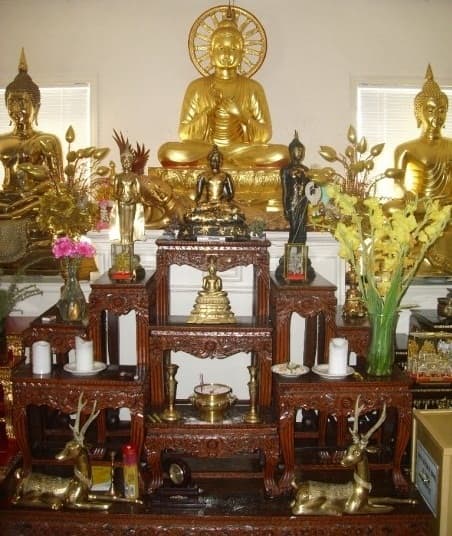
Wat Buddhananachat of Austin is a Theravada Buddhist temple located in Del Valle, Texas, established in 1986 to serve as a religious and cultural center for various ethnic Buddhist communities in central Texas, primarily Thai, Laotian, and Cambodian. It is recognized as the first Asian temple in the area and has grown significantly since its founding, supporting resident monks and hosting numerous religious festivals and cultural events that attract both Buddhists and non-Buddhists.