
Buddha Dhatu Jadi
The Buddha Dhatu Jadi, also known as the Bandarban Golden Temple, is a significant Theravada Buddhist temple located in Bandarban City, Bangladesh. It houses relics believed to belong to Buddha and features the second-largest Buddha statue in the country. The temple is a prominent religious and tourist site, reflecting the Buddhist heritage of the region.
Key Facts
- ›The temple is the largest Theravada Buddhist temple in Bangladesh.
- ›It houses relics of Buddha (dhatu) enshrined below four Buddha statues.
- ›Construction of the temple was completed in 2000, built in Arakanese architecture.
- ›The temple features the second-largest Buddha statue in Bangladesh.
- ›It was founded by Ven. U Pannya Jota Mahathera, a monk from the Bohmong royal family.

Important Relationships
- Ven. U Pannya Jota Mahathera
- Bohmong royal family of Bandarban
- State Sangha Maha Nayaka Committee of Myanmar
Second-Largest Buddha Statue In Bangladesh, Buddha Relics, Golden Bell Set On A Dragon
Arakanese Architecture, South East Asian Style
About Buddha Dhatu Jadi
The Buddha Dhatu Jadi, also widely known as the Bandarban Golden Temple, stands as the largest Theravada Buddhist temple in Bangladesh, situated near Balaghata town in Bandarban City. The temple's name, 'Dhatu Jadi,' refers to the material remains of a holy person, with this particular temple housing relics believed to belong to the Buddha. It is also recognized for possessing the second-largest Buddha statue in the country, making it a significant religious and cultural landmark.
History and Foundation
Construction of the impressive temple began in 1995 and was completed in 2000. The temple's design is rooted in Arakanese architecture, a style influenced by Southeast Asian traditions. The Buddha's dhatu, enshrined within the temple, were a gift presented to its founder and chief priest, Ven. U Pannya Jota Mahathera, in 1994 by the State Sangha Maha Nayaka Committee of Myanmar. Ven. U Pannya Jota Mahathera, a monk since 1991 and formerly a senior assistant judge, hails from the royal Bohmong family of Bandarban, adding a layer of historical lineage to the temple's establishment.
Location and Architecture
Perched atop a 60-meter (200 ft) high hill, the Buddha Dhatu Jadi offers panoramic views in the remote Bandarban Hill District. The temple's architecture is characterized by an elegant stairway leading to its entrance, with exquisite sculptural images adorning the structure. Inside, visitors will find smaller statues and a golden bell set on a dragon, in addition to the main Buddha statue enshrined in the sanctum. The temple forms part of the 'Buddhist Circuit Tour,' a tourism initiative sponsored by the South Asia Subregional Economic Cooperation, highlighting its role in promoting cultural tourism in the region.
Religious and Cultural Significance
Bandarban has a substantial ethnic population that practices Buddhism, predominantly the Theravada tradition, which is followed by the Marma indigenous people. While Buddhism is a minority religion in Bangladesh, it holds historical and cultural importance in the southeastern districts. The Buddha Dhatu Jadi serves as a vital center for the Theravada Buddhist community, attracting both local devotees and international visitors interested in Buddhist heritage and the serene spiritual atmosphere it provides. Visitors are expected to observe a respectful dress code, ensuring no shorts are worn and shoes are removed before entering the temple premises.
Source: Wikipedia ↗
Frequently Asked Questions
What are the relics enshrined in the Buddha Dhatu Jadi?
The temple enshrines dhatu, which are the material remains of Buddha. These relics are believed to bring peace of mind and happiness to devotees and are housed below four statues of Buddha.
What is the architectural style of the Bandarban Golden Temple?
The Buddha Dhatu Jadi is built in Arakanese architecture, which is an adoption of the South East Asian style. The temple is situated atop a hill and is approached by an elegant stairway.
Who founded the Buddha Dhatu Jadi?
The temple was founded by Ven. U Pannya Jota Mahathera, who is also the chief priest. He is a Theravada monk and a member of the royal Bohmong family of Bandarban.
What is the significance of the Buddha Dhatu Jadi in Bangladesh?
It is the largest Theravada Buddhist temple in Bangladesh and holds the country's second-largest Buddha statue. The temple is a key component of the 'Buddhist Circuit Tour' tourism project.
Are there any specific visitor guidelines for the temple?
Yes, visitors are required to adhere to a strict dress code, which includes wearing no shorts and removing shoes before entering the temple precincts.
Related Buddhist Temples

Ananda Temple
The Ananda Temple, built in Bagan, Myanmar in 1105 AD, is a significant Buddhist temple renowned for its architectural fusion of Mon and Indian styles. It is celebrated for its four standing Buddha statues, intricate stone sculptures, and glazed terra-cotta plaques depicting Jataka tales, serving as a "veritable museum of stones" and a testament to Theravada Buddhism. The temple, though damaged by an earthquake in 1975, has been fully restored and remains a highly revered site and a cultural icon of Myanmar.

Baphuon
The Baphuon is a significant Buddhist temple located in Angkor Thom, Cambodia, renowned for its "golden mountain" appearance and its intricate carvings. Originally dedicated to Shiva, it was later converted to Theravada Buddhism, with major restoration efforts transforming it into what has been called the "largest 3D jigsaw puzzle in the world."
Angkor Wat
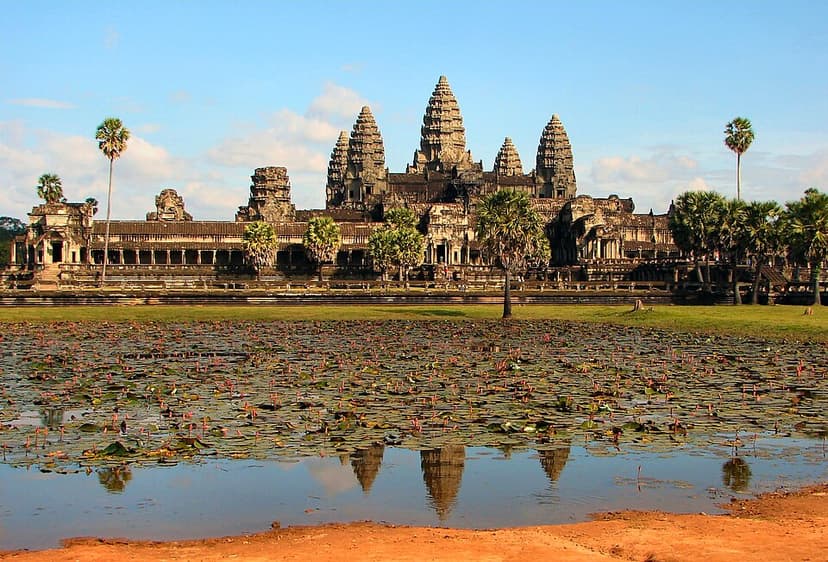
Angkor Wat, originally a Hindu temple dedicated to Vishnu and commissioned by King Suryavarman II in the early 12th century, is the largest religious complex in the world and a cornerstone of Khmer architecture. It was gradually transformed into a Theravada Buddhist temple from the late 13th century onwards and has remained an active center of Buddhist worship, serving as a potent symbol of Cambodia and appearing on its national flag.