
Andaw-thein Temple
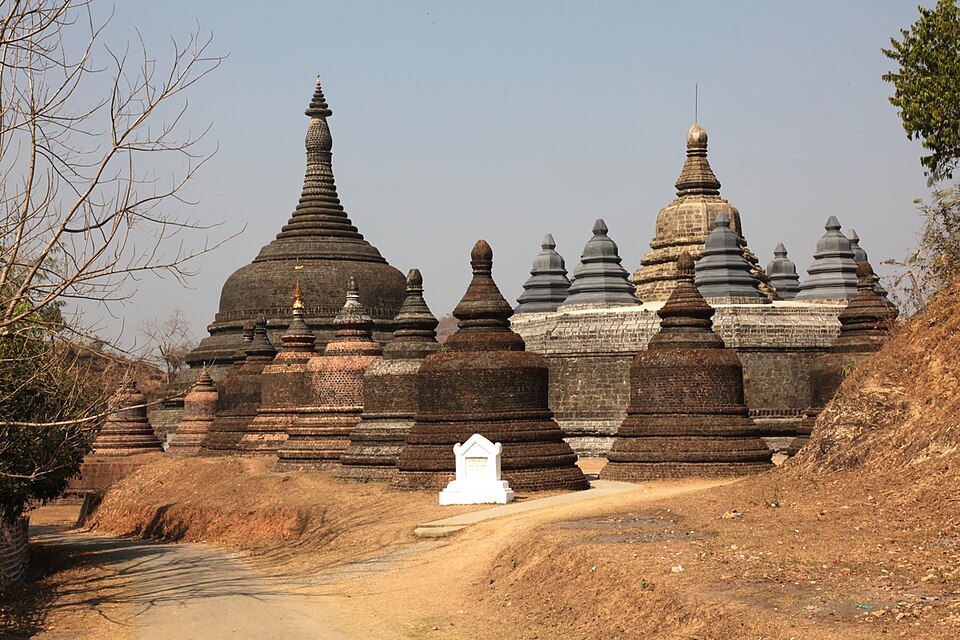
Andaw-thein Temple, meaning 'Tooth Shrine,' is a significant Buddhist temple located in Mrauk U, Myanmar. Originally built as an ordination hall, it was later expanded to house a sacred tooth relic of the Buddha, brought from Sri Lanka. Its unique architecture and the presence of diverse reliefs highlight a blend of Buddhist and Hindu influences.
Key Facts
- ›The temple's name, Andaw-thein, translates to 'Tooth Shrine,' referencing the sacred relic it houses.
- ›It was first constructed as an ordination hall between 1515 and 1521 by King Thazata.
- ›The temple was expanded to enshrine a tooth relic of the Buddha brought from Sri Lanka.
- ›Architecturally, it features an octagonal central shrine with concentric passageways and is topped by a bell-shaped stupa.
- ›The central shrine displays intricate carvings, including reliefs of Hindu deities like Ganesh and Shiva, alongside Buddhist figures.
- ›Andaw-thein Temple contains a total of 175 Buddha images, each often depicting different mudras.
Important Relationships
- King Thazata
- King Ming Phalaung
- King Min Razagyi
- Shite-thaung Temple
Sacred Tooth Relic of the Buddha, Octagonal Central Shrine, Concentric Octagonal Passageways, Bell-Shaped Stupa, Reliefs of Hindu Deities, 175 Buddha Images
- Original Construction As An Ordination Hall
- Restoration By King Ming Phalaung
- Renovation By King Min Razagyi To Enshrine the Tooth Relic
- Theft and Recovery of the Sacred Tooth Relic
Mrauk U Style
About Andaw-thein Temple
Andaw-thein Temple, whose name translates to 'Tooth Shrine,' is a significant Buddhist temple situated in Mrauk U, Myanmar. Its primary importance stems from its role as a sanctuary for a sacred tooth relic of the Buddha, believed to have been brought from Sri Lanka. This relic draws pilgrims and visitors interested in its spiritual significance.
History and Construction
The temple's origins trace back to the early 16th century. It was initially constructed as an ordination hall between 1515 and 1521 by King Thazata. Later, it underwent restoration by King Ming Phalaung between 1534 and 1542. A pivotal moment in its history occurred in 1596 when King Min Razagyi renovated and expanded the structure specifically to house a sacred tooth relic of the Buddha. This relic had been brought back from a pilgrimage to Ceylon (Sri Lanka).
Historical accounts mention an incident where a man from Allayse village attempted to steal the relic from its golden casket. Although the casket was lost, the Myo-ok of Mrauk U successfully recovered the tooth, which was then placed in a silver case. The relic itself is described as being 3¼ inches in length and nearly as thick.
Architecture and Features
The architectural design of Andaw-thein Temple is distinctive. It is characterized by an octagonal central shrine, encircled by two concentric octagonal passageways. The temple rests on a base measuring 125 feet from north to south and 120 feet from east to west. Surrounding the main structure, at the northwest and southwest corners, are sixteen smaller shrines, each containing a Buddha image. A large prayer hall was later added to the eastern entrance.
The temple features entrances on its east, north, and south sides, each accompanied by three niches in the wall. The main shrine is crowned by a bell-shaped stupa with a segmented dome, a style reminiscent of early Mrauk U temples. Eight identical stupas are positioned at each corner around the central stupa.
Notably, the temple has very few openings, with light and air entering primarily through the main entrance. Its inner construction, built entirely from stone blocks, shares a fortress-like design with the nearby Shite-thaung Temple.
Statues and Artistry
Within the large prayer hall, six standing Buddha images are displayed in niches at the entrance to the main shrine. Each image depicts a different mudra (hand gesture). Two specific Buddha images combine Abhaya and Varada Mudras, symbolizing the Buddha's descent from the heaven of the thirty-three gods. The Buddha statues are rendered with broad faces, slightly bowed heads, and downcast eyes, conveying a sense of contemplation. Their long ears extend nearly to their shoulders, and their bodies are depicted as strong with wide chests and heavy limbs. Most are seated in Virasana, with their right leg over the left and their right hand touching the ground in the Bhumisparsha Mudra.
In total, Andaw-thein Temple houses 175 Buddha images.
Hindu Deities and Diverse Imagery
A remarkable aspect of the central shrine is the presence of eight types of thrones adorned with intricate carvings that blend Buddhist and Hindu iconography. These carvings include reliefs of Hindu figures such as Ganesh, Shiva, and Brahma, as well as mythical creatures like Garuda, ogres, Hamsa birds, sphinxes, and lions. The depiction of Shiva seated cross-legged and Brahma with an ornate headdress is particularly noteworthy in a Buddhist context. A striking relief of Garuda with spread wings is also present, alongside guardian figures and elephants.
The thrones are further embellished with floral motifs, Rakhine Byala (a mythical creature), kalasa pots, and parrot carvings, illustrating a rich fusion of influences. The unusual sight of a relief likely depicting Shiva with two consorts, hands pressed in a gesture of respect, placed between Buddha images, underscores the temple's unique artistic and religious synthesis.
Source: Wikipedia ↗
Frequently Asked Questions
What is the meaning of the name Andaw-thein Temple?
The name Andaw-thein Temple translates from Burmese to 'Tooth Shrine.' This name is derived from the sacred tooth relic of the Buddha that is housed within the temple.
When was Andaw-thein Temple originally built?
Andaw-thein Temple was initially built as an ordination hall between the years 1515 and 1521 by King Thazata. It has undergone restorations and expansions since its original construction.
What significant relic is kept at Andaw-thein Temple?
The temple is renowned for housing a sacred tooth relic of the Buddha. This relic was brought from Sri Lanka and is a central feature of the shrine.
What are some notable architectural features of Andaw-thein Temple?
The temple is characterized by its octagonal central shrine and two concentric octagonal passageways. It is topped by a bell-shaped stupa, similar to those found in early Mrauk U temples, and surrounded by eight identical stupas.
Does Andaw-thein Temple contain any non-Buddhist imagery?
Yes, the central shrine features intricate carvings that include reliefs of Hindu deities such as Ganesh, Shiva, and Brahma, alongside Buddhist figures and mythical creatures. This reflects a blend of religious influences.
Related Buddhist Temples

Bagaya Monastery
Bagaya Monastery, also known as Maha Waiyan Bontha Bagaya Monastery, is a historic Buddhist monastery located in Inwa, Myanmar. Originally constructed of teak wood, it has undergone reconstruction and is renowned for its Burmese architectural style and extensive collection of palm-leaf manuscripts.

Baoguo Temple (Mount Emei)
Baoguo Temple is a significant Buddhist temple located on Mount Emei in Sichuan, China, serving as the headquarters for the Buddhist Association of Mount Emei. It is distinguished by its unique syncretism, enshrining not only Buddhist Bodhisattvas but also sages of Confucianism and deities of Taoism, reflecting the historical ideal of the "Three Teachings Harmonious as One."

Baisui Palace
Baisui Palace is a significant Buddhist temple situated atop Chaxiao Peak in Chizhou, Anhui, China. It holds the distinction of being one of the "Four Great Buddhist Temples in Mount Jiuhua" and has a history marked by repeated destruction and reconstruction over 400 years.