
Primatial Cathedral Basilica of the Transfiguration
The Primatial Cathedral Basilica of the Transfiguration, officially the Catedral Basílica de Salvador, is the historic seat of the Archbishop of Salvador, Brazil, who also holds the title of Primate of Brazil. Originally built by the Society of Jesus as part of a monastic and educational complex, the current church was consecrated in 1654 and later elevated to basilica status in 1933. It is renowned as a significant example of Mannerist architecture within the Portuguese empire and is a focal point of Salvador's Historic Center, a UNESCO World Heritage Site.
Key Facts
- ›The current structure was consecrated in 1654 by the Society of Jesus.
- ›It is considered a prime example of Mannerist architecture, influenced by Portuguese styles.
- ›The church was transferred to the Archbishopric of Bahia after the expulsion of the Jesuits in 1759.
- ›In 1933, it became the cathedral of Salvador when the older cathedral was demolished.
- ›The façade and interior feature Lioz stone from Portugal and elaborate Baroque altarpieces.
- ›The sacristy is noted for its exquisite jacaranda wood decoration and Baroque furnishings.

Mannerist, Baroque
Transfiguration of Christ
Relic Reportedly Used By St. Francis Xavier
Society of Jesus
About Primatial Cathedral Basilica of the Transfiguration
Primatial Cathedral Basilica of the Transfiguration of the Lord
The Primatial Cathedral Basilica of the Transfiguration of the Lord, officially known as the Catedral Basílica de Salvador, serves as the principal ecclesiastical seat for the Archbishop of Salvador in the state of Bahia, Brazil. The Archbishop of Salvador also holds the distinguished title of Primate of Brazil, making this basilica a significant religious center.
History and Construction
The Society of Jesus was instrumental in the establishment of the current structure, building it as part of a larger Jesuit monastic and educational complex. The present church was consecrated in 1654. Following the expulsion of the Jesuits from Brazil in 1759, the school and church were subsequently transferred to the jurisdiction of the Archbishopric of Bahia. A pivotal moment in its history occurred in 1933 when Archbishop Augusto Álvaro da Silva ordered the demolition of the existing cathedral of Salvador to facilitate the construction of a tram line. In its place, the former Jesuit church was elevated to the status of a basilica, becoming the new cathedral for the city.
Architectural Significance
The Cathedral Basilica of Salvador is widely regarded as one of the finest surviving examples of Mannerism within the Portuguese empire, bearing a strong resemblance to the Jesuit Church of Coimbra in Portugal. Both the façade and other structural elements prominently feature Lioz stone, imported from Portugal. The interior of the cathedral is characterized by a spacious nave, adorned with elaborate Baroque-style side altars, and includes a sacristy, library, and ossuary.
Location and Heritage
Situated on the edge of the historic center of Salvador, the basilica faces the broad Terreiro de Jesus plaza and overlooks the Bay of All Saints. Its prominence within the Historic Center of Salvador underscores its importance as a landmark and a key component of the city's rich cultural and architectural heritage, which is recognized as a UNESCO World Heritage Site.
Source: Wikipedia ↗
Frequently Asked Questions
What is the official name of the Cathedral Basilica of Salvador?
The official name is the Primatial Cathedral Basilica of the Transfiguration of the Lord (Catedral Basílica de Salvador). It is dedicated to the Transfiguration of Christ.
Who built the Cathedral Basilica of Salvador?
The structure was originally built by the Society of Jesus as part of a Jesuit monastic and educational complex. It served as their church.
When was the current church consecrated?
The current church structure was consecrated in 1654.
Why did the former Jesuit church become the cathedral of Salvador?
The older, 16th-century cathedral of Salvador was demolished in 1933 by Archbishop Augusto Álvaro da Silva to make way for a tram line. The former Jesuit church then became the city's cathedral.
What architectural style does the Cathedral Basilica of Salvador represent?
The cathedral is considered one of the finest examples of Mannerism in the Portuguese empire, with its façade strongly resembling the Jesuit Church of Coimbra.
Is the Cathedral Basilica of Salvador part of a UNESCO World Heritage Site?
Yes, the cathedral is a focal point of the Historic Center of Salvador, which is recognized as a UNESCO World Heritage Site.
What is notable about the sacristy of the cathedral?
The sacristy, dating to 1694, is described as 'Brazil's most exquisite,' featuring walls, floors, and ceilings of jacaranda wood, fine paintings, extraordinary furniture, and Baroque decorations.
Related Basilicas

Our Lady of the Conception of Praia Basilica
The Basilica of the Immaculate Conception in Salvador, Bahia, Brazil, is a significant religious and architectural landmark, recognized as one of the oldest parishes in its archdiocese. Its construction began in 1739 and continued through the mid-19th century, featuring a monumental façade that blends Baroque and Neoclassical styles, and is considered a prime example of Portuguese influence on Brazilian architecture.
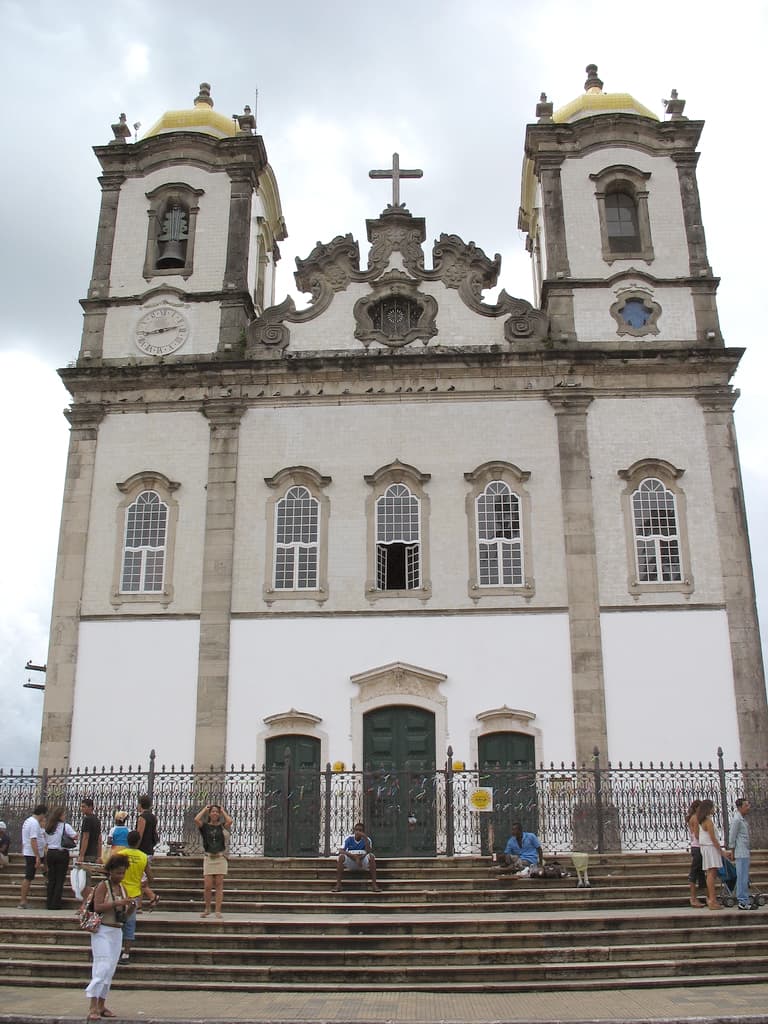
Basilica of Our Lord of Bonfim
The Church of Our Lord of Bonfim, located in Salvador, Bahia, Brazil, is a highly significant Catholic church renowned for its intense religious devotion and the annual Festa do Senhor do Bonfim. Originally built in the 18th century, it is the cathedral of the Roman Catholic Diocese of Bonfim and a prominent site for religious syncretism, blending Catholic and Candomblé traditions.
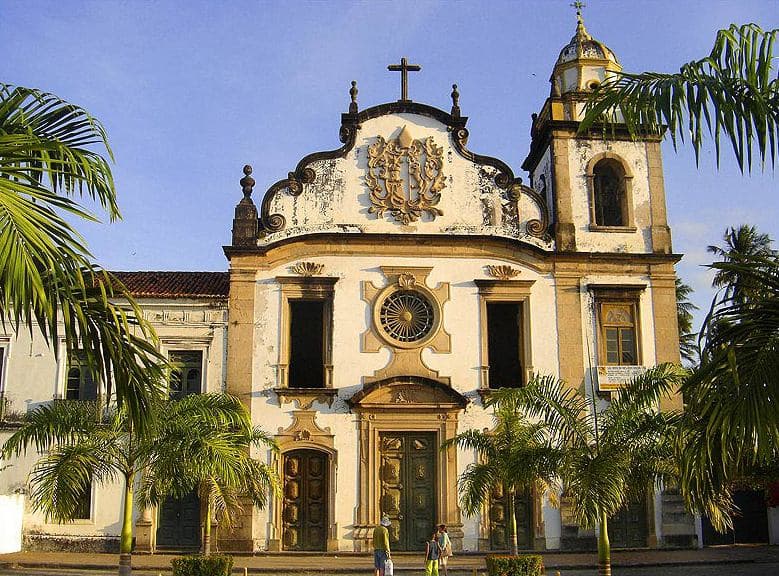
Abbatial Basilica of the Monastery of St Benedict
The Basilica and Monastery of St. Benedict is a significant Baroque architectural complex in Olinda, Pernambuco, Brazil. It is part of the historic center of the city, which is recognized as a UNESCO World Heritage Site. The basilica holds importance for its historical roots in Portuguese colonization and its elevated status as a Minor Basilica.